The Province of L'Aquila occupies the western, mountainous interior of the Abruzzo region, standing as one of Italy's most sparsely populated yet ecologically significant territories. Dominated by the Apennine ridge, it holds the highest peak in peninsular Italy, the Corno Grande (2,912 meters). For millennia, local society revolved around transhumance—the seasonal migration of sheep between Apennine summer pastures and the lowlands of Puglia—which established deep culinary, architectural, and agricultural customs that persist today.
Travelers exploring the province transition between dramatic ecological zones, from the stark, high-altitude grasslands of Campo Imperatore—frequently called 'Little Tibet'—to the fertile valleys of Peligna and Navelli. The province is dotted with impeccably preserved fortified villages developed under medieval feudal lords and later enriched by the Medici wool trade. L'Aquila provides an uncommercialized mountain escape defined by silent wilderness, centuries-old stone fortresses, and generous pastoral hospitality.
Reasons to Visit
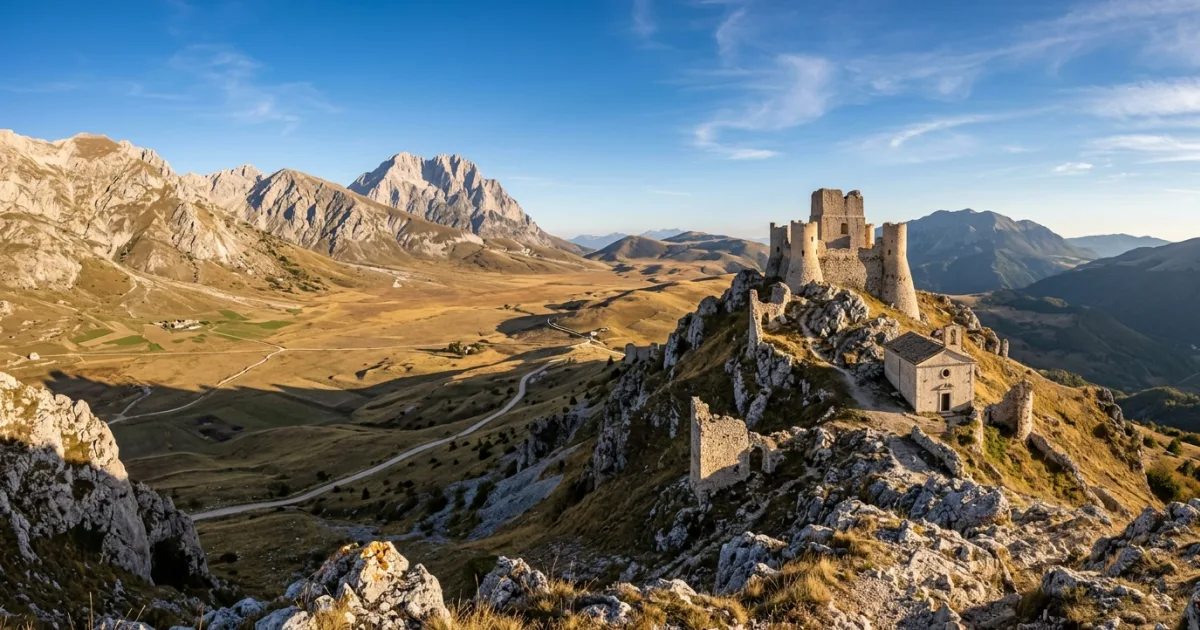
- Stand before Rocca Calascio, one of Europe's highest and most striking medieval fortresses perched at 1,460 meters.
- Traverse Campo Imperatore, a vast upland plateau with sweeping panoramic views of the Gran Sasso massif.
- Explore authentic fortified villages like Santo Stefano di Sessanio, an intact medieval settlement pioneering the 'albergo diffuso' scattered-hotel concept.
- Trek through untouched wilderness home to rare European wildlife, including Apennine wolves, Marsican brown bears, and golden eagles.
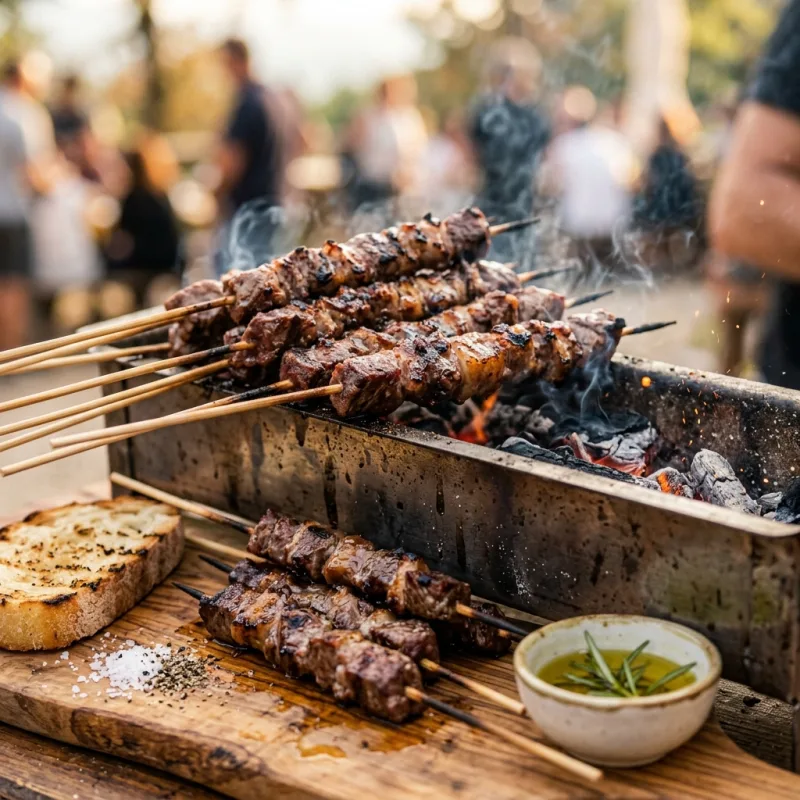
- Savor rich culinary traditions highlighting world-renowned Navelli saffron, mountain sheep cheeses, and authentic mutton arrosticini.
Things to Avoid
- Avoid driving through high mountain passes in late autumn or winter without checking weather forecasts and carrying compulsory snow chains.
- Do not rely entirely on GPS navigation apps on rural mountain roads; download offline maps to prevent getting routed down narrow unpaved tracks.
- Avoid visiting medieval hilltop towns without cash, as cellular card readers frequently encounter connectivity drops in deep stone alleys.
- Do not hike high-elevation trails around Corno Grande without proper mountaineering boots, adequate water, and weather gear.
Local Transportation Tips
A rental car is the most practical way to explore the Province of L'Aquila, granting freedom to access trailheads, nature reserves, and remote medieval hamlets. Major highways (A24 and A25) connect the provincial capital of L'Aquila to Rome and the Adriatic coast, but secondary roads wind through steep mountainous terrain. TUA regional buses connect main municipal centers like L'Aquila, Sulmona, and Avezzano, while local bus routes to outlying hamlets operate with limited daily schedules, especially on Sundays.
Travel Etiquette
- Greet shopkeepers and tavern hosts when entering and exiting establishments with a polite 'Buongiorno' or 'Buonasera'.
- Respect religious decorum by covering shoulders and knees when visiting historic shrines and basilicas like Santa Maria di Collemaggio.
- Tipping is discretionary in restaurants; leaving €1 to €2 per diner for attentive sit-down service is appreciated but never mandatory.
- Stay on designated trails within national parks and avoid disturbing livestock or picking protected wild flora.
Recommended Age Group
The Province of L'Aquila appeals to adventurous travelers and outdoor lovers, with varying suitability across different ages due to rugged topography.
- Babies (0-2 years): Neutral. Steep stone steps, cobblestone alleys, and rugged mountain paths make stroller navigation difficult; baby carriers are strictly required.
- Kids (3-12 years): Recommended. Children enjoy castle ruins, wide-open mountain landscapes, farm visits with animals, and beginner-friendly forest walks.
- Teens (13-19 years): Recommended. Excellent destination for active teenagers interested in mountain biking, alpine hiking, rock climbing, and winter skiing.
- Adults (20-64 years): Recommended. Perfect for scenic road trips, high-altitude trekking, photography, medieval history, and immersive gastronomic tours.
- Seniors (65+ years): Neutral. While driving tours and scenic towns like Sulmona are pleasant, historic hilltop villages feature steep climbs, loose paving, and uneven stairs.
Accessibility Level: Medium
- Historic fortified villages feature steep inclines, narrow stone alleyways, and extensive staircases that present mobility barriers.
- The restored historic center of L'Aquila features level pedestrian corridors along Corso Vittorio Emanuele and flat access into major basilicas.
- Regional nature reserves provide select barrier-free sensory paths, including designated flat loop trails around Lake Scanno and Lake Sinizzo.
- Most mountain rifugi and medieval castle ruins like Rocca Calascio require rough uphill walking and lack wheelchair ramps.
Did You Know?
The vast, sweeping steppe of Campo Imperatore has served as the filming location for dozens of classic Spaghetti Westerns and international cinema masterpieces, including Sergio Leone films and 'Ladyhawke', earning it the moniker 'Italy's Little Tibet'.
Cool Statistics
- Home to the Corno Grande at 2,912 meters, the highest mountain summit in the entire Apennine mountain range.
- Contains over 3 protected national and regional parks, encompassing more than 40% of the province's total surface area.
- Hosts the Calderone Glacier, historically considered the southernmost glacier in Europe.
- Features the Navelli Plain, which produces over 60% of Italy's certified protected DOP saffron.






Buy a compatible power adapter for your trip