Disclosure: This site contains affiliate links. We may earn a commission if you make a purchase, at no extra cost to you.
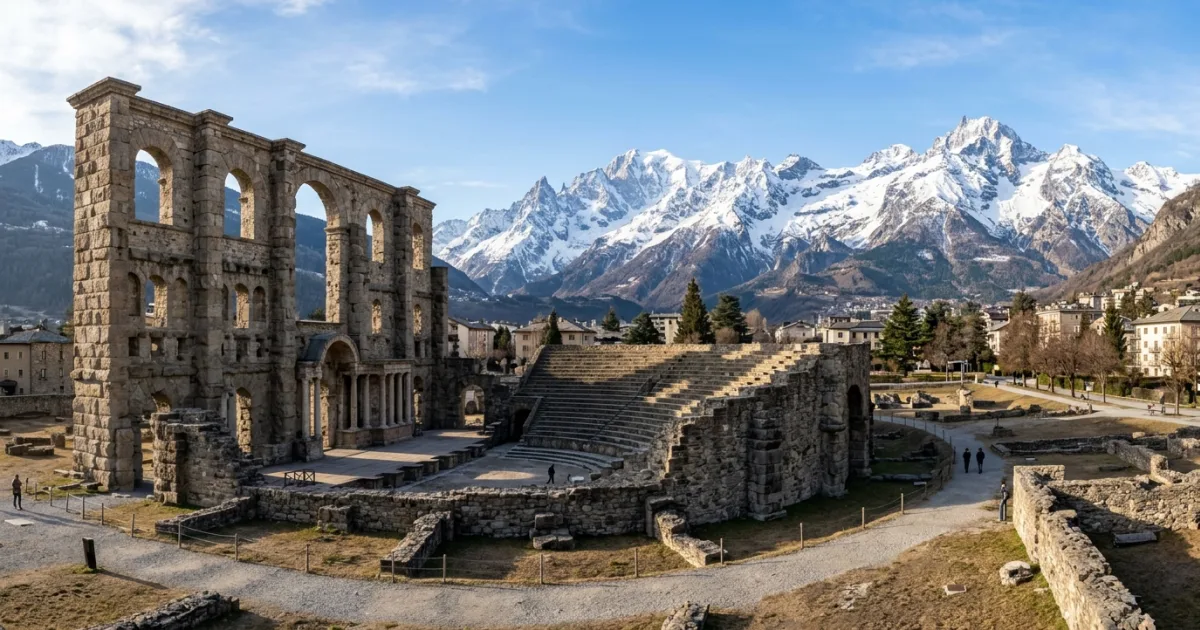
Ancient Roman Theatre ruins in Aosta with snowcapped alpine mountains in the background

Basic Info

COUNTRY & Region

Italy,
Europe

ACCESSIBILITY LEVEL​

  • High: Widely accessible with good facilities for disabilities.
  • Medium: Some accessible options, but limitations exist.
  • Low: Limited accessibility; many barriers for disabilities.
Medium

LOCAL CURRENCY​

Euro (EUR)

Price Level

Low – budget‑friendly basics

Medium – moderate mid‑range costs

High – pricey lodging, dining & transport

Medium

SAFETY LEVEL

5 shields = Excellent – very low crime or conflict.

4 shields = Safe – low risk, routine care.

3 shields = Relatively safe – use normal street smarts.

2 shields = Use caution – higher crime or periodic unrest.

1 shields = Avoid – active conflict or extreme danger.

Scores are derived from multi-year peace, homicide and security indices blended into a single 1-to-5 scale.

Recommended Duration

1-7 days, Full day

Aosta Overview & Key Highlights

Aosta serves as the administrative and cultural capital of the autonomous Aosta Valley region in northwest Italy. Known historically as the "Rome of the Alps," the town features an exceptionally preserved grid of Roman urban planning established in 25 BC under Emperor Augustus. Towering peaks, including the Grand Combin and Mont Vélan, frame the valley basin, providing an alpine backdrop to monumental ancient ruins such as the Arch of Augustus, the Roman Theatre's 22-meter facade, and the underground Cryptoporticus. Beyond its classical antiquity, Aosta provides direct access to high-altitude outdoor recreation and distinct bilingual Franco-Provençal traditions. The Pila-Aosta cable car departs directly from the town edge, ferrying hikers and skiers into alpine elevations in under twenty minutes. Within the historic center, pedestrianized stone lanes are lined with traditional wine bars, artisanal cheesemongers curing Fontina DOP, and Romanesque architectural marvels like the Collegiate Church of Sant'Orso.

Aosta Travel Guide: Logistics & In-Depth Tips

Aosta rests in a broad glacial basin surrounded by four of Europe's tallest massifs: Mont Blanc, the Matterhorn, Monte Rosa, and Gran Paradiso. Founded by the Romans under Emperor Augustus in 25 BC to secure the strategic transalpine passes of the Great and Little Saint Bernard, Augusta Praetoria was constructed with monumental stone defenses that remain largely intact today. Visitors entering the historic core encounter the Porta Praetoria, a double-gate fortress made of giant puddingstone blocks, alongside the triumphal Arch of Augustus and the striking south wall of the Roman Theatre.

During the Middle Ages, Aosta evolved into an essential stop along the Via Francigena pilgrimage route linking Canterbury to Rome. This religious heritage is embodied in the Collegiate Church and Cloister of Sant'Orso, renowned for its 12th-century historiated Romanesque marble capitals depicting biblical scenes and medieval folklore. Today, Aosta blends its layered 2,000-year history with modern mountain living, serving as a tranquil base for hiking, vineyard tours, and winter skiing without the frantic commercialism of larger ski resort villages.

Reasons to Visit

  • Intact Roman Antiquity: Walk through the Cryptoporticus Forense, an evocative subterranean gallery, and photograph the towering Roman Theatre wall set against snowcapped peaks.
  • Seamless Ski & Trail Access: Hop on the direct town gondola to reach the Pila alpine plateau for winter skiing and summer downhill mountain biking in under 20 minutes.
  • Bilingual Alpine Gastronomy: Sample Fontina DOP, Valle d'Aosta Lard d'Arnad, and high-altitude mountain wines produced in terraced steep-slope vineyards.
  • Via Francigena Heritage: Walk portions of the historic medieval pilgrimage trail and explore the Romanesque cloister and Ottonian frescoes of Sant'Orso.
  • Authentic Alpine Town Life: Enjoy quiet evenings in Piazza Chanoux, sipping local craft beers and Genepy herbal liqueur in a pedestrian-friendly, historic environment.

Things to Avoid

  • Avoid driving into the historic center; strict ZTL (Limited Traffic Zone) cameras operate constantly and generate heavy automated fines for unauthorized vehicles.
  • Do not expect shops, bakeries, or smaller historical sites to stay open all day; many independent businesses close between 12:30 PM and 3:30 PM for the traditional afternoon pause.
  • Avoid visiting without pre-checking winter road conditions if traveling by car, as snow tires or onboard chains are legally required from October 15 to April 15.
  • Do not skip the underground Roman Cryptoporticus; its atmospheric stone vaults are one of the most unique and cool subterranean Roman sites in Europe.

Local Transportation Tips

Aosta's historic center is compact, flat, and strictly pedestrianized, making walking the most practical way to explore the town's historical monuments, shops, and restaurants. For excursions into surrounding valleys and villages, SVAP operates clean and reliable local bus lines departing from the central bus terminal next to the Aosta railway station. The Aosta-Pila cable car runs continuously during winter and summer seasons, bridging the town directly to the alpine resort of Pila. Taxis can be found outside the train station or booked by telephone, though public buses and walking cover almost all visitor needs within the valley floor.

Travel Etiquette

  • Acknowledge shopkeepers and waitstaff with a polite greeting ("Buongiorno" or "Bonjour") upon entering and leaving commercial establishments.
  • Dress respectfully when entering churches such as the Aosta Cathedral and the Collegiate Church of Sant'Orso by covering shoulders and knees.
  • Tipping is not mandatory in restaurants; rounding up the bill or leaving €1 to €2 per person for attentive table service is considered generous.
  • Stay to the right on shared multi-use pedestrian and cycling paths along the Dora Baltea river and alpine trails.

Recommended Age Group

Aosta offers a balanced mix of cultural monuments and mountain outdoor activities suited to various travel stages.

  • Babies (0-2 years): Recommended. The flat, pedestrianized historic center allows effortless navigation with strollers, and the town is quiet and safe.
  • Kids (3-12 years): Recommended. Children enjoy riding the mountain cable car up to Pila, exploring the castle-like Roman towers, and visiting nearby alpine nature parks.
  • Teens (13-19 years): Recommended. High-adrenaline activities like mountain biking, skiing, snowboarding, and white-water rafting on the Dora Baltea river keep teens engaged.
  • Adults (20-64 years): Recommended. Exceptional alpine hiking, rich Roman archaeology, and world-class regional wine and culinary tasting make Aosta ideal for adults.
  • Seniors (65+ years): Recommended. The compact, flat historic center features minimal steep inclines, accessible Roman sites, and peaceful Romanesque cloisters.

Accessibility Level: Medium

  • The historic core of Aosta is generally flat with smooth paving stones, though some peripheral archaeological zones feature gravel walkways and original uneven Roman flagstones.
  • The Roman Theatre viewing area is equipped with ramps, though access into lower seating tiers is restricted for wheelchair users.
  • The Cryptoporticus Forense involves descending stairs, which presents physical barriers for travelers with severe mobility limitations.
  • The modern Aosta-Pila gondola terminal is step-free and fully accessible for wheelchairs and strollers.
  • City buses operated by SVAP feature low floors and fold-out ramps on primary municipal routes.

Did You Know?

Beneath the modern streets of Aosta lies the Cryptoporticus Forense, a vast three-sided underground double colonnade built by the Romans. Archaeologists still debate its exact purpose: while it provided structural leveling for sacred forum temples above, its cool, constant temperature also made it an engineering feat that may have functioned as a sheltered public promenade during harsh alpine winters.

Cool Statistics

  • Founded in 25 BC, Aosta retains roughly 80% of its original Roman rectangular street perimeter.
  • The south facade of Aosta's Roman Theatre stands 22 meters tall and originally seated up to 4,000 spectators.
  • Aosta sits at an altitude of 583 meters above sea level, framed by alpine peaks exceeding 4,000 meters.
  • The annual Fiera di Sant'Orso has been held continuously on Aosta's streets every January 30 and 31 for over 1,000 years.

Address:

Aosta, Italy

Find Nearby Accommodations

Electricity

220-240V, 
50Hz

Plug Type

Type C (Round pin), Type F (Two round pins with earth clips), Type L (Three round pins in line)
Plug types
Click To View Plug Types
Aosta is part of our
Coolcation collection

Activities To Do In Aosta

Best Time To Visit Aosta

Aosta is a year-round destination with two distinct peak seasons catering to mountain sports and cultural sightseeing.

  • June to September: Warm summer days averaging 24°C to 28°C provide ideal conditions for hiking, cycling, and exploring outdoor Roman ruins with minimal rainfall.
  • December to March: Crisp winter temperatures ranging from -3°C to 6°C cater to skiers and winter enthusiasts utilizing the direct cable car connection to the Pila ski resort.
  • October to November & April to May: Shoulder seasons bring quiet streets and lower hotel rates, though mountain trails may feature mud or late snow, and cable cars run on reduced seasonal schedules.
  • Late January: The historic Fiera di Sant'Orso brings over a thousand local woodworkers and craftspeople to Aosta's historic center for a millennium-old traditional winter festival.

Average Temperatures Per Month

Average monthly temperaturesMonthly source values, with Celsius and Fahrenheit equivalents in the following data table.-5°23°4°39°13°55°21°70°30°86°JanJan: 4°C / 39°FFebFeb: 7°C / 45°FMarMar: 8°C / 46°FAprApr: 10°C / 50°FMayMay: 15°C / 59°FJunJun: 20°C / 68°FJulJul: 24°C / 75°FAugAug: 24°C / 75°FSepSep: 19°C / 66°FOctOct: 15°C / 59°FNovNov: 9°C / 48°FDecDec: 5°C / 41°F
View temperature data
Average monthly temperatures
Month°C°F
Jan439
Feb745
Mar846
Apr1050
May1559
Jun2068
Jul2475
Aug2475
Sep1966
Oct1559
Nov948
Dec541

Remember to check the weather forecast a few days before the trip and before heading to the airport.

Safety Level

5 shields = Excellent – very low crime or conflict.

4 shields = Safe – low risk, routine care.

3 shields = Relatively safe – use normal street smarts.

2 shields = Use caution – higher crime or periodic unrest.

1 shields = Avoid – active conflict or extreme danger.

Scores are derived from multi-year peace, homicide and security indices blended into a single 1-to-5 scale.

Aosta is exceptionally safe with low rates of both violent crime and petty theft. Take standard precautions with unattended personal belongings in crowded market squares or during the Sant'Orso festival. In winter, exercise caution when walking on shaded stone pavements that may harbor black ice. When venturing onto higher alpine trails connected via the town, carry proper maps and check daily weather forecasts for sudden mountain storms.

The rating is based on multi-year peace, crime, and security indices. Before you go, always verify current conditions through official government travel advisories.

Emergency Numbers

Police: 112
Ambulance: 112

No internet needed • Includes local translations • Free for TravelingWiz readers

Spoken Languages

Italian, French (both official regional languages), and Valdôtain (Arpitan dialect). Basic English is spoken in hotels, restaurants, and visitor sites.
Travel Booking Partner - TravelingWiz

Learn The Language

  • Buongiorno: Good morning / Hello (Italian)
  • Bonjour: Good morning / Hello (French)
  • Grazie mille: Thank you very much (Italian)
  • Merci beaucoup: Thank you very much (French)
  • Per favore: Please (Italian)
  • Dov’è il Teatro Romano?: Where is the Roman Theatre? (Italian)
  • Il conto, per favore: The bill, please (Italian)
  • Arrivederci: Goodbye (Italian)

Trip Cost & Budgeting for Aosta, 2026

Everything you need to know about money while traveling
Is Aosta expensive for tourists in 2026? Aosta offers moderate prices that make it far more affordable than surrounding Alpine ski resorts. For daily food and drink, expect to pay around 1.60 EUR for a cappuccino, 5.00 EUR for a pint of beer, and 25.00 EUR for a standard meal in a mid-range restaurant. Featuring Human Verified prices, it provides excellent value in northern Italy. Use the data table below to calculate your specific daily budget based on your travel style.

LOCAL CURRENCY​:

Euro (EUR)

Price Level:

Low – budget‑friendly basics

Medium – moderate mid‑range costs

High – pricey lodging, dining & transport

Medium

Cards Vs. Cash

Credit cards are widely accepted across Aosta, though carrying a small amount of cash is useful for small cafes.

How Much Cash to Carry (on you)

Per person, per day – pocket cash for small purchases.

Local: 14
Euro (EUR)
≈ 15 USD

Average Daily Costs (per person)

Full daily spend estimation (accommodation, food, transportation, attractions).

Travel Style
Euro (EUR)
≈ USD ($)
Budget
75
82
Mid-range
135
148
Comfort
300
329
Note

The Prices, Daily costs, and calculator results are estimates for planning purposes only. Actual costs may vary based on season, booking timing, personal spending habits, and currency fluctuations. TravelingWiz cannot be held responsible for discrepancies between these estimates and your final trip expenses.

Best Value Tips

  • • Stay in Aosta town rather than resort hubs like Courmayeur to save significantly on lodging and food.
  • • Enjoy an aperitivo at cafes in Piazza Chanoux, where evening drinks include complimentary local snacks.
  • • Take advantage of fixed-price menu del giorno options at local osterias during lunch hours.
  • • Purchase a regional transport or museum pass if planning visits across the Aosta Valley.

Tours & Tickets

Explore tours, attractions, and ticket options to plan your visit.
Plan ahead

Travel Offers & Coupons

Browse travel offers and coupons from our affiliate partners.
Affiliate partner offers

What To Pack

  • Sturdy walking shoes with rubber soles suitable for cobblestone streets and uneven Roman archaeological sites.
  • Layered alpine clothing, including a fleece jacket and windproof shell, even during summer evenings when mountain breezes drop temperatures.
  • High-SPF sunscreen and UV-blocking sunglasses for high-altitude solar exposure.
  • Thermal baselayers, waterproof winter coat, and insulated boots if visiting between December and April.
  • Universal power adapter compatible with Type C and Type L Italian sockets.
  • Refillable water bottle to use at the historic town fountains dispensing fresh mountain spring water.
Only the good stuff!
Browse recommended travel gear
Check out our free packing list tool

Recommended Itineraries for Traveling to Aosta

Take your itinerary with you

Choose a ready-made itinerary, plan your own trip, and keep TravelingWiz by your side while you travel.

Get the TravelingWiz app

Food & Drink Highlights

Local Food Overview

Aosta Valley gastronomy is defined by mountain comfort food reliant on cured meats, polenta, rye bread, mountain pasture butter, and Fontina DOP cheese. Due to the cool alpine climate, olive oil is replaced by rich dairy, and meals often feature slow-cooked stews enriched with regional red wines like Torrette and Fumin. Local specialties include Mocetta (cured chamois or beef), Lardo d'Arnad, and Seupa à la Vapelenentse, a rich baked casserole of stale white bread, cabbage, meat broth, and melted Fontina.

Must Try Dish

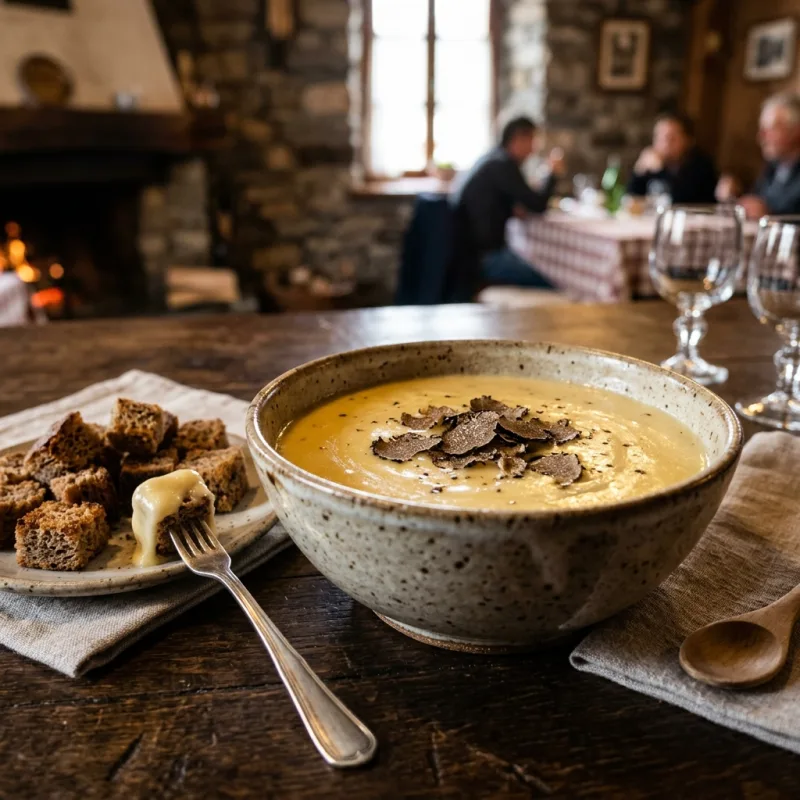
Fonduta alla Valdostana - A velvety cheese fondue prepared by melting regional Fontina DOP with milk, butter, and egg yolks until silken. It is served steaming hot alongside crusty rye croutons or poured directly over dense, golden polenta.
Bowl of rich Fonduta alla Valdostana cheese fondue with crusty bread

Maya’s Final Checklist for Aosta

Logistics shouldn’t be the focus of your trip—the experience should. I’ve hand-vetted these essential partners to ensure your arrival, stay, and exploration are as smooth as an Athenian breeze.

Maya, the human travel expert at TravelingWiz, offering curated, non-AI expertise

Where to Stay

Compare accommodation options and choose a stay that suits your plans and budget.

Air Travel

Compare flight options and find a route that fits your plans.

Local Guides

Connect with local guides for personalized help planning and exploring.

Travel Protection

The “Engineer’s” rule: always have a backup. Secure your trip with a plan that covers every “what if” and unexpected change.

Car Rentals

Compare rental options and choose a car that suits your trip.

Visa Information

Don’t let paperwork slow you down. Get expert assistance with your application to ensure all your entry documents are in order.

FAQs

Aosta earned this nickname because it preserves an extensive collection of ancient Roman structures from its founding in 25 BC as Augusta Praetoria, including a 22-meter theatre facade, town walls, the Arch of Augustus, and a preserved street grid.
Yes, the Aosta-Pila gondola departs directly from the southern edge of town near the train station, transporting skiers and mountain bikers to the Pila ski resort at 1,800 meters in less than 20 minutes.
Both Italian and French are official co-equal languages in the autonomous region of Aosta Valley. Most day-to-day conversation occurs in Italian, but street signs, administrative documents, and schools are fully bilingual.
Aosta is reachable by regional train and coach buses connecting via Turin (Porta Susa) and Milan, as well as direct international buses crossing through the Mont Blanc Tunnel from Chamonix, France.

Your Insights Matter

TravelingWiz grows through the stories of our community. If you’ve recently explored ,Aosta share your tips and stories to help us perfect our guides for the next traveler.

Where should we send your offline card?

We hate spam just as much as you do

newsletter_consent *