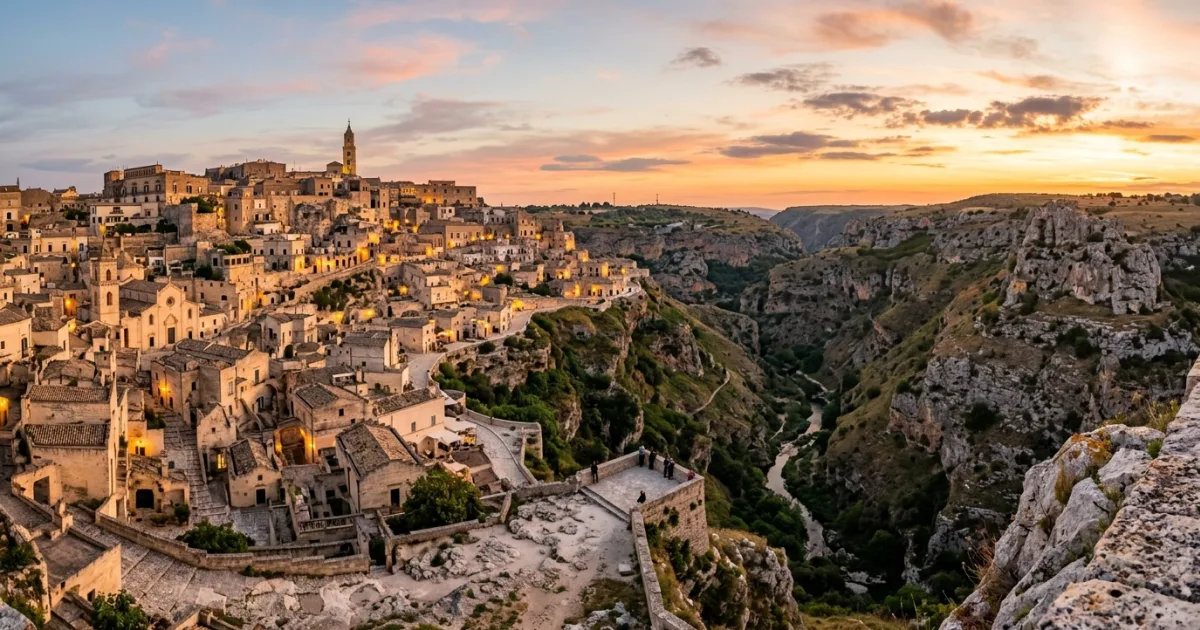
The Province of Matera forms the eastern flank of the Basilicata region, stretching from the rugged limestone plateaus of the Murge to the calm waters of the Gulf of Taranto along the Ionian Sea. The landscape is defined by stark geographical contrasts, transitioning rapidly from cavernous ravines to barren clay formations known as calanchi, before flattening out into fertile coastal citrus plains. Its central jewel, the city of Matera, commands international acclaim for its ancient Sassi districts, where dwellings, cisterns, and rupestrian churches were directly hewn into the soft calcarenite stone across millennia.
Beyond Matera's dramatic urban canyons lies a land steeped in literary and classical history. In the coastal town of Metaponto, monumental Doric columns stand as testaments to the Magna Graecia era, where the philosopher Pythagoras founded his school. Inland, the evocative abandoned hill town of Craco looms over eroded gullies, while villages like Aliano evoke the exiled writings of Carlo Levi. Whether examining prehistoric troglodytic settlements or touring peaceful hilltop sanctuaries, travelers discover an atmospheric southern Italian territory characterized by authentic agricultural rhythms and monumental historical depth.
Reasons to Visit
- Explore the world-famous Sassi di Matera, an extraordinary complex of subterranean homes and rupestrian sanctuaries carved into sheer canyon walls.
- Witness the stark, moon-like scenery of the calanchi clay badlands that punctuate the province's interior countryside.
- Walk with a local guide through the ruins of Craco, one of Europe's most famous and well-preserved medieval ghost towns.
- Visit Magna Graecia archaeological parks and the Tavole Palatine temple ruins along the sparkling Ionian coast at Metaponto.
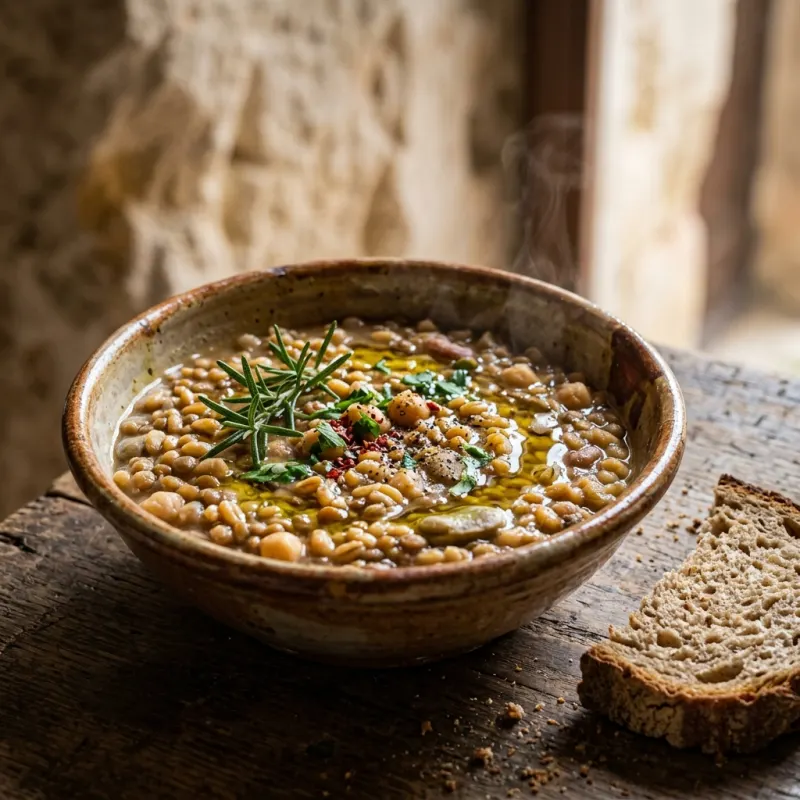
- Sample ancient culinary traditions centered around wood-fired Pane di Matera IGP and crunchy crusco peppers.
Things to Avoid
- Avoid wearing smooth-soled or slippery dress shoes when touring historic cave districts paved with slick limestone flags.
- Do not drive private vehicles into restricted traffic zones (ZTL) within Matera's historic quarters, as automatic cameras issue steep fines.
- Avoid planning strenuous midday hiking trips through exposed canyon trails in the summer months when heat levels can become dangerous.
- Do not rely entirely on public transit schedules to reach rural hamlets and badlands, as bus services are often sparse or infrequent.
Local Transportation Tips
The urban core of Matera is linked to Bari and its international airport by the Ferrovie Appulo Lucane (FAL) private railway line, operating regular train services across the border with Puglia. Within the city itself, the Miccolis municipal bus network and small electric tourist shuttles serve major transit hubs, though the historic Sassi areas must be traversed strictly on foot. To navigate the wider province—including the ghost town of Craco, the badlands of Pisticci, and the archaeological sites of Metaponto—renting a private automobile is by far the most reliable and flexible transit option.
Travel Etiquette
- Dress modestly with covered shoulders and knees when entering active churches and rock-hewn rupestrian shrines.
- Greet shopkeepers and café staff with a polite 'Buongiorno' or 'Buonasera' upon entering establishment doorways.
- Keep noise levels down late at night when wandering through residential residential lanes in the Sassi.
- Always request permission before taking close-up portraits of village elders or local craftspeople working in their workshops.
Recommended Age Group
The Province of Matera offers an unforgettable cultural and landscape journey, though its physical topography dictates specific accessibility conditions across different age categories.
- Babies (0-2 years): Not Recommended. Navigating narrow cliffside alleys and thousands of stone steps with baby strollers is practically impossible; carriers are an absolute requirement.
- Kids (3-12 years): Neutral. Children with good stamina will enjoy exploring cave chambers and ancient castles, but the sheer drops, lack of railings, and extensive walking may tire younger kids quickly.
- Teens (13-19 years): Recommended. Fascinating filming sites, suspension bridge canyon hikes, and dramatic ruined villages capture the imagination of teenagers effectively.
- Adults (20-64 years): Recommended. Ideal for cultural travelers, photographers, hikers, and food enthusiasts seeking deep historical immersion and scenic drives.
- Seniors (65+ years): Neutral. Highly rewarding for history lovers, but visitors with reduced mobility or joint problems may struggle with steep, slippery steps and steep grades.
Accessibility Level: Medium
- The upper modern city of Matera (il Piano) offers level pedestrian paths, smooth stone sidewalks, and accessible viewpoints overlooking the canyons.
- The ancient Sassi districts feature extensive flights of stairs, uneven cobblestones, and steep inclines that pose severe hurdles for manual and power wheelchairs.
- Select cave museums and cultural venues offer designated ramps or stair lifts, but advanced reservation and inquiry are advised.
- Designated disabled parking stalls are available along the edges of the historic center with municipal permits.
Did You Know?
Until the mid-20th century, approximately 15,000 residents lived inside the unventilated cave homes of Matera alongside their livestock without running water or electricity. The area was labeled the 'Shame of Italy' in 1948, prompting government evacuations to new modernist suburbs. Decades later, meticulous restoration transformed these prehistoric caves into luxury boutique hotels, gourmet restaurants, and a celebrated UNESCO World Heritage Site.
Cool Statistics
- Over 150 rupestrian churches containing medieval Byzantine frescoes are scattered across the Matera ravine system.
- Pane di Matera is crafted following centuries-old recipes using exclusively 100% Lucanian durum wheat semolina.
- The Sassi cave complex has provided the cinematic backdrop for major films, including Mel Gibson's 'The Passion of the Christ' and the James Bond film 'No Time to Die'.
- The Tavole Palatine temple in Metaponto features 15 preserved Doric columns dating back to the late 6th century BC.






Buy a compatible power adapter for your trip