Disclosure: This site contains affiliate links. We may earn a commission if you make a purchase, at no extra cost to you.

>
>
>
Friuli-Venezia Giulia

Friuli-Venezia Giulia

Piazza dell'Unità d'Italia in Trieste at sunset

Friuli-Venezia Giulia Overview & Key Highlights

Friuli-Venezia Giulia is a culturally diverse region in northeastern Italy, bordering Austria and Slovenia. The area offers a unique blend of Latin, Slavic, and Germanic influences, visible in its architecture, dialects, and culinary traditions. Visitors can explore the grand Habsburg-era squares of Trieste, the ancient Roman ruins of Aquileia, and the rolling vineyards of the Collio wine region. The landscape transitions dramatically from the rugged peaks of the Julian Alps in the north to the sandy beaches of the Adriatic coast in the south, providing diverse activities for nature lovers and history enthusiasts alike. Whether you are indulging in world-class San Daniele prosciutto, hiking the pristine trails of the Dolomites, or sipping espresso in historic literary cafes, this region offers an authentic and uncrowded Italian experience.

Friuli-Venezia Giulia Travel Guide: Logistics & In-Depth Tips

Friuli-Venezia Giulia is a region that rewards the curious traveler. In the capital city of Trieste, you can sip espresso in historic cafes once frequented by James Joyce and admire the sweeping views of the Adriatic from the Piazza dell'Unità d'Italia. Inland, the elegant city of Udine boasts Venetian-style piazzas and masterpieces by Tiepolo. History buffs will be captivated by Cividale del Friuli, a UNESCO World Heritage site founded by Julius Caesar, and the ancient Roman mosaics of Aquileia.

Nature lovers will find paradise in the northern part of the region, where the Julian Alps and the Friulian Dolomites offer pristine lakes, such as the emerald-green Fusine Lakes, and world-class hiking and skiing. The region's eastern border features the rolling hills of the Collio, a premier wine-producing area dotted with family-run vineyards. Whether you are exploring medieval castles, relaxing on the golden beaches of Lignano Sabbiadoro, or indulging in the local gastronomy, Friuli-Venezia Giulia provides a rich, multi-faceted Italian getaway.

Reasons to Visit

  • Experience an authentic, off-the-beaten-path Italian region without the overwhelming tourist crowds.
  • Taste world-renowned culinary exports at their source, including Prosciutto di San Daniele and Montasio cheese.
  • Explore a unique cultural melting pot where Italian, Austrian, and Slavic histories intersect.
  • Enjoy diverse landscapes ranging from the dramatic peaks of the Julian Alps to the serene Adriatic coastline.
  • Tour the prestigious Collio wine region, famous for producing some of Italy's finest white wines.

Things to Avoid

  • Avoid expecting English to be spoken fluently in remote mountain villages or rural farmhouses; learning a few Italian phrases goes a long way.
  • Don't skip the 'osmize'—these temporary farmhouse eateries are a quintessential local experience.
  • Avoid driving in the historic centers of cities like Trieste and Udine, as they have strict ZTL (Limited Traffic Zones) with heavy fines.
  • Don't limit your visit to just the summer; the autumn wine harvest and spring blooms are spectacular.

Local Transportation Tips

The region is well-connected by the Italian railway network (Trenitalia), making travel between Trieste, Udine, Gorizia, and Pordenone fast and affordable. Local buses serve smaller towns and coastal resorts. However, to truly experience the depth of Friuli-Venezia Giulia—especially the Collio vineyards, the Carso plateau, and the Julian Alps—renting a car is highly recommended. The roads are well-maintained, though mountain passes can be winding and require careful driving.

Travel Etiquette

  • Always greet shopkeepers with a 'Buongiorno' or 'Buonasera' when entering and leaving a store.
  • Dress modestly when visiting churches and religious sites (shoulders and knees should be covered).
  • Tipping is not obligatory but leaving a few euros or rounding up the bill is appreciated for good service in restaurants.
  • When tasting wine, it is customary to clink glasses and say 'Cin cin' or 'Salute' while making eye contact.

Recommended Age Group

Friuli-Venezia Giulia offers a diverse range of activities suitable for various age groups, from relaxing coastal resorts to active mountain adventures.

  • Babies (0-2 years): Neutral. While coastal towns and major cities are stroller-friendly, the mountainous areas and historic cobblestone streets can be challenging to navigate.
  • Kids (3-12 years): Recommended. The sandy beaches of Lignano Sabbiadoro and Grado are perfect for families, and exploring medieval castles sparks great imagination.
  • Teens (13-19 years): Recommended. The region offers excellent outdoor activities, including hiking, cycling the Alpe Adria trail, and water sports on the coast.
  • Adults (20-64 years): Recommended. Adults will deeply appreciate the rich history, the sophisticated coffee culture of Trieste, and the world-class wine tasting in the Collio region.
  • Seniors (65+ years): Recommended. The region is ideal for slow travel, offering accessible historic centers, scenic drives, and excellent culinary experiences without the rush of mass tourism.

Accessibility Level: Medium

  • Major cities like Trieste and Udine have made significant efforts to improve accessibility, with flat pedestrian zones and accessible museums.
  • Many historic sites and medieval towns feature uneven cobblestones and steep inclines, which may pose challenges for wheelchair users.
  • The regional train network generally offers accessible carriages, but it is advisable to book assistance in advance.
  • Several beaches in Lignano Sabbiadoro and Grado are equipped with accessible boardwalks and specialized beach wheelchairs.

Did You Know?

Trieste, the capital of the region, was the primary seaport of the Austro-Hungarian Empire for centuries. Because of this, it has a deeply ingrained coffee culture and is often referred to as the 'Coffee Capital of Italy,' serving as the headquarters for the famous Illy coffee brand.

Cool Statistics

  • Friuli-Venezia Giulia produces over 50% of Italy's white wine.
  • The Roman city of Aquileia, located in the region, was once one of the largest and wealthiest cities in the early Roman Empire, with a population of over 100,000.
  • The Grotta Gigante in the Carso region is one of the largest tourist caves in the world, featuring a central cavern that is 107 meters high.


Address:

Friuli-Venezia Giulia, Italy

Find Nearby Accommodations

Basic Info

address icon

COUNTRY & Region

Italy,
Europe

ACCESSIBILITY LEVEL​

Medium
Currency icon

LOCAL CURRENCY​

Euro (EUR)
Price level icon
Medium
Safety Level icon

SAFETY LEVEL

Duration icon

Recommended Duration

• 1-7 days
• More than a week

Electricity

electricity icon

Electricity

220-240V, 
50Hz
Plug Socket icon

Plug Type

• Type C (Round pin)
• Type F (Two round pins with earth clips)
• Type L (Three round pins in line)
Plug types
Click To View Plug Types
Friuli-Venezia Giulia is part of our
Accessible Travel collection

Activities To Do In Friuli-Venezia Giulia

Best Time To Visit Friuli-Venezia Giulia

The best times to visit Friuli-Venezia Giulia are during the late spring (May to June) and early autumn (September to October).

  • Spring: Offers mild weather, blooming landscapes, and fewer crowds, perfect for city exploration and hiking.
  • Autumn: Ideal for food and wine lovers, as this is the season for grape harvests in the Collio region and various culinary festivals.
  • Summer: July and August are great for the Adriatic beaches, though it can be hot and more crowded.
  • Winter: Excellent for skiing in the Julian Alps, though coastal towns may be quiet.

Average Temperatures Per Month

Remember to check the weather forecast a few days before the trip and before heading to the airport.

Safety Level icon

Safety Level

Friuli-Venezia Giulia is a tranquil and safe region with very low violent crime rates, requiring only standard routine precautions. In urban transport hubs like Trieste Centrale and busy summer beach areas such as Lignano Sabbiadoro, keep a watchful eye on your personal belongings to prevent opportunistic pickpocketing. If you are exploring the Julian or Carnic Alps, check local mountain weather forecasts before setting out and ensure you have proper alpine gear and emergency contacts.

The rating is based on multi-year peace, crime, and security indices. Before you go, always verify current conditions through official government travel advisories.

Emergency Numbers

Police: 112 (Universal) / 113
Ambulance: 112 (Universal) / 118

No internet needed • Includes local translations • Free for TravelingWiz readers

Spoken Languages

Italian is the official language. Friulian, a distinct Romance language, is widely spoken in the central and northern areas. Slovenian and German are also spoken in the border regions. English is commonly understood in tourist areas and by younger generations.

Learn The Language

  • Ciao (Hello/Goodbye)
  • Buongiorno (Good morning)
  • Per favore (Please)
  • Grazie (Thank you)
  • Quanto costa? (How much does it cost?)
  • Dov’è il bagno? (Where is the bathroom?)
  • Il conto, per favore (The bill, please)
  • Parla inglese? (Do you speak English?)
Travel Booking Partner - TravelingWiz

Trip Cost & Budgeting for Friuli-Venezia Giulia, 2026

Everything you need to know about money while traveling
Is Friuli-Venezia Giulia expensive for tourists in 2026? No, it offers moderate prices and excellent value compared to nearby Venice. You can expect to pay around 1.90 EUR for a coffee, 5.00 EUR for a draft beer, and 30 EUR for a mid-range restaurant meal. Based on our Human Verified prices, a typical mid-range travel basket averages about 140 EUR daily. Use the data table below to calculate your specific daily budget based on your travel style.
Currency icon

LOCAL CURRENCY​:

Euro (EUR)
Price level icon
Medium
Credit cards are widely accepted across major cities, though carrying small cash is useful for cafes and buses.

Per person, per day – pocket cash for small purchases.

Local: 14
Euro (EUR)
≈ 16 USD

Full daily spend estimation (accommodation, food, transportation, attractions).

Travel Style
Euro (EUR)
≈ USD ($)
Budget
75
87
Mid-range
140
162
Comfort
310
360

The Prices, Daily costs, and calculator results are estimates for planning purposes only. Actual costs may vary based on season, booking timing, personal spending habits, and currency fluctuations. TravelingWiz cannot be held responsible for discrepancies between these estimates and your final trip expenses.

  • • Take advantage of the FVG Card for free or discounted entry to top regional museums, historic sites, and transport.
  • • Drink your espresso standing at the bar like a local to avoid sit-down table service fees.
  • • Travel via regional Trenitalia trains between Trieste, Udine, and Gorizia for budget-friendly transportation.
  • • Enjoy an aperitivo hour where ordered drinks often come with complimentary local snacks.

Pre-Order Tickets

Avoid disappointment when tickets sell out — and skip the long lines by booking online in advance. You’ll often save up to 20% too.
Save up to 20%

Travel Discounts & Coupons

Save on hotels, attractions, transport, and gear — find verified discounts for smarter travel spending.
Verified Coupons

What To Pack

  • Comfortable walking shoes for cobblestone streets and historic sites.
  • Layered clothing, as temperatures can vary greatly between the coastal areas and the Julian Alps.
  • A smart-casual outfit for dining in upscale restaurants or visiting wineries.
  • A lightweight rain jacket, especially if visiting in the spring or autumn.
  • Hiking boots and outdoor gear if you plan to explore the mountain trails.
We couldn't find tips for Friuli-Venezia Giulia.
If you got any, please share

Recommended Itineraries for Traveling to Friuli-Venezia Giulia

We couldn't find itineraries for Friuli-Venezia Giulia.
you can contact us for custom trip plan

Food & Drink Highlights

Local Food Overview

The cuisine of Friuli-Venezia Giulia is a fascinating reflection of its geography and history, blending Italian, Austrian, and Slavic traditions. The region is world-renowned for its Prosciutto di San Daniele, a sweet and delicate cured ham, and its exceptional white wines from the Collio and Colli Orientali areas. Hearty mountain dishes feature polenta, game, and robust cheeses, while the coastal areas serve fresh Adriatic seafood.
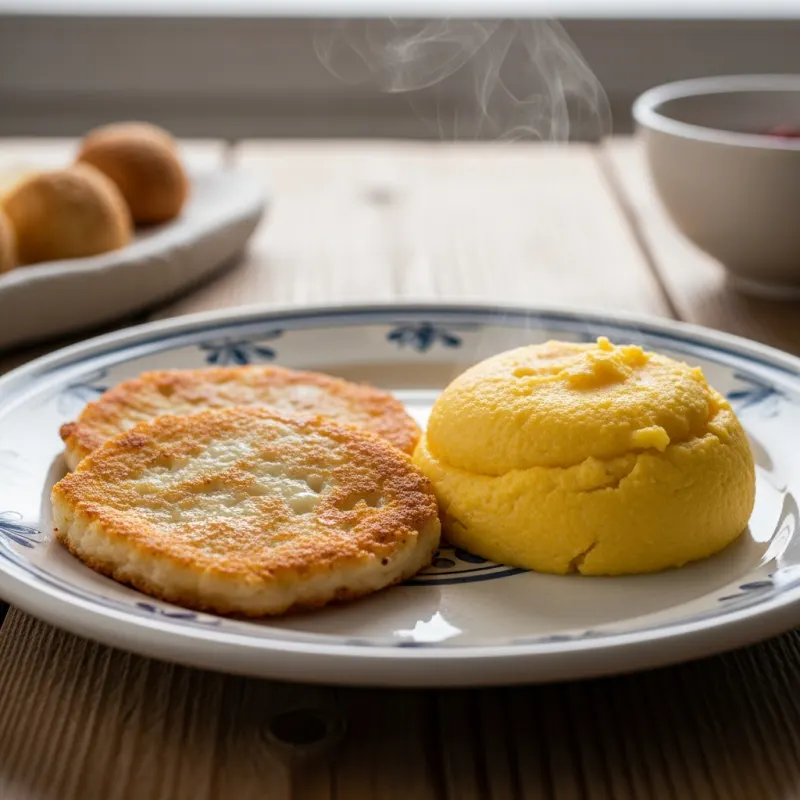
A plate of traditional Frico con Polenta from Friuli-Venezia Giulia

Must Try Dish

Frico con Polenta. This traditional Friulian dish is a savory, crispy pancake made from Montasio cheese and potatoes, often served alongside soft, warm polenta.
Food Experiences Title Icon

Food
Experiences

Discover cooking classes, tastings and local food tours

No food experience found
Maya, the human travel expert at TravelingWiz, offering curated, non-AI expertise

Maya’s Final Checklist for Friuli-Venezia Giulia

Logistics shouldn’t be the focus of your trip—the experience should. I’ve hand-vetted these essential partners to ensure your arrival, stay, and exploration are as smooth as an Athenian breeze.

Where to Stay

From boutique hotels to local apartments—compare thousands of options and find the perfect stay in the best neighborhood.

Air Travel

Getting there should be seamless. Compare the best routes and prices across top airlines to start your journey on the right note.

Local Guides

Connect with experts who know the destination best. Get personalized advice and insider tips to help you plan your perfect trip.

Travel Protection

The “Engineer’s” rule: always have a backup. Secure your trip with a plan that covers every “what if” and unexpected change.

Car Rentals

Explore at your own pace with total freedom. Compare reliable rental options and find the right vehicle for your adventure.

Visa Services

Don’t let paperwork slow you down. Get expert assistance with your application to ensure all your entry documents are in order.

FAQs

Regional trains are excellent for traveling between major cities like Trieste, Udine, and Pordenone. However, renting a car is highly recommended for exploring the wine regions, mountain villages, and rural landscapes.
Compared to other Italian regions like Tuscany or Veneto, Friuli-Venezia Giulia is a hidden gem and remains largely uncrowded, offering a more authentic and relaxed experience.
The region is globally celebrated for its crisp, aromatic white wines, particularly Friulano, Ribolla Gialla, and Pinot Grigio, primarily produced in the Collio and Colli Orientali del Friuli areas.
The late spring months of May and June, as well as early autumn in September and October, are the ideal times to visit. You will enjoy mild weather for exploring historic towns and hiking alpine trails, alongside seasonal grape harvests in the Collio wine country, without the high summer heat and coastal crowds.
Yes, you can safely drink the tap water throughout Friuli-Venezia Giulia. Tap water across Italy is strictly monitored and meets rigorous quality standards. You can comfortably drink from taps in hotels and restaurants, as well as refill your reusable water bottle at public fountains across cities like Trieste and Udine during your daily travels.
You should make sure to taste authentic Prosciutto di San Daniele and aged Montasio cheese directly at their source. In Trieste and coastal towns, you can enjoy hearty dishes served in traditional buffets and fresh Adriatic seafood. Be sure to pair your meals with renowned local white wines and visit historic literary cafes for espresso.
No, you do not need to speak fluent Italian, as English is commonly understood in hotels and tourist hubs across Trieste and Udine. However, English is rarely spoken in rural wine regions and remote alpine villages. Learning a few polite Italian phrases will greatly help your interactions with locals and shopkeepers.

Your Insights Matter

TravelingWiz grows through the stories of our community. If you’ve recently explored ,Friuli-Venezia Giulia share your tips and stories to help us perfect our guides for the next traveler.

Related Articles

Check out our related articles and blog posts to learn even more about the destination.

No related articles found

Don’t Travel Alone

Share with your friends and family

Where should we send your offline card?

We hate spam just as much as you do

newsletter_consent *