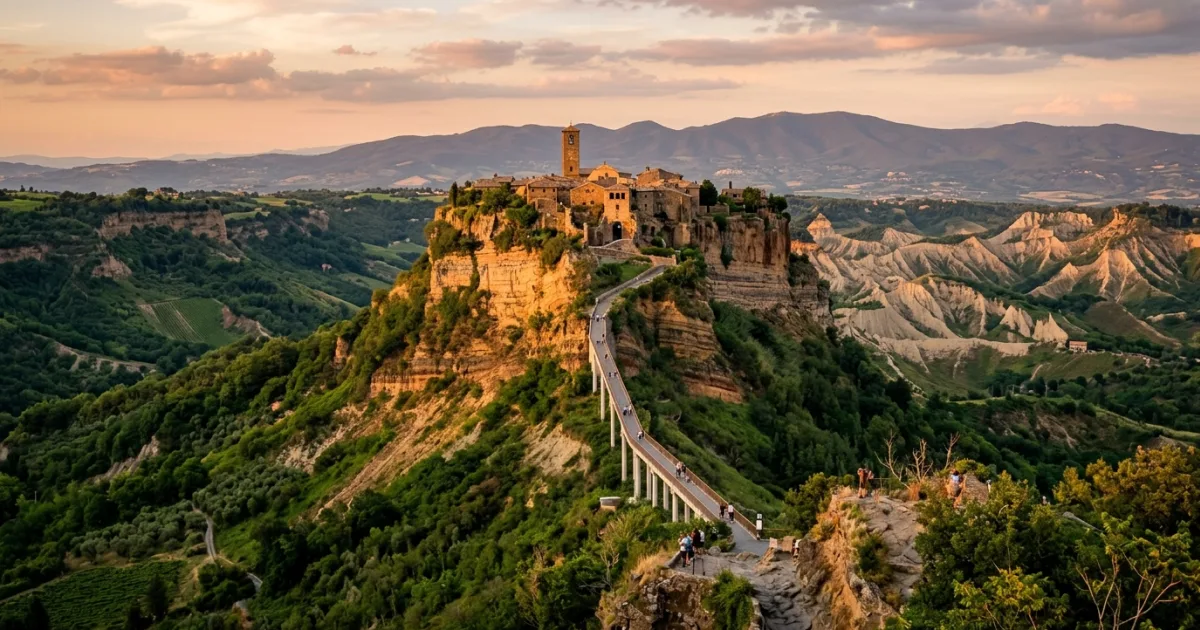
Occupying the ancient heartland of the Etruscan civilization, the Province of Viterbo spans the volcanic plateau between the Tyrrhenian Sea and the Tiber Valley. Known historically as Tuscia, the region served as a strategic corridor between northern Europe and Rome, traversed by the historic Via Francigena pilgrim route. Today, it remains characterized by dramatic topography: dense chestnut and oak forests on the Cimini Hills, pristine volcanic caldera lakes, and striking tufo stone cliffs topped with fortified medieval towns.
Beyond its natural landmarks, Viterbo preserves masterworks of the Italian Renaissance. Noble dynasties such as the Farnese and Orsini built magnificent estates, including the pentagonal Palazzo Farnese in Caprarola and the surreal, sculpted Monster Park (Sacro Bosco) in Bomarzo. The absence of heavy commercialization allows visitors to experience classical Italian history, agrarian culture, and geothermal wellness in an authentic setting.
Reasons to Visit
- Natural Thermal Springs: World-class hyper-thermal sulphur waters ranging from rustic open pools to full-service spa facilities.
- Untouched Medieval Quarters: Viterbo's San Pellegrino quarter stands as one of the best-preserved 13th-century residential districts in Europe.
- Surreal Landscapes: The crumbling tufa promontory of Civita di Bagnoregio and the volcanic expanse of Lake Bolsena.
- Mannerist Renaissance Architecture: Incredible architectural sites like Villa Lante in Bagnaia and Palazzo Farnese in Caprarola.
- Etruscan Heritage: Enormous necropolises with painted rock-cut tombs at Tarquinia and cavernous sunken roads (Vie Cave).
Things to Avoid
- Avoid relying exclusively on public buses to explore smaller hill towns, as schedules are sparse on weekends.
- Do not wear sterling silver jewelry into the sulphur hot springs, as volcanic minerals will quickly tarnish the metal.
- Avoid driving into the historic centers of Viterbo or Tarquinia without checking for ZTL (restricted traffic zone) cameras.
- Do not plan excursions without accounting for the midday riposo (shop and church closures between 1:00 PM and 4:00 PM).
Local Transportation Tips
Regional rail services managed by Trenitalia operate from Rome Ostiense and Rome Tiburtina directly to Viterbo Porta Romana and Viterbo Porta Fiorentina. COTRAL regional buses link Viterbo city with outlying towns, though routes operate primarily on commuter schedules. For maximum flexibility, a personal or rental car is indispensable for visiting archaeological parks, lakeside villages, and rural agriturismi.
Travel Etiquette
- Greet shopkeepers and café staff with 'Buongiorno' upon entering and 'Arrivederci' when leaving.
- Do not order a cappuccino after 11:00 AM; locals transition strictly to espresso after mid-morning.
- Dress respectfully when entering basilicas and rural churches by ensuring shoulders and knees are covered.
- Always request the check at restaurants ('Il conto, per favore'), as waitstaff consider it rude to bring it unprompted.
Recommended Age Group
The Province of Viterbo welcomes travelers of all generations, offering quiet countryside pacing, interactive history, and family-friendly natural attractions.
- Babies (0-2 years): Neutral. Cobblestone medieval streets and steep steps in cliff towns like Civita di Bagnoregio can be challenging with traditional strollers; baby carriers are strongly advised.
- Kids (3-12 years): Recommended. Children enjoy exploring the towering stone sculptures of Bomarzo's Monster Park, castle fortresses, and swimming along the sandy shores of Lake Bolsena.
- Teens (13-19 years): Recommended. Outdoor kayaking, archaeological hiking along sunken Etruscan roads, and unique photography locations appeal strongly to older youth.
- Adults (20-64 years): Recommended. A premier destination for road trips, Renaissance garden exploration, thermal wellness, and local wine tastings.
- Seniors (65+ years): Recommended. Relaxed pace, historic walking tours, scenic drives, and therapeutic thermal baths suit mature travelers well, though steep village ascents should be navigated carefully.
Accessibility Level: Medium
- Paved access and relatively flat topography are present along the lake promenades of Bolsena and Marta.
- Historic hill towns like Civita di Bagnoregio and Vitorchiano feature steep inclines, uneven cobblestones, and limited vehicular access.
- Major thermal facilities like Terme dei Papi provide ramped pool entries, specialized amenities, and designated parking areas.
- Modern regional train stations offer step-free access, but rural bus transit remains largely unequipped for wheelchairs.
Did You Know?
The word 'conclave' originated in Viterbo. Between 1268 and 1271, during the longest papal election in history, local citizens grew so frustrated by the cardinals' indecision that they locked them inside the Papal Palace 'cum clave' (with a key) and removed the roof until a Pope was finally chosen.
Cool Statistics
- Lake Bolsena is Europe's largest volcanic lake, covering approximately 113.5 square kilometers.
- Viterbo’s hyper-thermal waters exit the ground at temperatures reaching up to 58°C (136°F).
- The UNESCO-listed Etruscan Necropolis of Tarquinia contains more than 6,000 rock-cut tombs, around 200 of which feature vivid ancient wall frescoes.






Buy a compatible power adapter for your trip