Liguria's unique topography—where the Maritime Alps and the Apennines plunge directly into the sea—has shaped both its history and its breathtaking landscapes. Historically a powerful maritime republic centered in Genoa, the region boasts a rich architectural heritage visible in its grand palazzos, historic ports, and ancient watchtowers built to defend against pirate raids. Today, the region is divided into the Riviera di Ponente (the coast of the setting sun) to the west of Genoa, known for its sandy beaches and flower cultivation, and the Riviera di Levante (the coast of the rising sun) to the east, famous for its dramatic cliffs and the iconic Cinque Terre.
Beyond the visual splendor, Liguria offers a deeply authentic Italian lifestyle. Visitors can wander through the 'caruggi' (narrow alleyways) of Genoa's old town, sip local Vermentino wine on a terrace overlooking the Gulf of Poets, or watch fishermen mend their nets in the harbor of Camogli. The region's commitment to preserving its natural and cultural heritage makes it a premier destination for slow travel, where the simple pleasures of a freshly baked slice of focaccia and a sunset over the Mediterranean take center stage.
Reasons to Visit
- Hike the world-famous coastal trails of the Cinque Terre National Park.
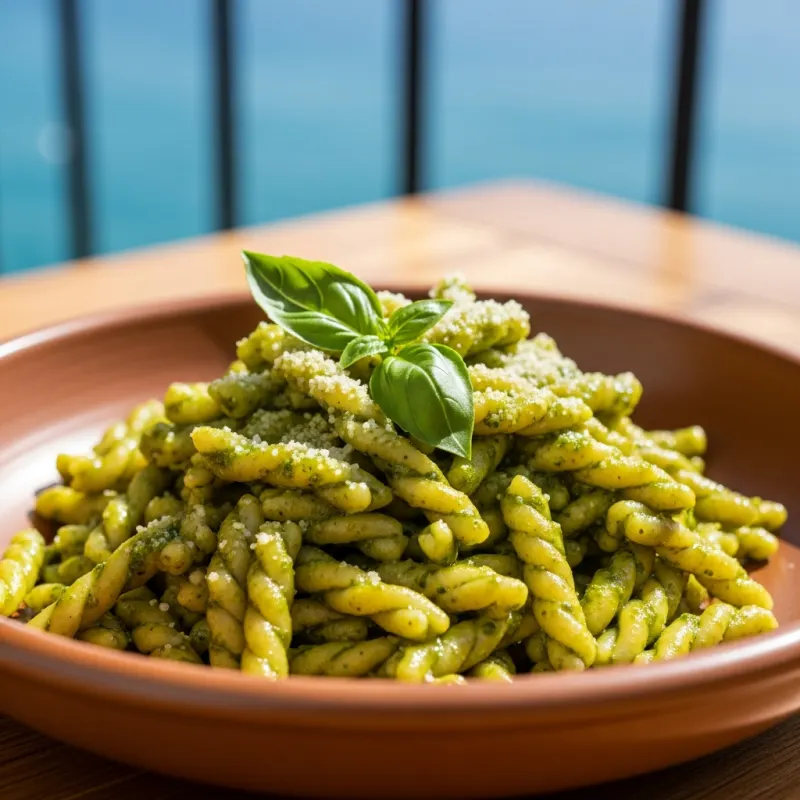
- Taste authentic Pesto alla Genovese in its birthplace.
- Explore the grand palaces and maritime history of Genoa.
- Experience the luxury and glamour of Portofino's picturesque harbor.
- Discover hidden, colorful fishing villages like Camogli and Tellaro.
- Relax on the beautiful beaches of the Riviera di Ponente.
Things to Avoid
- Avoid driving into the Cinque Terre or Portofino; parking is scarce and incredibly expensive.
- Do not hike the coastal trails in flip-flops or sandals; proper footwear is required by law in the national park.
- Avoid visiting in August if you dislike intense crowds and peak summer heat.
- Don't expect large, sandy beaches everywhere; much of the eastern Riviera features pebble beaches or rocky coves.
Local Transportation Tips
The backbone of transportation in Liguria is the regional railway network, which hugs the coastline and connects almost every town and village efficiently. The Cinque Terre Express is a dedicated service running frequently between La Spezia and Levanto, stopping at all five villages. For a more scenic perspective, seasonal passenger ferries operate between major hubs like Genoa, Portofino, Santa Margherita Ligure, and the Cinque Terre. Buses serve the inland villages, while driving is best reserved for exploring the mountainous interior rather than the congested coastal roads.
Travel Etiquette
- Dress modestly when entering churches; shoulders and knees should be covered.
- Greet shopkeepers with a polite 'Buongiorno' or 'Buonasera' when entering and leaving.
- Do not walk around towns in just your swimwear; cover up when leaving the immediate beach area.
- Validate your train ticket at the machines on the platform before boarding to avoid hefty fines.
- Respect the local environment by staying on marked hiking trails and disposing of trash properly.
Recommended Age Group
Liguria offers diverse experiences, but its rugged terrain requires consideration for certain age groups.
- Babies (0-2 years): Neutral. While Italians adore babies, strollers are highly impractical on the steep stairs, narrow paths, and crowded trains of the coastal villages. A baby carrier is essential.
- Kids (3-12 years): Recommended. Children will enjoy the boat rides, pebble beaches, and exploring the colorful, maze-like towns, though long hikes may be tiring.
- Teens (13-19 years): Recommended. The region is perfect for active teens who enjoy hiking, swimming, kayaking, and capturing stunning photography.
- Adults (20-64 years): Recommended. Ideal for romantic getaways, culinary exploration, wine tasting, and scenic coastal hikes.
- Seniors (65+ years): Recommended. While the steep cliffside villages require mobility, the region offers excellent train connectivity and flat, elegant promenades in towns like Santa Margherita Ligure and Rapallo.
Accessibility Level: Medium
- Many of the historic cliffside villages, particularly in the Cinque Terre, have steep inclines, uneven cobblestones, and numerous stairs, making wheelchair access challenging.
- The regional trains are generally accessible, and major stations have elevators, but smaller village stations may have gaps between the platform and the train.
- Towns on the Riviera di Ponente (western coast) and specific eastern towns like Levanto and Santa Margherita Ligure offer flatter terrain and more accessible promenades.
- Some beaches offer accessible facilities, including ramps and specialized beach wheelchairs, particularly in larger resort towns.
Did You Know?
Liguria is home to the 'Sanctuary of the Cetaceans', a massive marine protected area in the Ligurian Sea that is one of the best places in the Mediterranean for whale and dolphin watching.
Cool Statistics
- Liguria has over 300 kilometers (186 miles) of coastline.
- The Cinque Terre National Park is the smallest national park in Italy, covering just 3,860 hectares.
- Genoa's historic center is one of the largest and most densely populated medieval old towns in Europe.
- The region produces some of Italy's finest olive oil, specifically from the small, delicate Taggiasca olive.






Buy a compatible power adapter for your trip