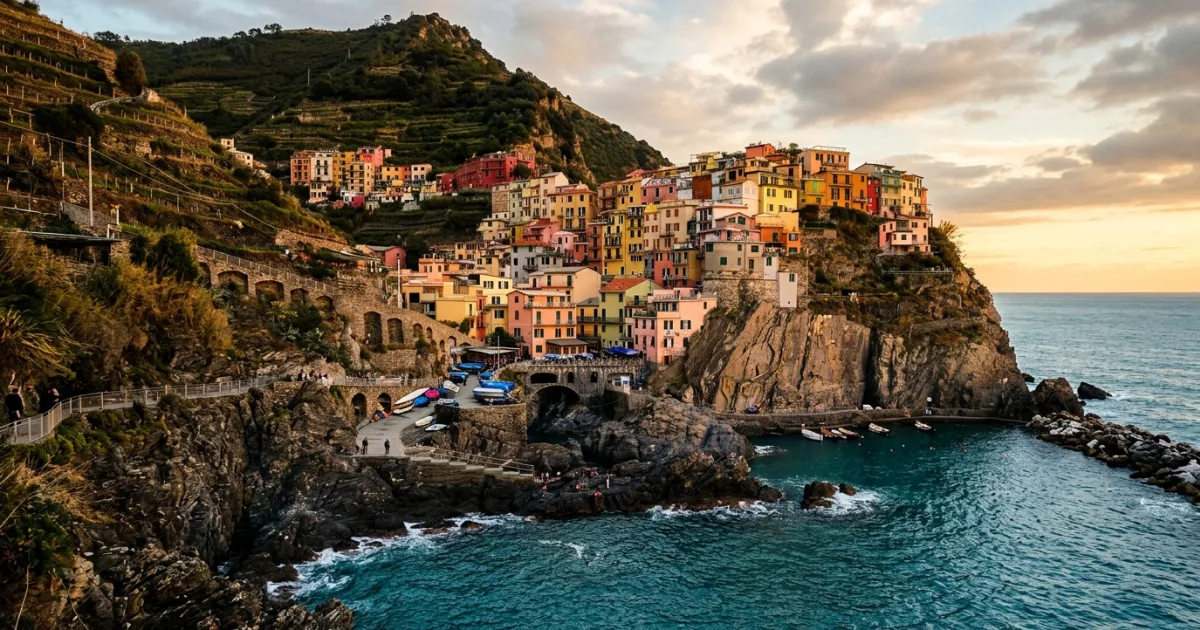
Cinque Terre represents one of humanity's most striking triumphs of agricultural engineering over hostile coastal terrain. Strung along a five-mile stretch of Ligurian cliffs, the hamlets of Monterosso al Mare, Vernazza, Corniglia, Manarola, and Riomaggiore evolved from defensive medieval settlements into an integrated network of working fishing and wine-producing communities. The steep hillslopes are reinforced by an estimated 7,000 kilometers of dry-stone walls, a complex terraced system that local winemakers still navigate today using single-rail mechanical monorails called trenini.
Designated a National Park in 1999, the area carefully balances intense international tourism with preservation of its delicate natural ecosystem. Visitors experience an environment unencumbered by modern automotive sprawl, where soundscapes consist of crashing Mediterranean surf, church bells, and train whistles echoing through rock-hewn tunnels. Whether traversing the rugged Blue Trail high above the coastline, swimming off the sun-warmed rocks of Manarola's natural harbor, or sipping chilled Sciacchetrà wine amidst lemon groves, the region delivers an unmatched Italian coastal encounter.
Reasons to Visit
- Spectacular cliff-edge hiking paths offering unobstructed views across the sapphire Ligurian Sea.
- Five distinctly charming historical villages with candy-colored tower houses, narrow carrugi alleyways, and medieval fortresses.
- Centuries-old terraced vineyards producing rare DOC white wines and sweet Sciacchetrà via heroic viticulture.
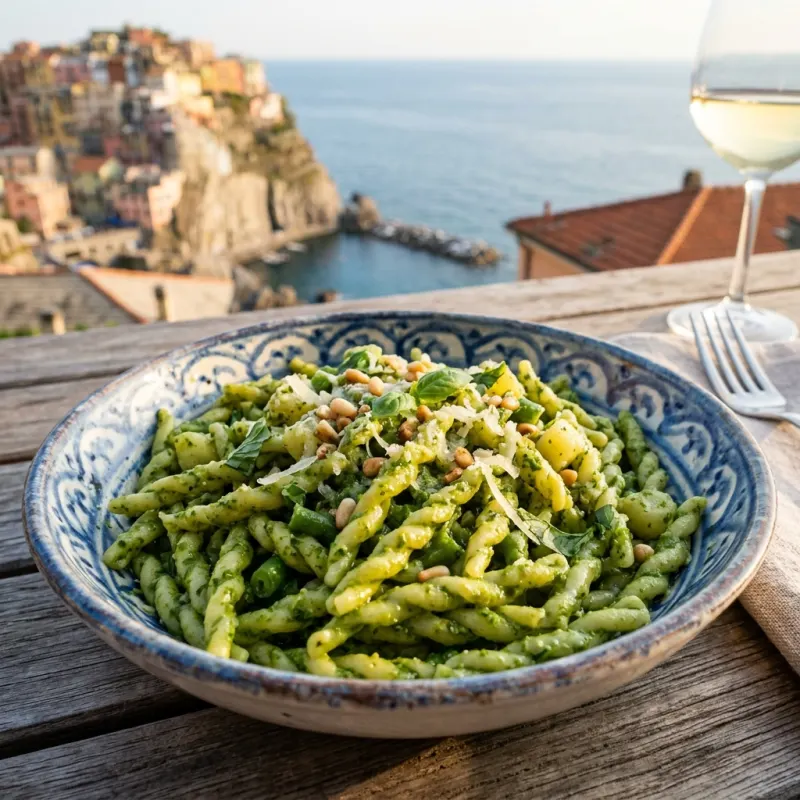
- Unsurpassed seafood and regional culinary specialties, including freshly landed Monterosso anchovies and fragrant basil pesto.
- A scenic, highly efficient train network linking all five hamlets in mere minutes without the need for rental cars.
Things to Avoid
- Do not attempt to hike the trails wearing flip-flops, smooth-soled fashion sneakers, or sandals; park rangers turn away improperly shod hikers and issue fines up to €2,500.
- Avoid relying on automobiles within the park boundaries; parking lots are situated high above the towns and charge steep hourly rates with limited spaces.
- Do not congregate at train carriage doors on the Cinque Terre Express; move deep into the cars to keep platform stops efficient and minimize delays.
- Avoid planning your trip exclusively around the popular Sentiero Azzurro; inland paths such as the Sentiero dei Santuari offer equally stunning vistas without overcrowding or fees.
Local Transportation Tips
The Cinque Terre Express regional rail service operated by Trenitalia runs frequently between La Spezia Centrale and Levanto, stopping at all five villages (Monterosso, Vernazza, Corniglia, Manarola, and Riomaggiore). Single ride fares vary seasonally from €5 to €10, making the multi-day Cinque Terre Treno Card the most economical choice for frequent hops. Seasonal public passenger ferries run from late March through October, connecting all villages except Corniglia (which has no sea-level harbor) and providing sweeping panoramic perspectives from the water. Electric eco-buses run within each municipality, linking train stations to upper village points and hillside sanctuaries.
Travel Etiquette
- Keep to the right and allow faster hikers to overtake safely on narrow trail ascents and cliff passes.
- Respect local residents by keeping noise levels down in the residential carrugi alleyways after 22:00.
- Dispose of all trash in designated village recycling containers; packing out trail litter is mandatory across the national park.
- Wear appropriate casual cover-ups when entering village centers, bakeries, or churches after swimming; walking around in bare swimwear outside beach zones is prohibited.
Recommended Age Group
Cinque Terre's physical terrain features steep gradients, sheer staircases, and historic stone pathways that directly influence visitor comfort.
- Babies (0-2 years): Not Recommended. Narrow pedestrian alleys, endless stone stairways, and packed trains make strollers completely unusable; baby carriers are mandatory yet physically taxing on steep inclines.
- Kids (3-12 years): Neutral. Children comfortable with long walks will enjoy Monterosso's sandy beaches and ferry rides, but younger kids will tire quickly from repetitive stair climbing and trail ascents.
- Teens (13-19 years): Recommended. Cliff swimming, coastal kayaking, scenic rail journeys, and world-class hiking offer high-energy engagement for teenagers.
- Adults (20-64 years): Recommended. Ideal demographic for walking village-to-village, savoring regional wines, hiking park trails, and exploring coastal architecture.
- Seniors (65+ years): Neutral. Active seniors comfortable with stairs and uneven cobblestones will thoroughly enjoy the villages via train transit, though travelers with mobility limitations will face significant physical barriers.
Accessibility Level: Medium
- Accessibility across Cinque Terre is limited due to historic topography, steep vertical gradients, and ubiquitous stone stairways.
- Monterosso al Mare is the most wheelchair-friendly village, featuring a relatively flat seaside promenade and paved oceanfront access in the Fegina district.
- Corniglia is the least accessible village, perched high on a cliff and requiring either a shuttle bus ride or climbing the 382-step Lardarina staircase from the station.
- Train stations have undergone accessibility upgrades with elevators and ramps at Monterosso, Riomaggiore, and Corniglia, but elevator maintenance outages can occur without prior notice.
Did You Know?
The dry-stone walls built into Cinque Terre's terraced hillsides stretch for more than 7,000 kilometers in total length—an aggregate linear distance roughly equal to the Great Wall of China. These terraces were constructed entirely by hand without mortar to convert near-vertical cliffs into arable land for grapes and olives.
Cool Statistics
- 5 distinct historical villages forming a single UNESCO World Heritage cultural landscape.
- Over 120 kilometers of marked hiking footpaths crossing the Cinque Terre National Park.
- Over 7,000 kilometers of ancient dry-stone agricultural walls supporting the coastal hillsides.
- Corniglia sits 100 meters above sea level, accessible by climbing the Lardarina staircase of 382 brick steps.






Buy a compatible power adapter for your trip