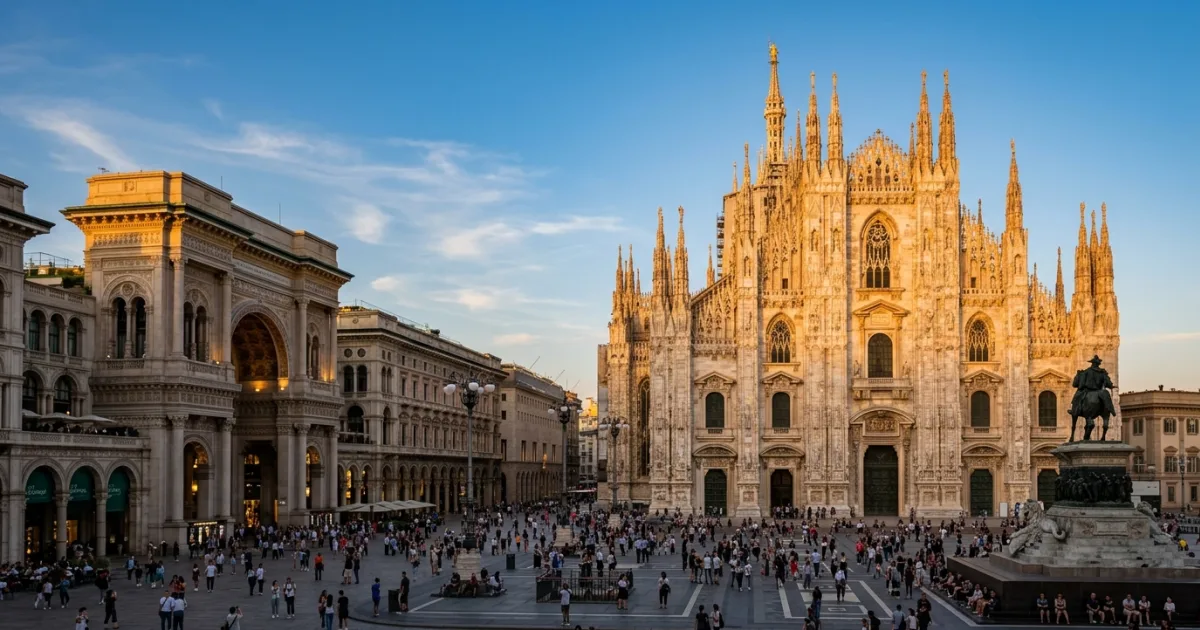
Milan, the capital of the Lombardy region, is a fast-paced metropolis where creativity and business intersect. Unlike the ancient ruins of Rome or the Renaissance romance of Florence, Milan offers a sleek, modern Italian experience grounded in a profound historical legacy. The city's skyline is a testament to this duality, featuring the Gothic spires of the Duomo standing in contrast to the contemporary skyscrapers of the Porta Nuova district.
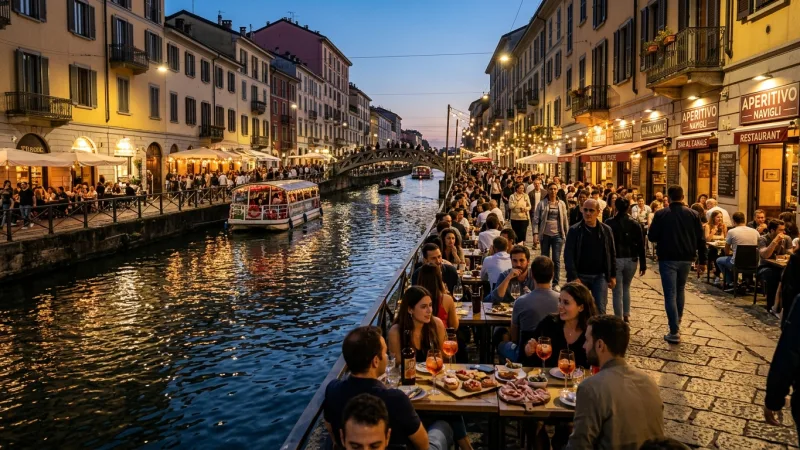
Art and culture thrive here, not just in the revered halls of the Pinacoteca di Brera or the convent housing The Last Supper, but in the everyday aesthetic of the city. From the meticulously dressed locals to the cutting-edge window displays in the Quadrilatero della Moda, design is woven into the fabric of Milan. The Navigli district, with its historic canals designed in part by Leonardo da Vinci, provides a lively evening atmosphere where the Milanese ritual of 'aperitivo' is celebrated daily.
Reasons to Visit
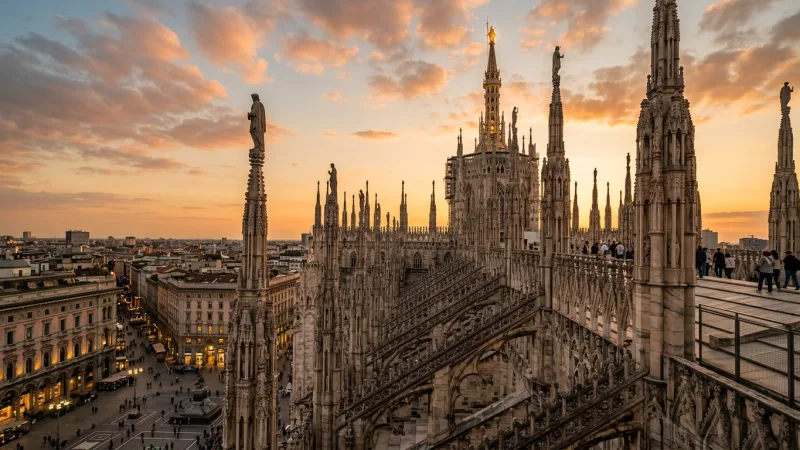
- The Duomo di Milano: One of the largest and most intricate Gothic cathedrals in the world, featuring a walkable rooftop with stunning city views.
- Fashion and Shopping: Home to the Quadrilatero della Moda, offering unparalleled luxury shopping and the historic Galleria Vittorio Emanuele II.
- Artistic Masterpieces: View Leonardo da Vinci's iconic mural, The Last Supper, and explore world-class galleries like the Pinacoteca di Brera.
- Aperitivo Culture: Experience the vibrant evening tradition of drinks and buffet snacks along the picturesque Navigli canals.
- La Scala Opera House: Attend a performance or tour one of the most famous and historic opera houses globally.
Things to Avoid
- Tourist Trap Restaurants: Avoid eating at restaurants immediately surrounding the Piazza del Duomo, where prices are inflated and quality is often lower.
- Driving in the City Center: Milan has a restricted traffic zone (Area C) and heavy traffic; rely on public transport instead.
- Ignoring Dress Codes: Do not attempt to enter churches, especially the Duomo, with bare shoulders or knees.
- Unvalidated Tickets: Always validate your paper bus, tram, or train tickets in the yellow machines before boarding to avoid hefty fines.
Local Transportation Tips
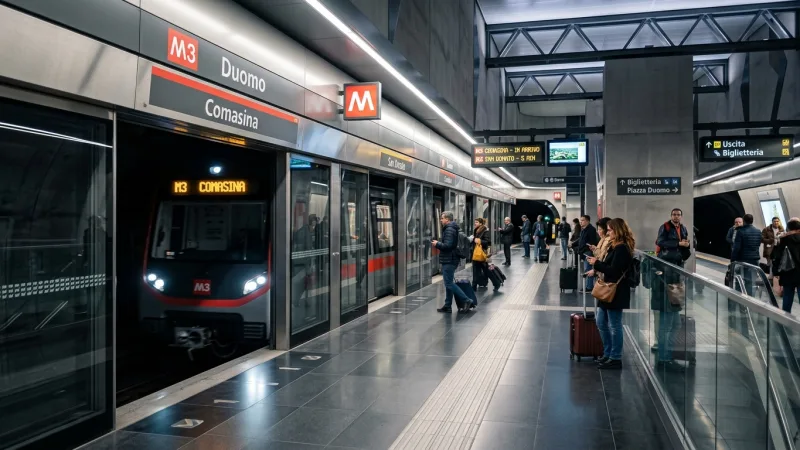
Milan boasts an extensive and highly efficient public transportation network operated by ATM. It includes four metro lines (with a fifth expanding), numerous tram routes, and buses. The historic yellow trams, some dating back to the 1920s, are not only a practical way to get around but also a charming Milanese experience. Contactless payment is available at metro turnstiles, making it incredibly easy for tourists to tap in and out. For regional day trips to places like Lake Como, the Trenord railway system operates frequently from Milano Centrale and Cadorna stations.
Travel Etiquette
- Greet shopkeepers and restaurant staff with a polite 'Buongiorno' (Good morning) or 'Buonasera' (Good evening) upon entering.
- Dress neatly; Milan is a fashion-conscious city, and smart-casual attire is appreciated, especially when dining out.
- Do not order a cappuccino after 11:00 AM or after a meal; Italians consider milk-heavy coffees strictly for breakfast. Opt for an espresso instead.
- Leave a small tip (1-2 Euros) if the service was exceptional, though a service charge (coperto) is usually already included in the bill.
Recommended Age Group
Milan offers a diverse range of attractions that cater to various age groups, though its fast-paced urban environment is best suited for older children and adults.
- Babies (0-2 years): Neutral. While Italians are incredibly welcoming to infants, navigating the cobblestone streets and crowded public transport with a stroller can be challenging.
- Kids (3-12 years): Recommended. Children will enjoy interactive spaces like the Leonardo da Vinci National Museum of Science and Technology and the expansive Sempione Park.
- Teens (13-19 years): Recommended. The vibrant fashion scene, trendy cafes, and dynamic urban energy make Milan highly appealing to teenagers.
- Adults (20-64 years): Recommended. Adults can fully appreciate the world-class dining, luxury shopping, historic architecture, and sophisticated nightlife.
- Seniors (65+ years): Recommended. The city center is relatively flat, and major attractions are well-connected by an accessible public transport system, making it comfortable for senior travelers.
Accessibility Level: Medium
- The historic center of Milan is mostly flat, making wheelchair navigation manageable, though some cobblestone streets can be bumpy.
- Most major museums, including the Pinacoteca di Brera and the Museo del Novecento, are fully wheelchair accessible with ramps and elevators.
- The Milan Metro has elevators at many, but not all, stations. It is advisable to check the ATM website for a map of accessible stations.
- Modern low-floor buses and some newer trams are equipped with ramps for wheelchair access, but the historic 1920s yellow trams are not accessible.
- Tactile paving is present in many newer metro stations and major pedestrian areas to assist visually impaired travelers.
Did You Know?
Milan once had a vast network of navigable canals, known as the Navigli, which were used to transport goods, including the marble used to build the Duomo. Leonardo da Vinci even contributed to the design of the canal locks in the 15th century. Today, only a few of these canals remain open, forming the heart of the city's nightlife district.
Cool Statistics
- The Duomo di Milano took nearly 600 years to complete and is adorned with exactly 3,400 statues, 135 gargoyles, and 700 figures.
- The Galleria Vittorio Emanuele II, opened in 1877, is considered one of the world's oldest shopping malls.
- Milan's tram network is one of the most extensive in the world, with tracks stretching over 180 kilometers.
- The city hosts over 800 showrooms and 6,000 fashion-related companies.






Buy a compatible power adapter for your trip