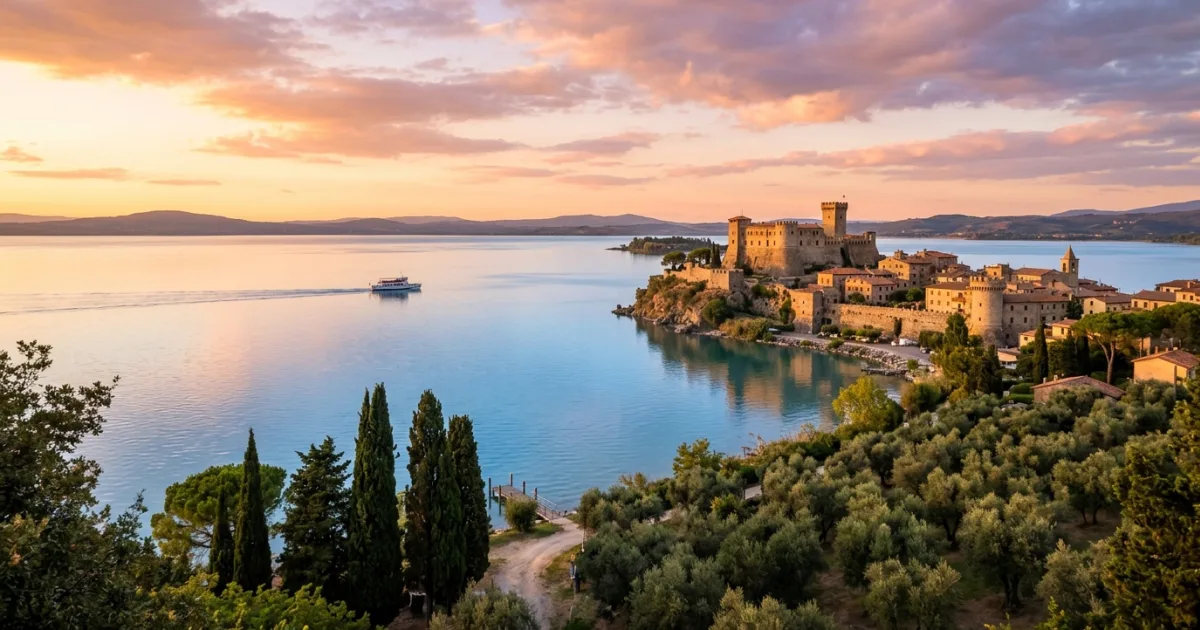
Lake Trasimeno covers an area of approximately 128 square kilometers in the northwestern corner of Umbria, bordering Tuscany. Because it has no major natural river outlets and relies primarily on rainfall and small seasonal streams, the lake is shallow, averaging a depth of only four to five meters. This unique hydrology creates lush fringe wetlands that serve as vital stopovers for migratory birds, making the Parco del Trasimeno an important natural haven in central Italy.
The human history along Trasimeno's perimeter spans millennia, from ancient Etruscan settlements to the bloody clash of 217 BC where Carthaginian general Hannibal Barca dealt the Roman army a devastating defeat along the northern shores. Today, the pace is decidedly unhurried; lakeside promenades feature cafes overlooking pastel sunsets, olive groves drape over limestone hillsides, and passenger ferries transport day-trippers to car-free islands covered in historic monasteries, olive trees, and quiet stone pathways.
Reasons to Visit
- Explore ancient pentagonal fortifications at the Rocca del Leone fortress in Castiglione del Lago, offering panoramic views over the lake.
- Ride the public ferry to Isola Maggiore to discover traditional Irish lace-making workshops and 14th-century Franciscan chapels.
- Cycle along the dedicated perimeter bike path through flat countryside, vineyard rows, and quiet wetlands.
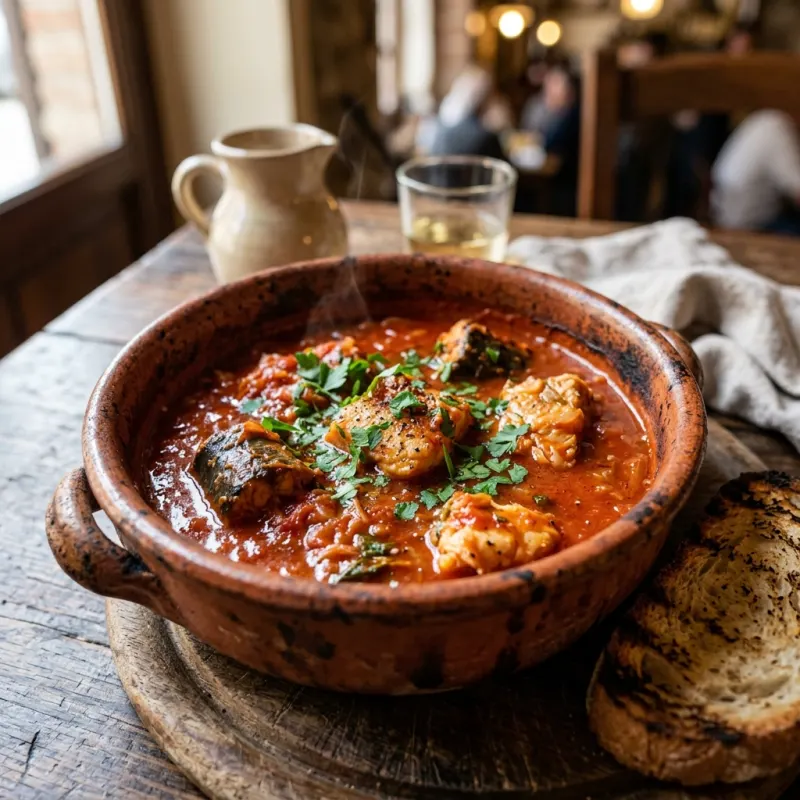
- Taste rare culinary specialties like Fagiolina del Trasimeno and local lake-to-table cuisine at lakeside cooperatives.
- Relive classical military history on the well-marked self-guided trail of Hannibal's Battle of Lake Trasimeno in Tuoro.
Things to Avoid
- Avoid swimming in unauthorized reed zones outside marked public beaches where aquatic weeds and murky bottoms present minor hazards.
- Do not forget insect protection during twilight hours, as mosquitoes and midges gather heavily near the shorelines in midsummer.
- Avoid relying on credit cards for tiny purchases under €5 at village flea markets and rural farm stands.
- Do not rush through the region solely on a brief half-day stop; the lake rewards slow exploration over two to three days.
Local Transportation Tips
Lake Trasimeno's transportation system centers on regional trains, local buses, and waterborne transit. Ferries operated by Busitalia provide reliable, scenic links between mainland docks (Passignano, Tuoro, Castiglione del Lago, San Feliciano) and the islands of Isola Maggiore and Isola Polvese. On land, Trenitalia regional trains halt at Passignano sul Trasimeno and Castiglione del Lago, while renting an e-bike or hybrid touring bike offers full freedom along the signposted Ciclovia del Trasimeno bike trail.
Travel Etiquette
- Greet shopkeepers and restaurant staff with a polite 'Buongiorno' or 'Buonasera' upon entering an establishment.
- Dress modestly when stepping into churches, ensuring shoulders and knees are covered, particularly at the Sanctuary of Santa Maria delle Grazie on Isola Maggiore.
- Avoid requesting non-local fish species; locals take immense pride in their sustainably caught freshwater carp, perch, and tench.
- Do not pick crops or flowers from working olive groves and vineyards while walking through rural footpaths.
Recommended Age Group
Lake Trasimeno offers gentle recreation suitable for a wide demographic, with distinct advantages for different age brackets.
- Babies (0-2 years): Recommended. Waterfront town promenades are flat, smooth, and stroller-friendly, with calm lakeside breezes offering a gentle environment for infants.
- Kids (3-12 years): Recommended. Safe shallow beaches, boat rides across to the islands, and sprawling grassy parks like Isola Polvese make it an engaging playground for children.
- Teens (13-19 years): Neutral. Teenagers interested in cycling, paddleboarding, and sailing will enjoy summer activities, though nightlife is low-key compared to seaside resorts.
- Adults (20-64 years): Recommended. Excellent wine tasting routes, medieval castles, road cycling, and scenic waterfront dining provide quintessential relaxation.
- Seniors (65+ years): Recommended. Level terrain along the lakeside marinas, step-free passenger ferries, and tranquil towns ensure relaxing, low-stress travel logistics.
Accessibility Level: Medium
- Waterfront promenades in Castiglione del Lago and Passignano sul Trasimeno offer wide, paved surfaces with zero-step access.
- Mainland ferry docks provide ramped boarding bridges, though boarding assistance may be required during fluctuating seasonal water levels.
- Historic hilltown upper quarters (like the castle in Castiglione del Lago) feature steep gradients and rough cobblestones that may challenge manual wheelchair users.
- Regional Trenitalia trains stopping at Passignano and Castiglione offer dedicated accessible boarding spaces when booked in advance via Sala Blu.
Did You Know?
Isola Maggiore on Lake Trasimeno is famous for its intricate lace-making technique, known as 'Punto di San Feliciano.' In 1904, the Marchioness Elena Guglielmi established a lace-making school on the island, teaching local fishermen's daughters the delicate art of Irish needlepoint lace, a craft still practiced by elder island residents today.
Cool Statistics
- Lake Trasimeno has a surface area of 128 square kilometers, ranking as the 4th largest lake in Italy.
- The maximum depth of the lake rarely exceeds 6 meters, making it one of Europe's largest shallow tectonic lakes.
- Over 70 kilometers of cycling paths and country lanes circle the perimeter of the lake basin.
- The lake supports three distinct islands: Isola Maggiore, Isola Polvese, and the privately owned Isola Minore.






Buy a compatible power adapter for your trip