Disclosure: This site contains affiliate links. We may earn a commission if you make a purchase, at no extra cost to you.
Perugia

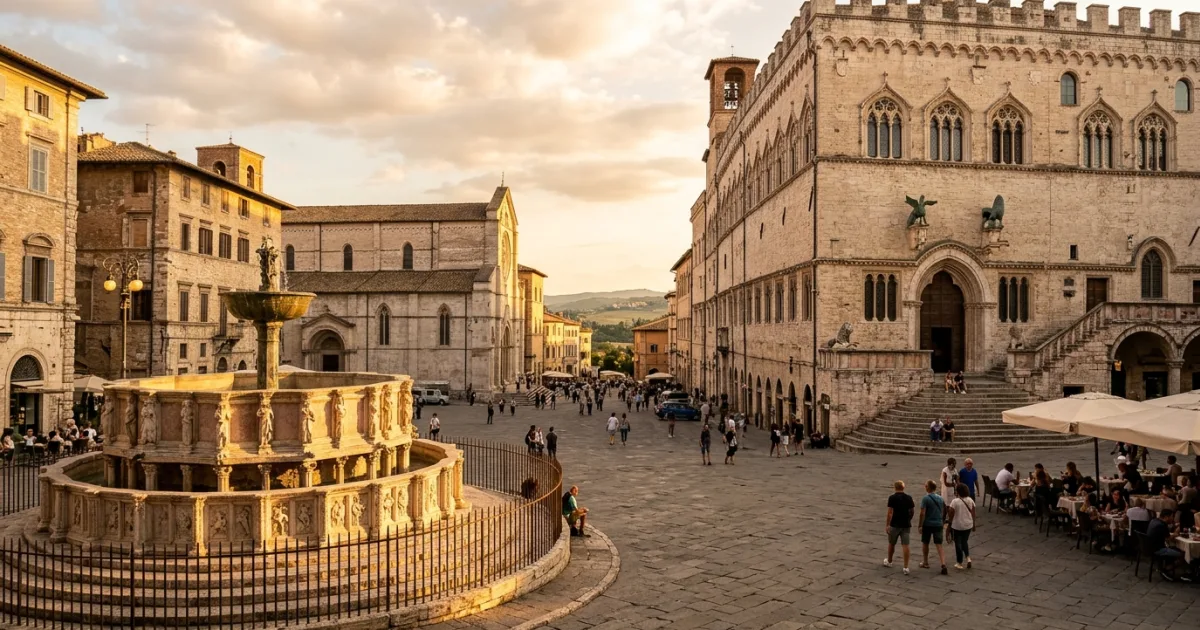
Piazza IV Novembre in Perugia featuring the historic Fontana Maggiore and Palazzo dei Priori

Basic Info

COUNTRY & Region

Italy,
Europe

ACCESSIBILITY LEVEL​

  • High: Widely accessible with good facilities for disabilities.
  • Medium: Some accessible options, but limitations exist.
  • Low: Limited accessibility; many barriers for disabilities.
Medium

LOCAL CURRENCY​

Euro (EUR)

Price Level

Low – budget‑friendly basics

Medium – moderate mid‑range costs

High – pricey lodging, dining & transport

Medium

SAFETY LEVEL

5 shields = Excellent – very low crime or conflict.

4 shields = Safe – low risk, routine care.

3 shields = Relatively safe – use normal street smarts.

2 shields = Use caution – higher crime or periodic unrest.

1 shields = Avoid – active conflict or extreme danger.

Scores are derived from multi-year peace, homicide and security indices blended into a single 1-to-5 scale.

Recommended Duration

1-7 days, Full day

Perugia Overview & Key Highlights

Perugia serves as the historic, fortified capital of Umbria, commanding panoramic vistas over the Tiber Valley from its elevated hilltop perch. The urban core contains deeply layered architecture, where medieval Gothic palazzi rest directly atop massive Etruscan arches and Renaissance fortress foundations. Modern escalators cut through subterranean tunnels beneath the fortress of Rocca Paolina, delivering travelers into a walkable acropolis anchored by the Piazza IV Novembre and the striking Fontana Maggiore. The city balances centuries of academic prestige with culinary indulgence, housing one of Italy's oldest universities alongside the globally celebrated Perugina confectionery heritage. Life here centers around Corso Vannucci, an elegant promenade packed with open-air cafes, wine bars serving Sagrantino di Montefalco, and trattorias specializing in black truffles and wild boar. With world-class events like Umbria Jazz and Eurochocolate, Perugia provides an authentic alternative to more crowded Tuscan hubs.

Perugia Travel Guide: Logistics & In-Depth Tips

Perugia stands proudly as the cultural and administrative heart of Umbria, positioned strategically between Rome and Florence. Originally founded by the Umbrians and fortified by the Etruscans as one of their twelve confederate city-states, the city preserves monumental antiquity, including the 3rd-century BC Arco Etrusco. The central acropolis showcases layered history, where ancient defensive walls merge seamlessly into soaring medieval palazzos and Renaissance civic buildings.

Today, Perugia balances its profound historical gravity with a vibrant student energy, fueled by the historic Università degli Studi di Perugia and the prestigious University for Foreigners. The pedestrian artery of Corso Vannucci remains the beating civic heart, where locals engage in the evening passeggiata between Gothic landmarks, artisanal chocolatiers, and panoramic overlooks opening across the sunlit Apennine foothills.

Reasons to Visit

  • Rocca Paolina Subterranean City: Walk through preserved medieval streets enclosed entirely beneath the vaulted stone ceilings of a 16th-century papal fortress.
  • Arco Etrusco: Marvel at one of the finest surviving Etruscan city gates in Italy, constructed from massive travertine blocks without mortar.
  • National Gallery of Umbria: Explore masterworks of central Italian Renaissance art, including paintings by Perugino and Pinturicchio inside the Palazzo dei Priori.
  • Fontana Maggiore: Admire the intricate 13th-century marble reliefs carved by Nicola and Giovanni Pisano in the central piazza.
  • Chocolate Tradition: Visit historic workshops and confectionery boutiques honoring the home city of the iconic Baci Perugina.

Things to Avoid

  • Driving into the Historic Center: Avoid bringing rental vehicles into the ZTL (Limited Traffic Zone) as strict automated cameras issue hefty fines; leave vehicles in lower peripheral lots.
  • Wearing Smooth-Soled Shoes: Do not wear leather-soled shoes or heels, as centuries of foot traffic have polished the limestone ramps and alleys to a slick surface.
  • Ignoring Escalator Operating Hours: Check civic elevator and scale mobili closing times at night to avoid grueling uphill climbs back to your hotel.
  • Ordering Cappuccino After Lunch: Stick to traditional espresso in local coffee houses following midday meals to avoid tourist faux pas.

Local Transportation Tips

Perugia combines ancient topography with innovative transit engineering. The signature Minimetrò automated cable-driven rail system shuttles commuters effortlessly from peripheral valley parking lots up to the Pincetto terminal in the old city. Inside the acropolis, an extensive network of modern scale mobili (civic escalators) and public elevators connects lower residential quarters and parking garages directly through historic fortifications into the central pedestrian zone. Local bus routes operate from Piazza Partigiani to regional destinations across Umbria, including Assisi and Gubbio.

Travel Etiquette

  • Church Dress Codes: Ensure shoulders and knees are covered when entering the Cathedral of San Lorenzo and the Basilica of San Domenico.
  • Passeggiata Etiquette: Respect the slow, social rhythm of Corso Vannucci during early evening strolls; keep phone volumes down and avoid rushing through crowded pedestrian plazas.
  • Greeting Merchants: Always offer a polite 'Buongiorno' or 'Buonasera' upon entering small boutiques, pasticcerie, and neighborhood alimentari.

Recommended Age Group

Perugia offers rewarding cultural and educational experiences, though steep urban terrain dictates specific travel considerations.

  • Babies (0-2 years): Neutral. Ancient cobblestones, numerous public stairways, and steep ramps make navigating heavy strollers challenging; front-facing baby carriers are strongly advised.
  • Kids (3-12 years): Recommended. Children enjoy the futuristic, automated Minimetrò ride, subterranean exploration under Rocca Paolina, and interactive chocolate tastings.
  • Teens (13-19 years): Recommended. Vibrant student culture, evening cafe plazas, ancient history tours, and seasonal festivals like Umbria Jazz offer high engagement for teenagers.
  • Adults (20-64 years): Recommended. Outstanding access to world-class art collections, historic wine cellars, truffle gastronomy, and medieval walking trails.
  • Seniors (65+ years): Recommended. While side alleys are steep, public elevators, escalators, and compact flat walking zones along Corso Vannucci provide comfortable access to primary cultural landmarks.

Accessibility Level: Medium

  • Terrain Challenges: The historic hill town features significant elevation changes, stone ramps, and traditional cobbled pavements that can impede manual wheelchair users.
  • Elevator & Escalator Access: Modern public escalators cut through Rocca Paolina, and civic elevators connect the Pincetto Minimetrò terminal to the acropolis ridge.
  • Museum Accommodations: The Galleria Nazionale dell'Umbria features elevator access, barrier-free gallery layouts, and adapted restroom facilities.
  • Public Transit: The Minimetrò is level-entry and fully wheelchair accessible across all platform boarding zones.

Did You Know?

The imposing Rocca Paolina fortress was so deeply despised by Perugian citizens as a symbol of oppressive papal conquest that they systematically dismantled its upper towers and parapets immediately following the unification of Italy in 1860, leaving the fascinating subterranean quarters intact.

Cool Statistics

  • 493 meters: Altitude of Perugia's historic hilltop acropolis above sea level.
  • 1308: Year the historic University of Perugia was officially founded by papal bull.
  • 3.2 kilometers: Total track length of the elevated Minimetrò system traversing the city.
  • 24: Intricately carved polygon basins making up the lower tier of the 13th-century Fontana Maggiore.

Address:

Perugia, Italy

Find Nearby Accommodations

Electricity

220-240V, 
50Hz

Plug Type

Type C (Round pin), Type F (Two round pins with earth clips), Type L (Three round pins in line)
Plug types
Click To View Plug Types
Perugia is part of our
Solo Female Friendly collection

Activities To Do In Perugia

Best Time To Visit Perugia

Perugia enjoys a Mediterranean climate tempered by its 493-meter elevation, delivering distinct seasonal dynamics.

  • April to June: Pleasant daytime temperatures (18°C–24°C) with vibrant spring blossoms across the valley, ideal for walking tours and outdoor dining.
  • July: Peak cultural energy during the world-renowned Umbria Jazz festival; advance lodging bookings are mandatory.
  • October: Autumn harvest season bringing truffles, new olive oil, and the sweet madness of Eurochocolate celebrations.
  • November to February: Quieter, atmospheric winter months with crisp mountain air and authentic local life, though some rural excursions may operate on reduced hours.

Average Temperatures Per Month

Average monthly temperaturesMonthly source values, with Celsius and Fahrenheit equivalents in the following data table.-5°23°4°39°13°55°21°70°30°86°JanJan: 4°C / 39°FFebFeb: 6°C / 43°FMarMar: 8°C / 46°FAprApr: 10°C / 50°FMayMay: 16°C / 61°FJunJun: 21°C / 70°FJulJul: 25°C / 77°FAugAug: 24°C / 75°FSepSep: 19°C / 66°FOctOct: 14°C / 57°FNovNov: 9°C / 48°FDecDec: 6°C / 43°F
View temperature data
Average monthly temperatures
Month°C°F
Jan439
Feb643
Mar846
Apr1050
May1661
Jun2170
Jul2577
Aug2475
Sep1966
Oct1457
Nov948
Dec643

Remember to check the weather forecast a few days before the trip and before heading to the airport.

Safety Level

5 shields = Excellent – very low crime or conflict.

4 shields = Safe – low risk, routine care.

3 shields = Relatively safe – use normal street smarts.

2 shields = Use caution – higher crime or periodic unrest.

1 shields = Avoid – active conflict or extreme danger.

Scores are derived from multi-year peace, homicide and security indices blended into a single 1-to-5 scale.

Perugia is exceptionally safe with low violent crime rates. Exercise standard urban awareness around the main rail station (Fontivegge) late at night, and keep hands on bags along crowded pedestrian stretches of Corso Vannucci during major summer festivals. Watch your footing on wet limestone cobblestones after autumn rains.

The rating is based on multi-year peace, crime, and security indices. Before you go, always verify current conditions through official government travel advisories.

Emergency Numbers

Police: 112
Ambulance: 118

No internet needed • Includes local translations • Free for TravelingWiz readers

Spoken Languages

Italian (official), English (widely understood in hospitality and student centers)
Travel Booking Partner - TravelingWiz

Learn The Language

  • Buongiorno: Good morning
  • Buonasera: Good evening
  • Grazie mille: Thank you very much
  • Per favore: Please
  • Il conto, per favore: The bill, please
  • Dov’è il Minimetrò?: Where is the Minimetrò?
  • Quanto costa?: How much does it cost?
  • Parla inglese?: Do you speak English?

Trip Cost & Budgeting for Perugia, 2026

Everything you need to know about money while traveling
Is Perugia expensive for tourists in 2026? Perugia remains one of Italy's most affordable historic cities, offering great value compared to Florence or Rome. Travelers with Human Verified prices can expect to pay around 1.50 EUR for a morning cappuccino, 4.50 EUR for a pint of beer, and 20 EUR for a hearty mid-range meal. Accommodation and transport are also reasonably priced. Use the data table below to calculate your specific daily budget based on your travel style.

LOCAL CURRENCY​:

Euro (EUR)

Price Level:

Low – budget‑friendly basics

Medium – moderate mid‑range costs

High – pricey lodging, dining & transport

Medium

Cards Vs. Cash

Credit cards are widely accepted across Perugia, though keeping small cash for espresso bars, gelato, and buses is helpful.

How Much Cash to Carry (on you)

Per person, per day – pocket cash for small purchases.

Local: 10
Euro (EUR)
≈ 11 USD

Average Daily Costs (per person)

Full daily spend estimation (accommodation, food, transportation, attractions).

Travel Style
Euro (EUR)
≈ USD ($)
Budget
50
55
Mid-range
95
104
Comfort
210
230
Note

The Prices, Daily costs, and calculator results are estimates for planning purposes only. Actual costs may vary based on season, booking timing, personal spending habits, and currency fluctuations. TravelingWiz cannot be held responsible for discrepancies between these estimates and your final trip expenses.

Best Value Tips

  • • Take the Minimetrò or public escalators to reach the hilltop historic center cheaply instead of taking expensive taxis.
  • • Enjoy evening aperitivo around Piazza IV Novembre where drinks come with substantial free snacks.
  • • Order local house wine (vino della casa) at trattorias for high quality at budget-friendly prices.
  • • Explore historic underground sights like the Rocca Paolina fortress, which offers completely free admission.

Tours & Tickets

Explore tours, attractions, and ticket options to plan your visit.
Plan ahead

Travel Offers & Coupons

Browse travel offers and coupons from our affiliate partners.
Affiliate partner offers

What To Pack

  • Footwear: Sturdy, non-slip walking shoes or ankle boots to handle steep, centuries-old cobblestones and stone stairways.
  • Layering: Light windbreaker or thermal knitwear for cool evenings and underground explorations within the chilly subterranean chambers of Rocca Paolina.
  • Power: Universal European travel adapter fitting Italian Type C, F, or L wall sockets.
  • Day Gear: Compact cross-body daypack for urban walking and reusable water bottle for historic public fountains.
Only the good stuff!
Browse recommended travel gear
Check out our free packing list tool

Recommended Itineraries for Traveling to Perugia

Take your itinerary with you

Choose a ready-made itinerary, plan your own trip, and keep TravelingWiz by your side while you travel.

Get the TravelingWiz app

Food & Drink Highlights

Local Food Overview

Perugian gastronomy is rooted in rustic Umbrian culinary traditions, celebrating forest foraging, hearty legumes, and swine husbandry. Black Norcia truffles (tartufo nero) flavor handmade strangozzi pasta, while rich wild boar ragù and roasted porchetta define local osteria menus. Perugia is also Italy's chocolate capital, where dark cacao treats and roasted hazelnuts have shaped confectionery culture for over a century.

Must Try Dish

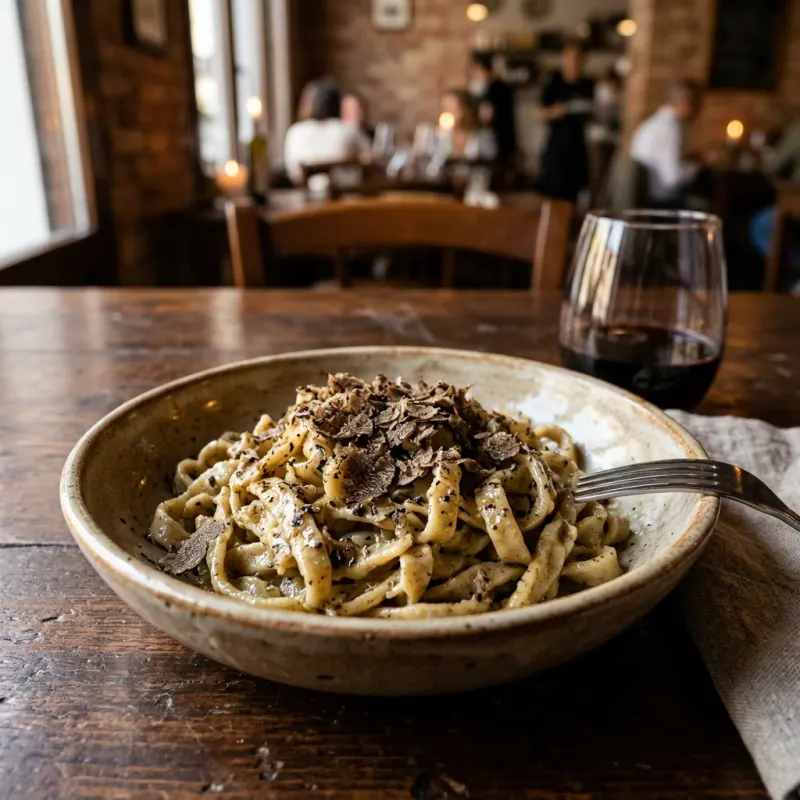
Strangozzi al Tartufo Nero - Thick, square-cut handmade wheat pasta tossed gently in fragrant local olive oil, minced garlic, and generous shavings of aromatic Umbrian black summer truffle. This comforting dish encapsulates the earthy, unpretentious essence of regional central Italian cooking.
Bowl of fresh strangozzi pasta topped with black truffle shavings

Maya’s Final Checklist for Perugia

Logistics shouldn’t be the focus of your trip—the experience should. I’ve hand-vetted these essential partners to ensure your arrival, stay, and exploration are as smooth as an Athenian breeze.

Maya, the human travel expert at TravelingWiz, offering curated, non-AI expertise

Where to Stay

Compare accommodation options and choose a stay that suits your plans and budget.

Air Travel

Compare flight options and find a route that fits your plans.

Local Guides

Connect with local guides for personalized help planning and exploring.

Travel Protection

The “Engineer’s” rule: always have a backup. Secure your trip with a plan that covers every “what if” and unexpected change.

Car Rentals

Compare rental options and choose a car that suits your trip.

Visa Information

Don’t let paperwork slow you down. Get expert assistance with your application to ensure all your entry documents are in order.

FAQs

Take the Minimetrò automated light rail directly from the Fontivegge railway station to the Pincetto terminal, which connects to the hilltop center via public escalators and elevators in under 15 minutes.
The main historic center along Corso Vannucci is flat and pedestrianized, but the surrounding side alleys feature steep hills, stone stairs, and uneven cobblestones that require proper walking shoes.
Rocca Paolina is a 16th-century fortress built by Pope Paul III over destroyed noble houses; today, visitors can walk freely through its subterranean medieval streets and chambers using integrated civic escalators.

Your Insights Matter

TravelingWiz grows through the stories of our community. If you’ve recently explored ,Perugia share your tips and stories to help us perfect our guides for the next traveler.

Where should we send your offline card?

We hate spam just as much as you do

newsletter_consent *