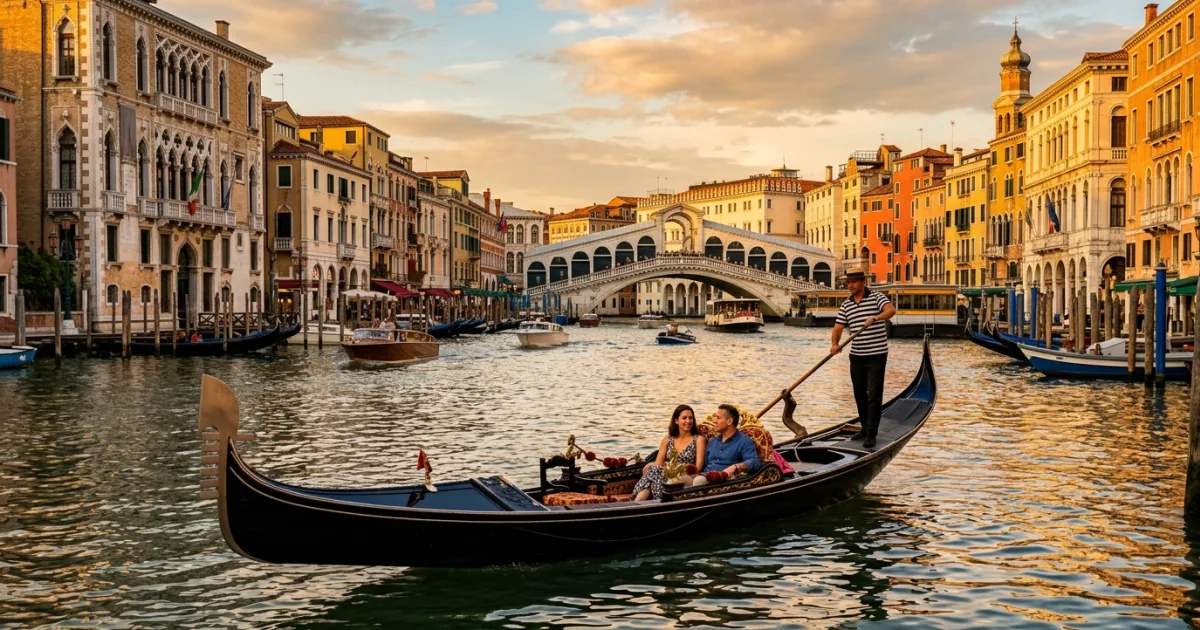
The Grand Canal, or Canal Grande, is the main aquatic thoroughfare of central Venice, winding in a large reverse-S shape through the city. A gondola ride here is not just a tourist activity; it is a passage through the history of the Venetian Republic. The gondola itself is a marvel of traditional craftsmanship, built asymmetrically to counterbalance the weight of the gondolier who rows from the stern using a single, long oar. Each boat is composed of 280 distinct pieces of wood from eight different types of trees, painted with seven coats of black lacquer.
Gliding along the Grand Canal, passengers are treated to unobstructed views of magnificent palazzos that date from the 13th to the 18th centuries. These buildings, originally constructed by wealthy merchant families, feature ornate facades that were designed to be admired from the water. While the Grand Canal is bustling with vaporettos (water buses) and water taxis, the slow, rhythmic pace of a gondola offers a uniquely serene vantage point, especially when the gondolier navigates away from the main canal into the quieter, more atmospheric side canals.
Reasons to Visit
- Experience a centuries-old Venetian tradition in an authentic, handcrafted wooden boat.
- Gain a unique, water-level perspective of the Grand Canal's stunning Renaissance and Gothic architecture.
- Enjoy a highly romantic and intimate atmosphere, especially during sunset or evening rides.
- Access narrow, shallow side canals that larger motorized boats cannot enter.
- Capture iconic photographs of Venice's bridges and palazzos without the crowds of the pedestrian walkways.
Things to Avoid
- Avoid paying more than the official city-regulated rates (€90 daytime / €110 evening) unless you have agreed to an extended tour.
- Do not stand up or move around abruptly while the gondola is in motion, as the boats are sensitive to weight shifts.
- Avoid taking a gondola during heavy rain or high winds, as the water can become choppy and less enjoyable.
- Don't expect the gondolier to act as a comprehensive tour guide; while some share history, their primary job is navigation.
Local Transportation Tips
To reach a gondola station (stazio) along the Grand Canal, you can walk through the city's pedestrian streets or take a vaporetto (public water bus) to major stops like Rialto, San Marco, or Ferrovia. Gondola stations are clearly marked and scattered throughout the city. If you are looking for a cheaper alternative to cross the Grand Canal where there are no bridges, look for a 'traghetto'—a larger, unadorned gondola rowed by two gondoliers that ferries passengers across for just €2.
Travel Etiquette
- Always ask for the price and confirm the duration of the ride before stepping into the boat.
- Wait for the gondolier's instructions and assistance before boarding or disembarking to ensure the boat remains stable.
- Respect the gondolier's profession; do not touch their oars or equipment without permission.
- Keep noise levels reasonable, especially when gliding through quiet residential side canals.
Recommended Age Group
A gondola ride is a memorable experience for travelers of almost all ages, though mobility is a factor.
- Babies (0-2 years): Neutral. While allowed, parents must hold infants securely at all times, and getting in/out with a baby requires extra caution. Strollers cannot be taken on board.
- Kids (3-12 years): Recommended. Children usually find the boat ride thrilling and magical, though they must remain seated and calm.
- Teens (13-19 years): Recommended. A great opportunity for unique photography and experiencing the city's history firsthand.
- Adults (20-64 years): Recommended. Perfect for couples seeking romance or friends wanting a classic Venetian experience.
- Seniors (65+ years): Recommended. Gondoliers are experienced in assisting passengers into the boat, but seniors should be aware that stepping down into the low boat requires some balance and mobility.
Accessibility Level: Medium
- Standard gondolas are not wheelchair accessible, as passengers must step down into the narrow hull.
- However, Venice has introduced a specific wheelchair-accessible gondola service called 'Gondolas4All' located at Piazzale Roma, which uses a special lift to safely board wheelchair users.
- Travelers with limited mobility should inform the gondolier beforehand so they can provide extra assistance during boarding and disembarking.
Did You Know?
Did you know that all Venetian gondolas are painted black due to a 16th-century sumptuary law? The law was enacted by the Venetian Senate to curb the extravagant and competitive decoration of boats by wealthy nobles, mandating a uniform black color that remains the standard today.
Cool Statistics
- There are exactly 433 licensed gondoliers operating in Venice today.
- A traditional gondola is 10.87 meters long and 1.42 meters wide.
- The distinctive metal prow (ferro) at the front of the gondola has six prongs representing the six sestieri (districts) of Venice.
- It takes about 500 hours of highly skilled labor to build a single gondola.






Buy a compatible power adapter for your trip