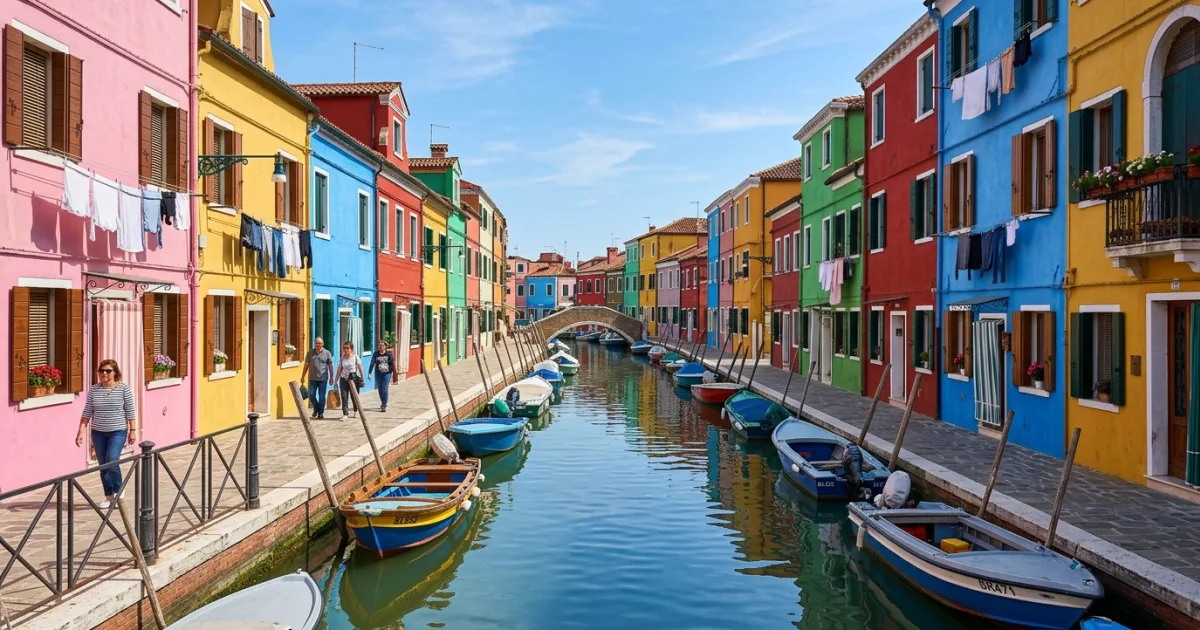
Murano and Burano offer a fascinating duality of Venetian lagoon life. Murano, located closer to Venice, is a cluster of seven islands linked by bridges, historically serving as the glassmaking capital of the world since the 13th century. Burano, situated further out in the lagoon, is instantly recognizable by its kaleidoscope of brightly painted houses, a tradition said to have helped returning fishermen find their homes in the thick lagoon fog. Both islands provide a quieter, more specialized cultural experience compared to the bustling center of Venice.
Reasons to Visit
- Witness master glassblowers shaping intricate artworks in historic Murano furnaces.
- Photograph the world-famous, brightly colored fishermen's houses lining the canals of Burano.
- Purchase authentic, handcrafted Venetian glass and delicate needle lace directly from the artisans.
- Escape the dense crowds of central Venice for a more relaxed, village-like atmosphere.
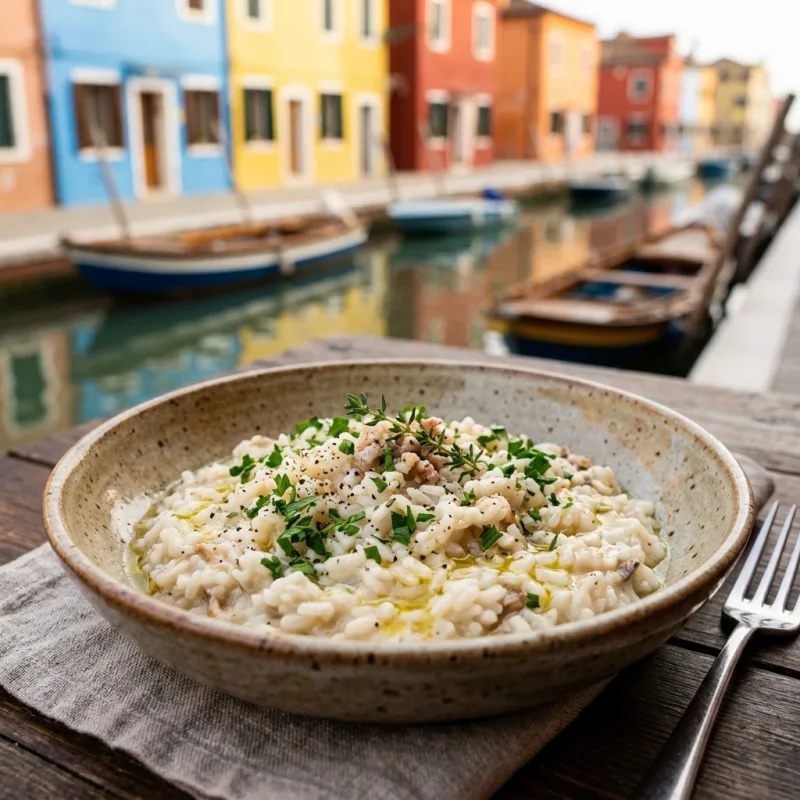
- Taste unique lagoon seafood specialties, such as Risotto di gò, found primarily on Burano.
Things to Avoid
- Avoid buying cheap, imported glass souvenirs; always look for the 'Vetro Artistico Murano' trademark to ensure authenticity.
- Do not touch the delicate lace or glass displays in shops without asking permission first.
- Avoid traveling during the peak rush hours on the vaporetto, as lines can be exceptionally long.
- Do not lean over or sit on the edges of the canals, as the drop-offs are unprotected.
- Avoid eating at establishments that aggressively tout for business outside; seek out quieter, locally-run trattorias.
Local Transportation Tips
The primary mode of transportation to and between the islands is the ACTV vaporetto (public water bus). Line 12 is the most popular route, departing from Fondamente Nove in Venice, stopping at Murano, and continuing to Burano. The journey to Murano takes about 10 minutes, while Burano is an additional 30-40 minutes away. Once on the islands, walking is the only way to get around, as there are no cars or bicycles permitted. Purchasing a 24-hour or 48-hour travel card is highly recommended for cost-effective island hopping.
Travel Etiquette
- Respect the privacy of Burano residents; do not peer into windows or block doorways while taking photographs.
- Dress modestly when entering any churches on the islands, ensuring shoulders and knees are covered.
- Always greet shopkeepers with a polite 'Buongiorno' or 'Buonasera' upon entering their stores.
- Ask for permission before taking close-up photographs of artisans at work or specific merchandise.
- Keep to the right when walking through narrow alleys and over bridges to allow locals to pass.
Recommended Age Group
Murano and Burano offer a visually stimulating and culturally rich experience that appeals to a wide range of ages, though mobility considerations apply.
- Babies (0-2 years): Neutral. Strollers can be challenging over the many stepped bridges, though the vaporetto ride is enjoyable.
- Kids (3-12 years): Recommended. The bright colors of Burano and the fascinating glass-blowing demonstrations in Murano capture children's imaginations.
- Teens (13-19 years): Recommended. The highly photogenic nature of Burano appeals to teens interested in photography and social media.
- Adults (20-64 years): Recommended. Adults will appreciate the rich history, artisanal shopping, and relaxed lagoon dining.
- Seniors (65+ years): Recommended. The islands offer a slower pace than central Venice, though mobility-impaired travelers should be mindful of bridge stairs.
Accessibility Level: Medium
- The ACTV vaporettos are wheelchair accessible, allowing easy boarding for travelers with mobility aids.
- Many of the main pathways along the canals in both Murano and Burano are flat and paved.
- However, crossing between different parts of the islands requires navigating stepped bridges, which lack ramps.
- Accessible restrooms can be found near the main vaporetto stops and within larger museums like the Museo del Vetro.
- Travelers with limited mobility may prefer to explore the areas immediately surrounding the vaporetto stops, which still offer excellent views and shopping.
Did You Know?
In 1291, the Venetian Republic ordered all glassmakers to move their foundries to Murano to protect the predominantly wooden city of Venice from the risk of fire. These artisans were highly privileged but were forbidden from leaving the Republic under penalty of death, to prevent the secrets of Venetian glassmaking from spreading to other countries.
Cool Statistics
- Murano has been the center of the Venetian glass industry for over 700 years.
- Burano's leaning bell tower, the Campanile of San Martino, leans approximately 1.83 meters from its axis.
- The vaporetto ride from Venice to Burano covers a distance of about 7 kilometers across the lagoon.
- At its peak in the 16th century, Burano lace was highly sought after by European royalty, including King Louis XIV of France.
- Murano is actually an archipelago of 7 individual islands linked by bridges, while Burano consists of 4 islands.






Buy a compatible power adapter for your trip