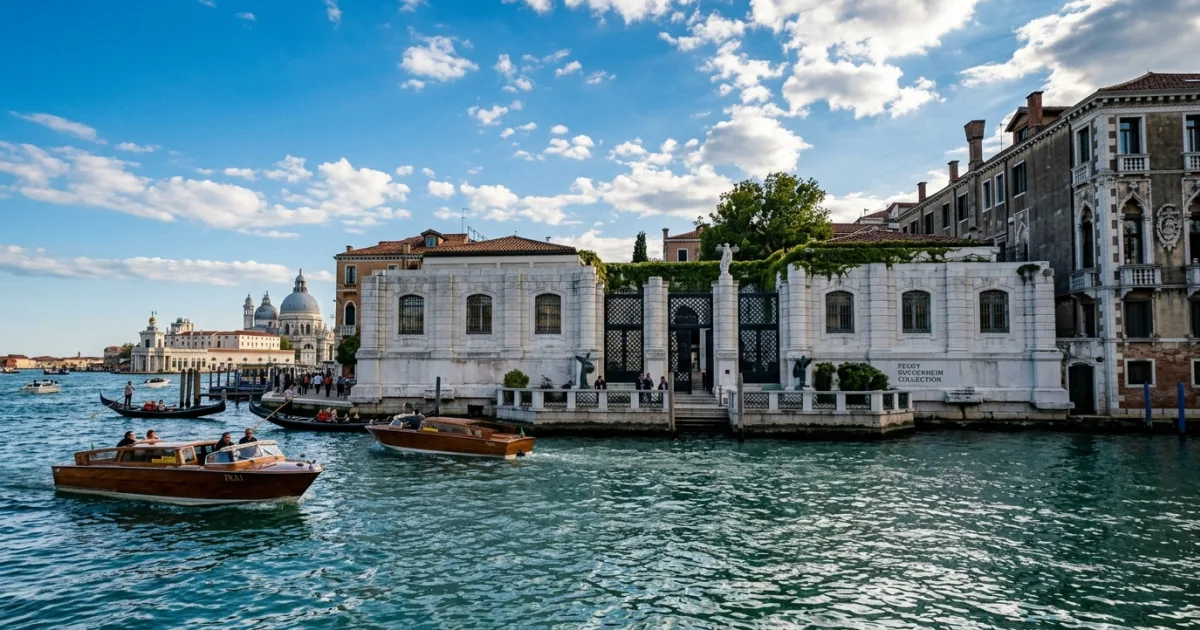
The Peggy Guggenheim Collection is not just a museum; it is a deeply personal journey into the life and tastes of one of the 20th century's most influential art patrons. Located in the Dorsoduro district of Venice, the Palazzo Venier dei Leoni offers a stark, modern contrast to the surrounding Gothic and Renaissance architecture. Peggy Guggenheim purchased the unfinished palazzo in 1949 and lived there until her death in 1979, transforming it into a sanctuary for avant-garde art.
Today, the museum preserves the intimate atmosphere of a private home. Visitors can wander through rooms that once hosted legendary artists and intellectuals, viewing masterpieces by Magritte, de Chirico, Braque, and Duchamp. The Nasher Sculpture Garden, located at the rear of the palazzo, provides a tranquil oasis featuring works by Moore, Giacometti, and Kapoor. The museum's terrace, extending directly over the Grand Canal, offers one of the most iconic and photographed views in all of Venice, making it a must-visit destination for art lovers and romantics alike.
Reasons to Visit
- View an unparalleled collection of European and American modern art in an intimate, historic setting.
- Experience the unique architecture of the Palazzo Venier dei Leoni, an unfinished 18th-century palace on the Grand Canal.
- Enjoy breathtaking, panoramic views of the Grand Canal from the museum's private waterfront terrace.
- Relax in the serene Nasher Sculpture Garden, a peaceful retreat from the bustling streets of Venice.
- Learn about the fascinating life and legacy of Peggy Guggenheim, a pioneering female art collector and patron.
Things to Avoid
- Avoid visiting during the peak midday hours in summer, as the galleries can become crowded and warm.
- Do not bring large backpacks or bulky luggage, as they are strictly prohibited in the galleries and the cloakroom space is limited.
- Avoid touching the artworks or sculptures, as the museum enforces strict conservation rules to protect the collection.
- Do not rely solely on walking; ensure you understand the vaporetto routes, as navigating Venice's labyrinthine streets can be confusing.
- Avoid eating at tourist-trap restaurants immediately surrounding major attractions; walk a few blocks away for better quality and prices.
Local Transportation Tips
Venice is a pedestrian-only city, meaning there are no cars, buses, or bicycles. The primary mode of public transportation is the vaporetto (water bus) operated by ACTV. To reach the Peggy Guggenheim Collection, take vaporetto line 1 or 2 to the 'Accademia' stop, or line 1 to the 'Salute' stop. From either stop, it is a brief, scenic walk to the museum. For a more luxurious and private experience, water taxis are available but are significantly more expensive. Walking is also a fantastic way to explore the Dorsoduro district, which is known for its charming canals, artisan shops, and quieter atmosphere compared to the San Marco area.
Travel Etiquette
- Respect the quiet atmosphere of the museum galleries by speaking softly and silencing your mobile phone.
- When walking in Venice, keep to the right side of the narrow streets and bridges to allow locals and workers to pass easily.
- Do not sit on bridges, steps, or monument ledges to eat or rest, as this is prohibited by local Venetian laws and can result in fines.
- Dress appropriately when visiting nearby churches; shoulders and knees should be covered.
- Always ask for permission before taking close-up photographs of locals or artisans working in their shops.
Recommended Age Group
The Peggy Guggenheim Collection offers a unique cultural experience, but its appeal varies across different age groups due to the nature of the exhibits and the museum's layout.
- Babies (0-2 years): Neutral. Strollers are not permitted inside the galleries, requiring parents to carry infants, though the sculpture garden offers some outdoor space.
- Kids (3-12 years): Neutral. While the modern art is visually stimulating, the museum requires quiet observation and touching is strictly prohibited, which may challenge younger children.
- Teens (13-19 years): Recommended. The bold, modern artworks and the fascinating history of Peggy Guggenheim appeal to teenagers interested in art, history, and culture.
- Adults (20-64 years): Recommended. Art enthusiasts and casual visitors alike will deeply appreciate the world-class collection, stunning architecture, and romantic Grand Canal setting.
- Seniors (65+ years): Recommended. The museum is relatively compact and fully accessible via ramps and an elevator, making it a comfortable and highly rewarding cultural experience.
Accessibility Level: Medium
- The museum is fully accessible to visitors with reduced mobility and wheelchair users.
- A ramp provides access to the main entrance, and an elevator is available to reach the different levels of the galleries and the café.
- Accessible restrooms are located on the premises and are clearly signposted.
- The museum offers free admission for visitors with disabilities and one accompanying caregiver.
- Service animals are welcome inside the museum, provided they are properly harnessed and certified.
Did You Know?
Did you know that Peggy Guggenheim is buried on the grounds of the museum? Her ashes are interred in a quiet corner of the Nasher Sculpture Garden, right next to the graves of her beloved Lhasa Apso dogs. The palazzo itself, Palazzo Venier dei Leoni, is often called the 'unfinished palace' because construction was halted in the 18th century, leaving only the ground floor completed. Legend has it that the powerful Corner family, who lived opposite the canal, blocked its completion because they feared it would overshadow their own grand residence.
Cool Statistics
- The museum attracts over 400,000 visitors annually, making it one of the most visited modern art museums in Italy.
- Peggy Guggenheim's collection includes works representing over 100 different artists from the 20th century.
- The Palazzo Venier dei Leoni features a facade made of Istrian stone, spanning an impressive 70 meters along the Grand Canal.
- Peggy Guggenheim opened her home to the public for the first time in 1951, allowing visitors to view her collection during the summer months.
- The museum's permanent collection features 326 individual works of art, carefully curated by Guggenheim herself.






Buy a compatible power adapter for your trip