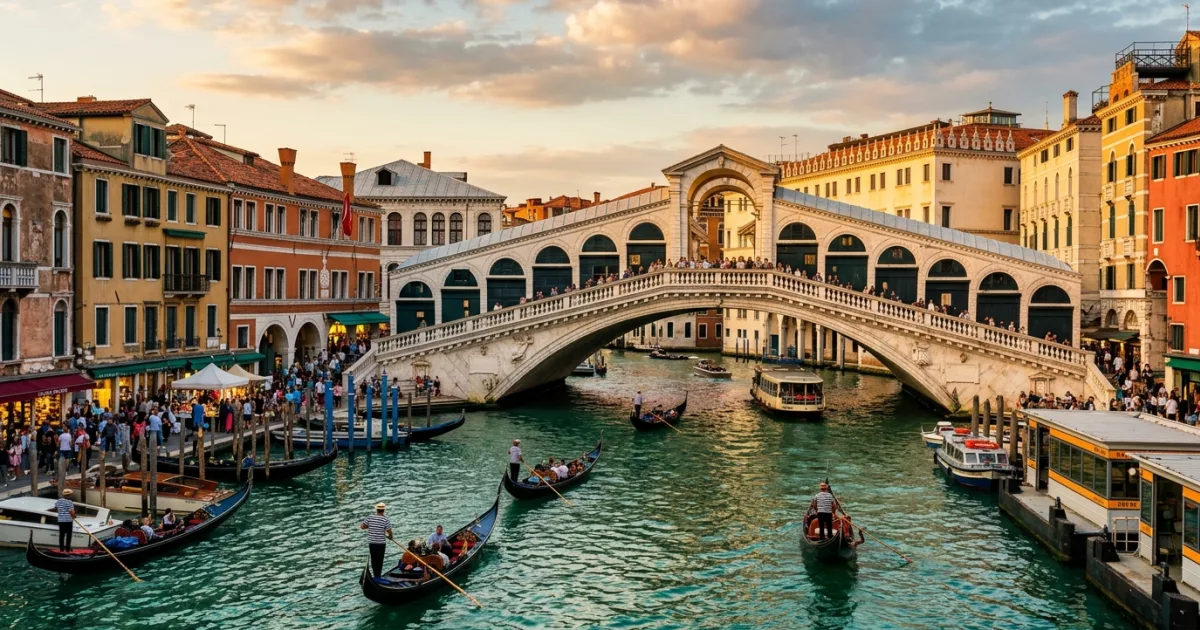
The Rialto Bridge is a marvel of Renaissance engineering. Designed by Antonio da Ponte and completed in 1591, it features a single stone arch spanning 28.8 meters across the Grand Canal. The bridge was built to replace a series of wooden bridges that had previously collapsed or burned down. Its unique design includes three parallel walkways: a wide central path lined with small boutiques, and two narrower outer paths offering spectacular views of the canal's boat traffic.
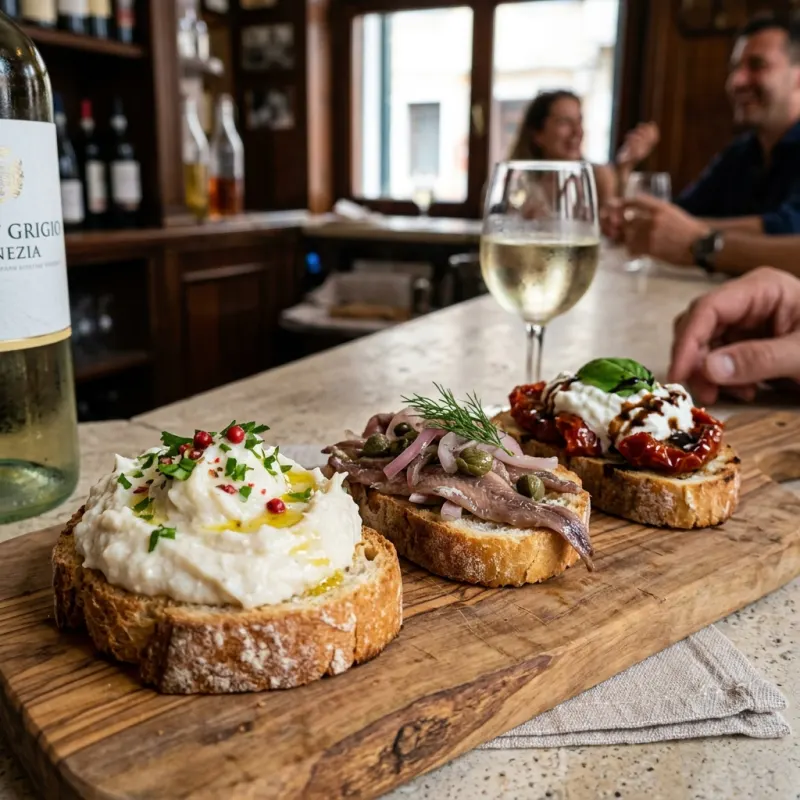
Just steps from the bridge, the Rialto Market has been the stomach of Venice since 1097. Divided into the Pescheria (fish market) and the Erberia (fruit and vegetable market), it is a vibrant, chaotic, and colorful space. Housed under neo-Gothic arcades built in the early 20th century, the fish market displays the daily catch from the Adriatic Sea, including cuttlefish, swordfish, and soft-shell crabs. Surrounding the market is a labyrinth of narrow alleys filled with traditional bacari, where locals gather to socialize over wine and cicchetti.
Reasons to Visit
- Experience the oldest and most famous bridge crossing the Grand Canal.
- Witness authentic Venetian daily life at the bustling morning fish and produce markets.
- Taste traditional Venetian street food and wine at historic local bacari.
- Capture stunning panoramic photographs of the Grand Canal from the top of the bridge.
- Shop for authentic Murano glass, jewelry, and local crafts in the bridge's built-in boutiques.
Things to Avoid
- Avoid eating at restaurants with aggressive touts directly on the main tourist thoroughfares, as they are often overpriced and lower quality.
- Do not buy counterfeit designer goods from illegal street vendors on or near the bridge.
- Avoid visiting the fish market after 12:00 PM, as the vendors will have packed up for the day.
- Do not sit on the steps of the bridge to eat or rest, as this violates local Venetian laws and can result in a fine.
Local Transportation Tips
The Rialto area is highly accessible via Venice's public water bus system, the Vaporetto. Line 1 and Line 2 both stop at the 'Rialto' station, located right at the base of the bridge. For direct access to the market, you can use the 'Rialto Mercato' stop on Line 1. Alternatively, the area is centrally located and easily reachable on foot by following the yellow signs for 'Rialto' painted on the sides of buildings throughout the city.
Travel Etiquette
- Keep to the right when walking over the bridge to allow the heavy flow of pedestrian traffic to move smoothly.
- Do not block the narrow walkways or market aisles with large luggage or by stopping abruptly for photos.
- When ordering at a bacaro, be prepared to eat standing up, as seating is often limited or reserved for full meals.
- Ask for permission before taking close-up photos of the market vendors or their produce.
Recommended Age Group
The Rialto Bridge and Market offer diverse experiences, though the physical environment can be challenging for some.
- Babies (0-2 years): Neutral. The bridge has many steep stairs, making strollers highly impractical. A baby carrier is essential.
- Kids (3-12 years): Recommended. Children will be fascinated by the bustling boat traffic on the Grand Canal and the strange sea creatures at the fish market.
- Teens (13-19 years): Recommended. The area offers excellent photography opportunities, vibrant street life, and unique shopping.
- Adults (20-64 years): Recommended. Perfect for culinary exploration, historical appreciation, and enjoying the local wine bar culture.
- Seniors (65+ years): Neutral. While culturally enriching, the bridge's steep, uneven stone steps and dense crowds can be physically demanding.
Accessibility Level: Medium
- The Rialto Bridge is not wheelchair accessible, as it consists entirely of steep stone steps with no ramps or elevators.
- The Rialto Market area is relatively flat and paved, making it accessible for wheelchairs and walkers, though it can get very crowded.
- Accessible vaporetto stops (Rialto and Rialto Mercato) provide flat boarding from the boats to the pavement.
- Visitors with mobility issues can enjoy excellent views of the bridge from the flat promenades along the Grand Canal without needing to climb it.
Did You Know?
The design for the current stone Rialto Bridge was chosen through a competition that included submissions from famous architects like Michelangelo and Palladio. Antonio da Ponte's design was ultimately selected because it allowed for a single span, which was necessary to let the tall masts of trading galleys pass underneath without obstruction.
Cool Statistics
- 1591: The year the current stone Rialto Bridge was completed.
- 28.8 meters: The length of the bridge's single stone arch span.
- 7.5 meters: The maximum clearance height under the bridge for boat traffic.
- 1097: The year the Rialto Market was officially established in this location.
- 12,000: The approximate number of wooden pilings driven into the lagoon floor to support the bridge's foundations.






Buy a compatible power adapter for your trip