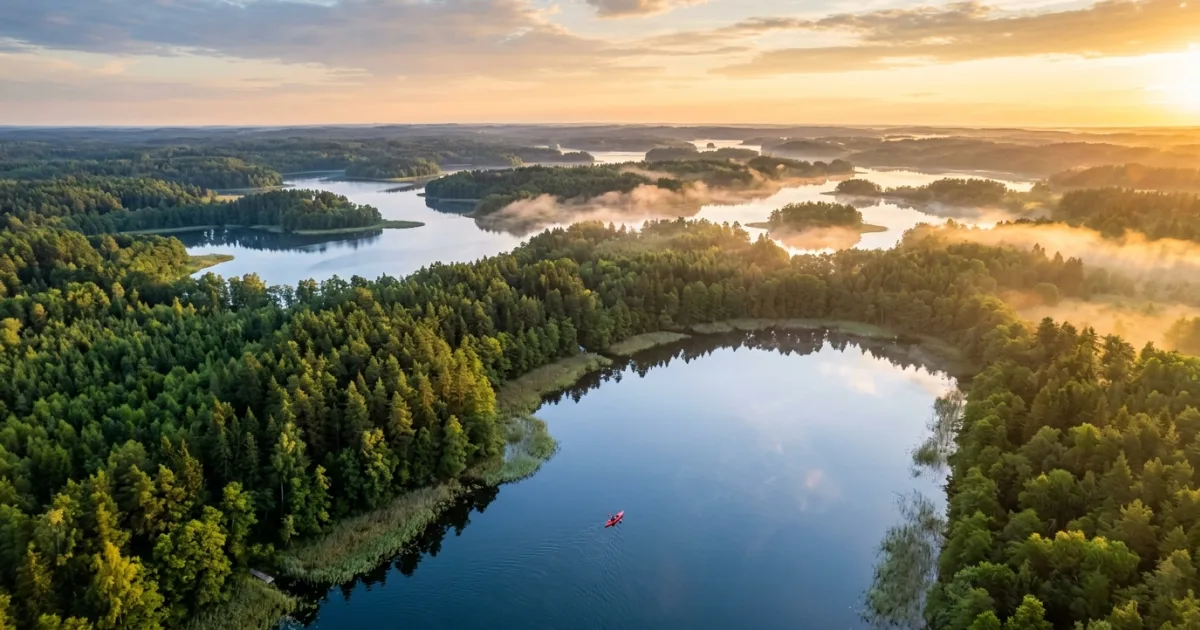
Aukštaitija National Park, established in 1974, encompasses over 40,000 hectares of protected lakes, peat bogs, and ancient Scots pine groves in northeastern Lithuania. Its unique hydrology features over 120 interconnected lakes that were carved by retreating glaciers at the end of the last Ice Age. Lake Tauragnas stands as Lithuania's deepest lake, plunging down over 60 meters, while Lake Baluošas is celebrated for containing its own seven forested islands, one of which cradles its own miniature internal lake.
Beyond aquatic landscapes, Aukštaitija holds deep cultural and historical value. The region features historic wooden villages designated as architectural monuments, including Salos II and Varniškės. In Stripeikiai, the Ancient Beekeeping Museum chronicles centuries of traditional tree-hollow apiculture. Whether camping along serene shores under dark Baltic skies or relaxing in a riverside birch-whisk sauna, the district offers an undisturbed immersion into North-Eastern European wilderness.
Reasons to Visit
- Traverse one of Europe's premier interconnected lake kayaking networks with pristine water clarity.
- Climb Ladakalnis, an ancient pagan offering hill providing panoramic sights across six interconnected lakes.
- Visit Palūšė's 18th-century wooden Church of St. Joseph, crafted entirely without metal saws or iron nails.
- Experience traditional Baltic sauna culture followed directly by a plunge into a cool glacial lake.
- Gaze at brilliant, unpolluted night skies, celebrated further at the nearby Lithuanian Museum of Ethnocosmology.
Things to Avoid
- Avoid pitching tents outside of designated state camping zones, as wild camping in core reserve areas incurs strict environmental fines.
- Do not drink lake water without rolling boiling or reliable microfiltration, despite high water clarity.
- Avoid walking through tall lakeside meadows without checking legs and clothing for ticks afterward.
- Do not ignore lake weather changes; open waters like Lake Lūšiai can develop choppy waves swiftly during summer squalls.
Local Transportation Tips
Traveling by private car or rental vehicle is the most flexible way to navigate regional trails, remote campsites, and scattered historic settlements. Trains run regularly from Vilnius to the gateway town of Ignalina in approximately 1 hour and 45 minutes. From Ignalina, local taxis or seasonal buses connect to Palūšė (4 kilometers away). Within the park itself, the best transit methods are kayaks, canoes, gravel touring bicycles, and well-marked footpaths.
Travel Etiquette
- Leave zero trace: pack out all plastic, food waste, and camping debris from forest shelters.
- Respect quiet hours at state campsites from 22:00 onwards so fellow campers can enjoy natural tranquility.
- Keep motorboat use to designated larger lakes; many park channels and smaller bays are strictly reserved for non-motorized craft.
- Greet fellow hikers and paddlers with a friendly 'Labas' when passing on rural trails and waterways.
Recommended Age Group
The Aukštaitija Lake District provides diverse recreational choices, making it suitable for a broad spectrum of nature enthusiasts and active explorers.
- Babies (0-2 years): Neutral. Dirt forest tracks and wooden piers can make stroller transit challenging, though quiet lake cabins offer serene retreats.
- Kids (3-12 years): Recommended. Shallow lake beaches, boat excursions, and open forest clearings offer safe outdoor recreation and wildlife discovery.
- Teens (13-19 years): Recommended. Multi-day kayak adventures, paddleboarding, swimming, and campfires provide thrilling outdoor independence.
- Adults (20-64 years): Recommended. Outstanding water trails, cycling loops, authentic saunas, and serene off-grid cabins make it ideal for recharging.
- Seniors (65+ years): Recommended. Flat forest walks, gentle boat trips, rich cultural heritage museums, and relaxed farmstays cater well to mature travelers.
Accessibility Level: Medium
- Main visitor centers in Palūšė and the Ancient Beekeeping Museum feature level access, ramps, and adapted restroom facilities.
- Most wilderness trails, lakeside piers, and observation towers involve uneven natural dirt paths, roots, and steep stairways that are not wheelchair accessible.
- Paved pathways exist near central Palūšė and select public boat launch areas.
Did You Know?
Lake Baluošas contains Lithuania's only lake island that itself holds an internal lake, named Ilgasalis ('Long Island'), creating an enchanting lake-within-a-lake phenomenon.
Cool Statistics
- Contains over 126 glacial lakes linked by intricate winding river channels.
- Lake Tauragnas reaches a maximum depth of 62.1 meters, making it the deepest lake in Lithuania.
- Forest covers roughly 70 percent of the national park, dominated by ancient Scots pine stands.




Buy a compatible power adapter for your trip