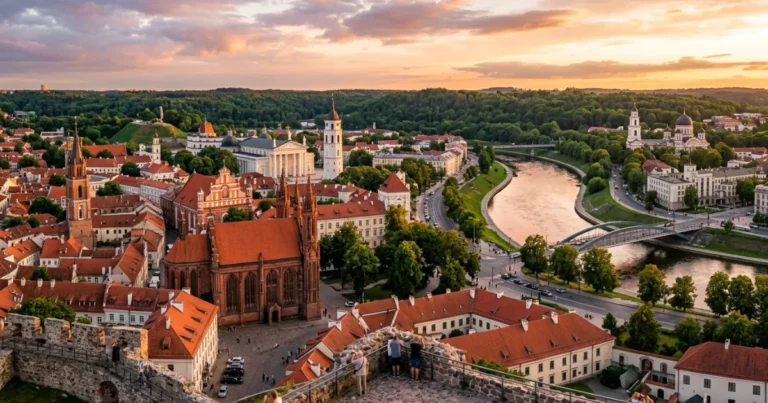
Lithuania is a country that rewards the curious traveler. Its capital, Vilnius, is famous for its extensive and impeccably preserved Old Town, a UNESCO World Heritage site that boasts a stunning array of Gothic, Renaissance, and Baroque architecture. Just a short trip from the capital lies Trakai, the historical capital, where a magnificent red-brick castle sits on an island in the middle of Lake Galvė, offering a fairy-tale setting that is perfect for photography and history enthusiasts alike.
Moving towards the coast, the port city of Klaipėda serves as the gateway to the Curonian Spit. This unique, 98-kilometer-long curved sand dune peninsula is shared with Russia and is renowned for its dramatic landscapes, pine forests, and quaint fishing villages like Nida. Inland, the country is dotted with dense forests, national parks, and poignant historical sites such as the Hill of Crosses, a pilgrimage site featuring hundreds of thousands of crosses that stand as a testament to Lithuanian endurance and faith.
Reasons to Visit
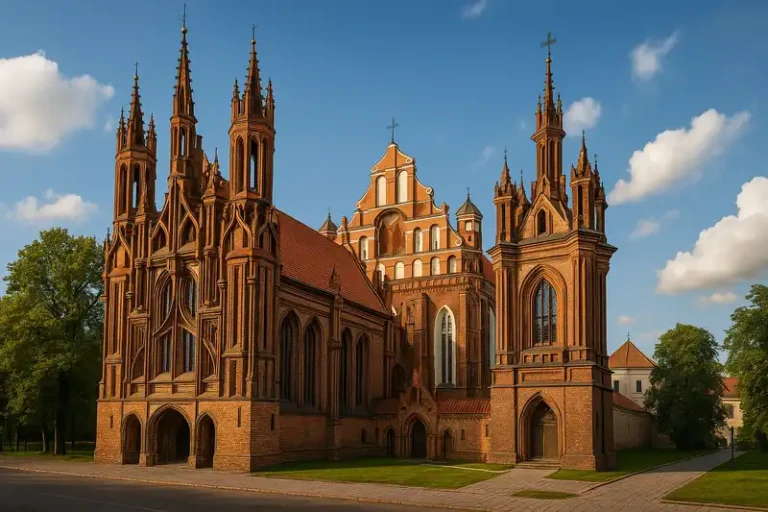
- Explore the stunning Baroque architecture of Vilnius Old Town.
- Visit the fairy-tale Trakai Island Castle surrounded by lakes.
- Experience the unique natural beauty of the Curonian Spit sand dunes.
- Witness the profound and eerie beauty of the Hill of Crosses.
- Enjoy highly affordable travel, dining, and accommodation compared to Western Europe.
- Immerse yourself in deep, untouched forests and pristine national parks.
Things to Avoid
- Avoid discussing sensitive political topics regarding the Soviet era unless invited to by locals.
- Don't forget to validate your public transport ticket immediately upon boarding to avoid fines.
- Avoid walking in designated bicycle lanes, as cyclists move fast and expect the path to be clear.
- Don't assume everyone speaks Russian; while older generations might, younger Lithuanians prefer English.
Local Transportation Tips
Lithuania offers a highly efficient and affordable public transportation system. In major cities like Vilnius and Kaunas, buses and trolleybuses are the primary modes of transit, and tickets can be easily purchased via mobile apps like Trafi. For intercity travel, the train network (LTG Link) is comfortable and scenic, while the extensive bus network reaches almost every small town. Ride-hailing apps such as Bolt are widely used and offer a cheap alternative to traditional taxis. If you plan to explore the countryside or the Curonian Spit extensively, renting a car provides the most flexibility.
Travel Etiquette
- Greet people with a firm handshake and maintain eye contact.
- Remove your shoes when entering someone's home.
- Tipping around 10% in restaurants is customary if the service was good.
- Bring a small gift, such as chocolates or flowers, if invited to a local's home (ensure flowers are in odd numbers).
- Respect personal space; Lithuanians may seem reserved initially but are very warm once you get to know them.
Recommended Age Group
Lithuania offers a diverse range of experiences that cater to various age groups, from interactive historical sites to serene nature escapes.
- Babies (0-2 years): Neutral. While cities are generally stroller-friendly, some cobblestone streets in Old Towns and rural nature trails can be bumpy and challenging to navigate.
- Kids (3-12 years): Recommended. Interactive museums, expansive parks, and fairy-tale castles like Trakai offer engaging and magical experiences for younger travelers.
- Teens (13-19 years): Recommended. The mix of outdoor activities like kayaking, unique sites like the Hill of Crosses, and fast Wi-Fi everywhere appeals strongly to teenagers.
- Adults (20-64 years): Recommended. Adults will appreciate the rich history, affordable high-quality dining, vibrant nightlife, and diverse cultural festivals.
- Seniors (65+ years): Recommended. The country offers a relaxed pace, excellent public transportation, and many accessible historical sites, though some medieval areas require walking on uneven surfaces.
Accessibility Level: Medium
- Major cities like Vilnius and Kaunas have made significant strides in accessibility, with low-floor buses and ramp access in many modern buildings.
- However, the historic Old Towns feature extensive cobblestone streets which can be difficult for wheelchair users to navigate.
- Many newer hotels and large shopping centers are fully accessible and equipped with elevators and accessible restrooms.
- Some historical sites and castles may have limited accessibility due to steep stairs and lack of elevators.
Did You Know?
Lithuania was the last country in Europe to adopt Christianity, officially converting in 1387. Because of this late conversion, many pagan traditions and symbols are still deeply woven into Lithuanian culture and folklore today.
Cool Statistics
- Lithuania has one of the fastest public Wi-Fi speeds in the world.
- The country boasts over 6,000 lakes, making it a paradise for water activities.
- Vilnius Old Town is one of the largest surviving medieval old towns in Northern Europe, covering 3.59 square kilometers.
- The Lithuanian language is one of the oldest living Indo-European languages, closely related to ancient Sanskrit.







Buy a compatible power adapter for your trip