Kaunas stands as Lithuania's second-largest urban center and a major cultural bastion. Situated at the junction of the Nemunas and Neris rivers, the city underwent an extraordinary transformation during the interwar period (1919–1939) when Vilnius was occupied, serving as the provisional capital of the newly independent republic. This era fostered an unprecedented architectural boom, producing hundreds of pristine modernist buildings that earned Kaunas UNESCO World Heritage recognition in 2023.
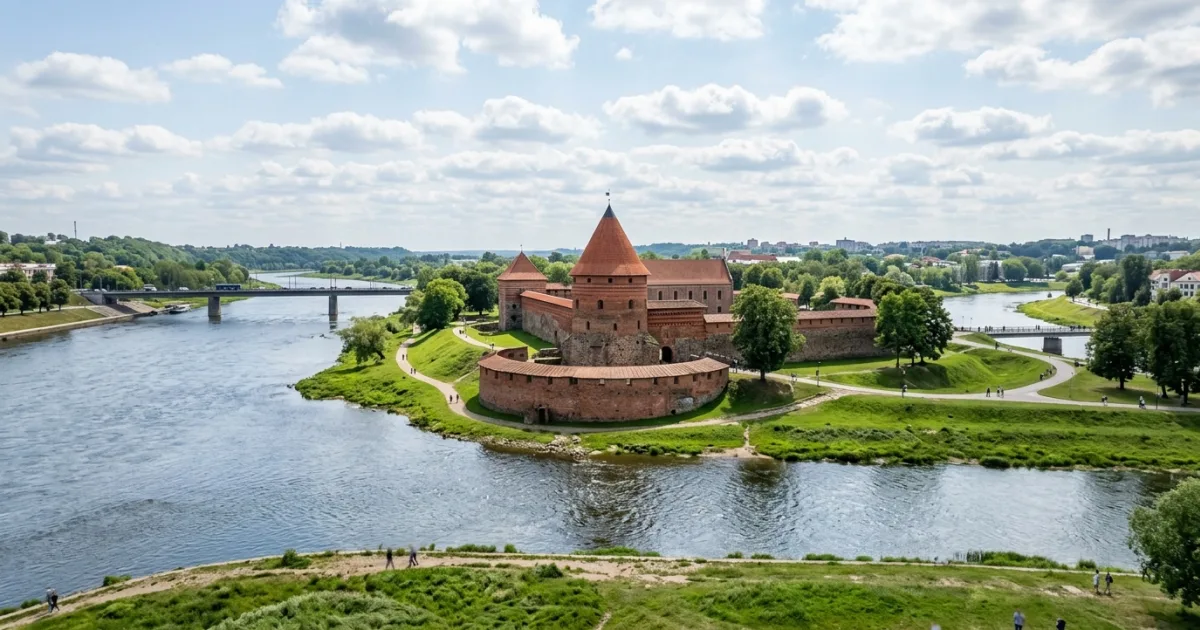
Today, Kaunas is a dynamic university town characterized by pedestrian boulevards, a compact medieval Old Town, and a vibrant community of artists and tech professionals. Visitors can seamlessly transition from 14th-century gothic fortifications at Kaunas Castle to monumental Art Deco apartments, open-air street murals, and cutting-edge design centers. Its position in Central Lithuania makes it both a rewarding destination in its own right and an ideal base for regional day trips.
Reasons to Visit
- World-class interwar Modernist architecture protected by UNESCO.
- Compact medieval Old Town featuring the 14th-century brick Kaunas Castle.
- Laisvės alėja (Liberty Avenue), one of Europe's longest pedestrian thoroughfares lined with linden trees.
- Unique museums including the M. K. Čiurlionis National Museum of Art and the world's only Devils' Museum.
- Pioneering street art culture, epitomized by the Open Air Gallery and iconic urban murals.
Things to Avoid
- Avoid walking on designated cycling paths on Laisvės alėja; local cyclists commute at high speeds.
- Avoid relying purely on taxis flagged from the curb; use ride-hailing apps like Bolt for transparent, lower fares.
- Do not skip the Žaliakalnis neighborhood, as many visitors mistakenly limit their stay exclusively to the medieval Old Town.
Local Transportation Tips
Kaunas boasts a reliable and efficient public transportation system comprised of modern trolleybuses and buses managed by Kauno Viešasis Transportas. Rides can be purchased conveniently using the 'Žiogelis' mobile ticketing app or contactless credit cards on onboard validators. The city also operates two operational historical funiculars in Žaliakalnis and Aleksotas, offering rapid scenic elevation gain. Shared electric scooters and bikes via Bolt are widely distributed throughout the central districts.
Travel Etiquette
- Greet shopkeepers and restaurant staff with a polite 'Laba diena' (Good day).
- Tipping in restaurants is customary at around 5% to 10% for good service, though not legally mandatory.
- Remove your shoes when entering a private home unless specifically instructed otherwise by the host.
- Maintain a calm, moderate volume in public transit and historical spaces.
Recommended Age Group
Kaunas accommodates varied travel demographics with its flat walking boulevards, educational institutions, and lively public spaces.
- Babies (0-2 years): Neutral. Cobblestones in the Old Town can challenge light strollers, though the paved expanse of Laisvės alėja and riverside paths are completely smooth.
- Kids (3-12 years): Recommended. Kaunas Castle grounds, scenic funiculars, and interactive family science exhibitions offer engaging entertainment.
- Teens (13-19 years): Recommended. Urban street art walks, contemporary design cafés, and vibrant riverfront parks appeal strongly to older youth.
- Adults (20-64 years): Recommended. Exceptional historical depth, UNESCO architectural tours, craft beer bars, and vibrant culinary spots make Kaunas an ideal destination for independent adults.
- Seniors (65+ years): Recommended. Flat pedestrian boulevards, affordable pricing, comfortable transit, and accessible classical art museums provide a relaxing, high-comfort visit.
Accessibility Level: Medium
- Laisvės alėja is entirely flat, step-free, and well-paved, providing seamless wheelchair mobility.
- Modern low-floor trolleybuses and city buses are equipped with accessible ramps and designated wheelchair bays.
- Old Town streets feature historic cobblestones, which may present mobility challenges along certain side alleys.
- Major institutions like the M. K. Čiurlionis Art Museum offer ramp or elevator access, while historic basements and medieval castle towers retain physical stairs.
Did You Know?
During the interwar period when Kaunas served as the temporary capital, foreign diplomats flocking to the city included Chiune Sugihara, the Japanese vice-consul who saved thousands of Jewish refugees during WWII by issuing unauthorized transit visas, an act commemorated at the Sugihara House museum in Kaunas.
Cool Statistics
- Laisvės alėja stretches nearly 1.6 kilometers, completely closed to motor vehicle traffic.
- Over 6,000 buildings in modernist style were erected during the 20-year interwar temporary capital era.
- Kaunas served as the European Capital of Culture in 2022.







Buy a compatible power adapter for your trip