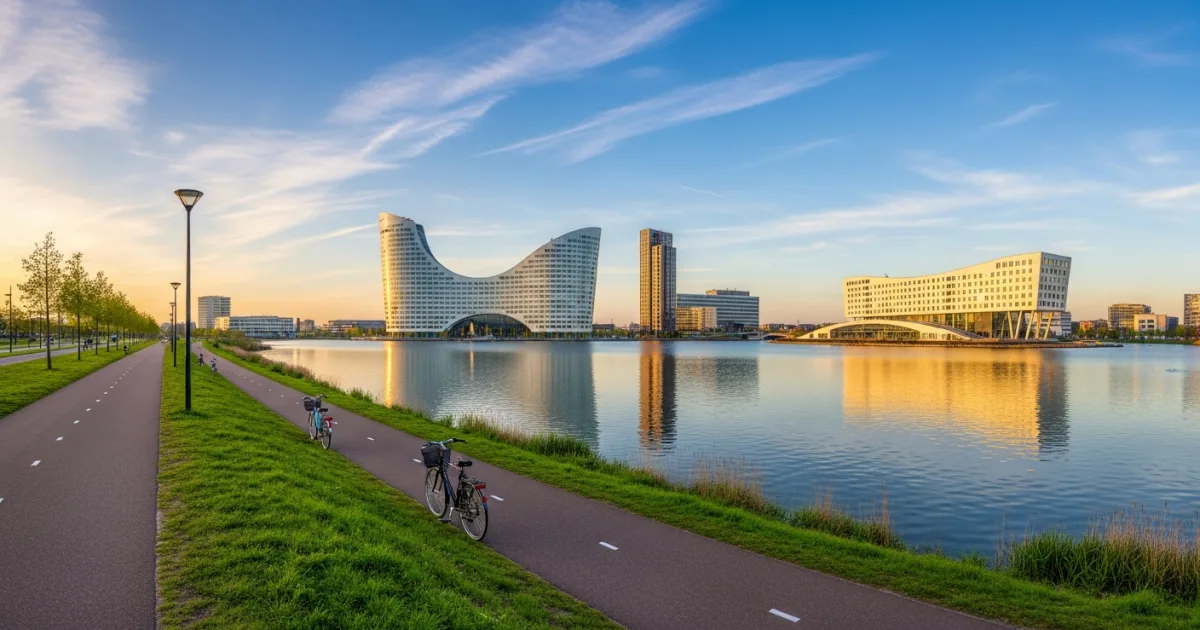
Almere comprises six distinct official districts: Almere Stad, Almere Haven, Almere Buiten, Almere Poort, Almere Hout, and the developing Almere Pampus. Almere Haven, the oldest district, features a nostalgic canal-lined design reminiscent of traditional Dutch towns, contrasting sharply with the hyper-modern aesthetic of Almere Stad. The municipality manages over 400 kilometers of dedicated bicycle infrastructure, completely separated from motorized traffic, ensuring safe and efficient non-motorized transit. Water management remains a critical engineering feat here, with a complex system of pumping stations and dikes maintaining the city's elevation at 2 to 5 meters below sea level.
Reasons to Visit
- Modern Architecture: The city center functions as an open-air museum of contemporary design, featuring works by renowned architects like Rem Koolhaas and René van Zuuk.
- Oostvaardersplassen: This 56-square-kilometer nature reserve offers unparalleled wildlife viewing, including herds of wild Konik horses and red deer.
- Water Recreation: The Weerwater, an artificial lake in the city's heart, provides facilities for cable wakeboarding, sailing, and swimming.
- Urban Planning: Professionals and enthusiasts visit to study Almere's successful multi-nuclei city model and sustainable development practices.
Things to Avoid
- Walking in bike lanes: Red-paved paths are strictly for bicycles; pedestrians walking here risk collisions and frustrate local commuters.
- Unprepared nature hikes: The Oostvaardersplassen lacks extensive shelter; visitors must prepare for sudden weather changes and strong winds.
- Cash-only reliance: Many modern cafes, public transport services, and parking facilities operate exclusively via card payments.
Local Transportation Tips
The allGo bus network provides the primary mode of intra-city public transportation, utilizing dedicated bus lanes that bypass standard traffic congestion. Six railway stations connect the various districts, with Almere Centrum serving as the main intercity hub offering direct connections to Amsterdam, Utrecht, and Schiphol Airport. Bicycle travel remains the most efficient method for navigating the city, supported by extensive, well-maintained paths and numerous rental facilities.
Travel Etiquette
- Punctuality: Dutch culture highly values being on time for tours, reservations, and meetings.
- Direct communication: Locals appreciate straightforward and honest conversation, which should not be mistaken for rudeness.
- Tipping: Service charges are included in bills, but leaving a 5-10% tip for exceptional service in restaurants is customary.
- Greeting: A simple 'Hallo' or 'Goedemorgen' when entering small shops or cafes is expected and appreciated.
Recommended Age Group
Almere's modern infrastructure and diverse attractions cater effectively to all age demographics.
- Babies (0-2 years): Recommended. Wide, flat pavements and excellent ramp access make stroller navigation effortless across the city.
- Kids (3-12 years): Recommended. Numerous urban parks, safe cycling paths, and interactive exhibits at the PIT Safety Museum provide engaging activities.
- Teens (13-19 years): Recommended. Cable wakeboarding on the Weerwater and modern shopping districts offer high-energy entertainment.
- Adults (20-64 years): Recommended. Architectural tours, nature reserves, and a growing culinary scene provide substantial cultural and recreational value.
- Seniors (65+ years): Recommended. The city's flat topography, accessible public transit, and tranquil nature spots ensure a comfortable visiting experience.
Accessibility Level: Medium
- Public Transit: All allGo buses feature low floors and wheelchair ramps, while train stations are equipped with elevators and tactile paving.
- Pedestrian Zones: The city center is entirely step-free, utilizing smooth paving suitable for mobility scooters and wheelchairs.
- Attractions: Major sites, including the Kunstlinie theater and modern architecture routes, comply with strict Dutch accessibility standards.
Did You Know?
Almere's entire landmass was submerged under the Zuiderzee until the mid-20th century. The land was reclaimed through the construction of the Flevopolder, the largest artificial island in the world, completed in 1968 before the city's first residents arrived in 1976.
Cool Statistics
- Elevation: 2 to 5 meters below sea level.
- Coastline: 42 kilometers of beaches and waterfront along the Markermeer and Gooimeer.
- Bicycle Paths: Over 400 kilometers of dedicated, separated cycling routes.
- Establishment: Officially recognized as a municipality in 1984, though the first house was completed in 1976.






Buy a compatible power adapter for your trip