Encompassing 5,500 hectares, De Hoge Veluwe National Park represents 5% of the Veluwe region's total landmass. Geological formations within the park date back to the Saalian glaciation, featuring extensive drift sand areas that require active management to prevent forest encroachment. The Kröller-Müller Museum, integrated into the park in 1938, attracts over 300,000 annual visitors to its 25-hectare sculpture garden and extensive Van Gogh collection. Ecological monitoring programs track approximately 200 red deer, 150 roe deer, 50 wild boar, and 200 mouflon, utilizing designated observation posts to minimize human-wildlife conflict. Financial independence is maintained through an annual operating budget of €15 million, sourced entirely from visitor fees, private donations, and estate yields.
Reasons to Visit
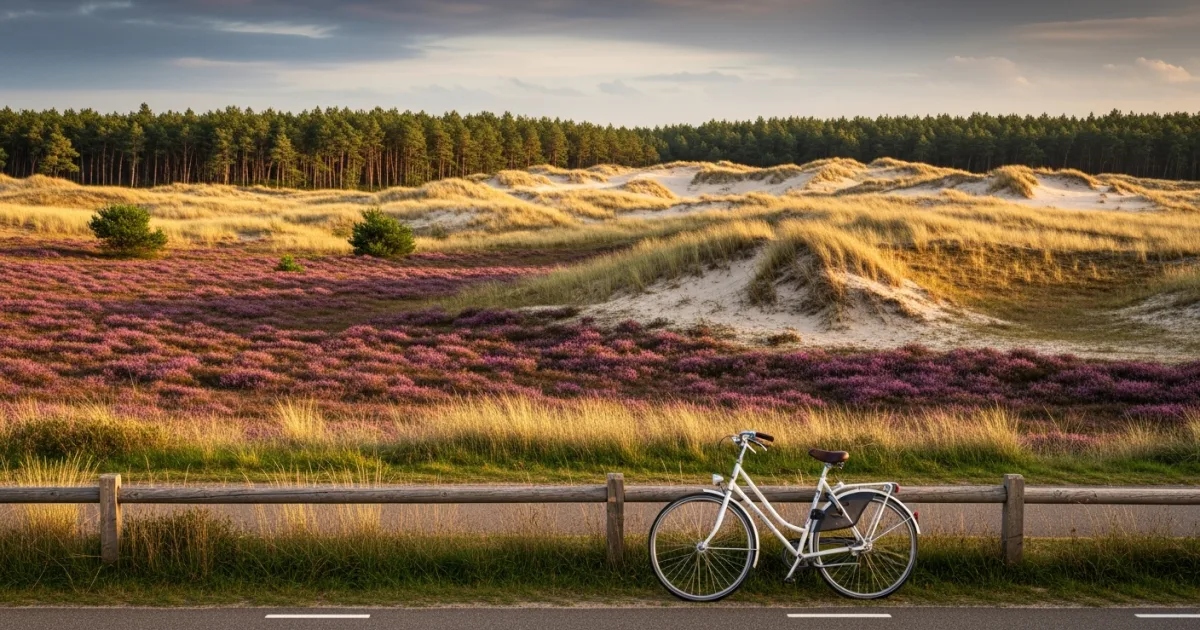
- 1,800 free white bicycles (Witte Fietsen) are available at three main entrances, providing access to 40 kilometers of paved cycling routes.
- The Kröller-Müller Museum houses 90 paintings and 180 drawings by Vincent van Gogh, constituting the second-largest collection globally.
- Jachthuis Sint Hubertus, completed in 1920, features a 31-meter observation tower and exemplifies Hendrik Petrus Berlage's architectural design.
- Museonder operates as the world's first underground museum, displaying a 135-year-old tree root system and Pleistocene epoch fossils.
Things to Avoid
- Feeding wildlife carries a minimum fine of €100 and disrupts the park's natural ecological balance.
- Visiting the Kröller-Müller Museum on Mondays results in denied entry, as the facility maintains a strict six-day operational schedule.
- Driving personal vehicles inside the park incurs an additional €12.50 fee and limits access to the extensive car-free zones.
Local Transportation Tips
Transportation within the 5,500-hectare park relies primarily on the 1,800 free white bicycles distributed across the Hoenderloo, Otterlo, and Schaarsbergen entrances. Paved cycling paths cover 40 kilometers, connecting all major attractions including the visitor center and museums. Motorized vehicles are permitted on restricted routes for an additional fee, with parking available at the visitor center and Jachthuis Sint Hubertus. Public transit access is facilitated by bus line 106, which connects the Otterlo and Hoenderloo entrances directly to the Apeldoorn railway station.
Travel Etiquette
- Remaining on marked trails protects the fragile drift sand ecosystems and prevents disturbance to ground-nesting birds.
- Yielding to cyclists on shared pathways ensures safety, as bicycles serve as the primary mode of transport for 70% of visitors.
- Maintaining silence at the designated wildlife observation posts increases the probability of sighting red deer and wild boar during twilight hours.
Recommended Age Group
The park's infrastructure is designed to accommodate a wide demographic, featuring extensive paved paths and accessible facilities.
- Babies (0-2 years): Recommended. Paved cycling paths and accessible visitor centers make stroller navigation straightforward.
- Kids (3-12 years): Recommended. White bicycles equipped with child seats, the interactive Museonder, and expansive open spaces provide excellent engagement.
- Teens (13-19 years): Recommended. Independent cycling, wildlife spotting, and modern art collections offer varied points of interest.
- Adults (20-64 years): Recommended. The combination of world-class art, architectural history, and extensive hiking routes caters perfectly to adult travelers.
- Seniors (65+ years): Recommended. Flat terrain, available e-bike rentals, and fully accessible museums ensure a comfortable visit for older guests.
Accessibility Level: Medium
- Wheelchair-accessible white bicycles and tricycles are available free of charge at the visitor center.
- The Kröller-Müller Museum and Museonder are fully wheelchair accessible, featuring ramps and elevators.
- Paved cycling paths provide smooth surfaces for mobility scooters and wheelchairs throughout the majority of the park.
- Accessible restrooms are located at all three main entrances, the visitor center, and the museums.
Did You Know?
The park receives zero direct government subsidies, relying entirely on ticket sales, endowments, and private donations to fund its €15 million annual operating budget. This financial model makes it unique among European national parks.
Cool Statistics
- 5,500 hectares of actively managed conservation land.
- 1,800 free white bicycles available for visitor use.
- 40 kilometers of dedicated, paved cycling paths.
- 90 Vincent van Gogh paintings housed in the Kröller-Müller Museum.
- 31-meter-high observation tower at Jachthuis Sint Hubertus.






Buy a compatible power adapter for your trip