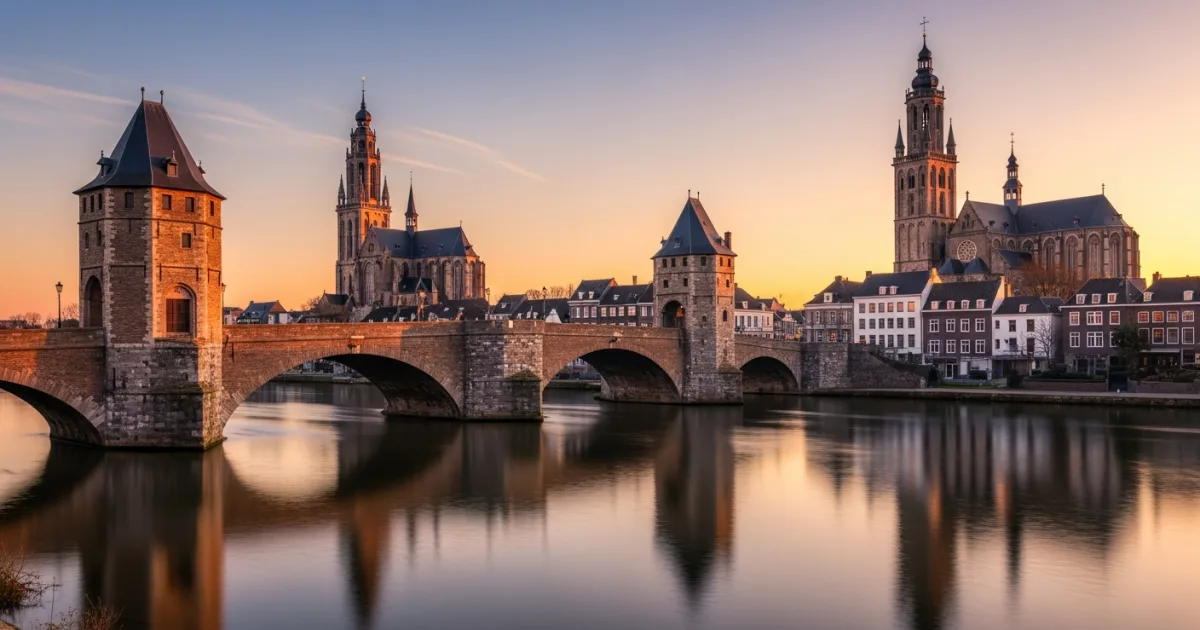
Maastricht functions as the capital of the Limburg province, positioned at the southernmost tip of the Netherlands between Belgium and Germany. The Meuse River divides the city, with the historic center situated on the western bank and the modern Wyck district on the eastern side, connected by the Sint Servaasbrug, a 13th-century stone bridge. Urban planning preserves over 1,600 national heritage sites (Rijksmonumenten), ranking Maastricht second only to Amsterdam in historical density within the country.
The local climate is temperate maritime, characterized by average summer highs of 23°C (73°F) and winter lows of 1°C (34°F), making May through September the optimal window for outdoor exploration. The city's strategic location has historically made it a focal point for European trade and defense, evidenced by the remnants of its medieval fortifications and the expansive underground quarry networks. Today, the integration of Maastricht University has infused the ancient streets with a vibrant, international demographic, fostering a dynamic environment where centuries-old architecture houses modern boutiques, innovative culinary establishments, and progressive art galleries.
Reasons to Visit
- Historical Density: Contains 1,677 national heritage buildings, including the Basilica of Saint Servatius, the oldest surviving church in the Netherlands.
- Underground Networks: Features the Mount Saint Peter caves, a 20,000-tunnel limestone quarry system used as a refuge during WWII.
- Culinary Scene: Boasts a high concentration of Michelin-starred restaurants and traditional eateries serving regional specialties like Vlaai.
- European Significance: Hosts the provincial government building where the 1992 Maastricht Treaty was signed, establishing the European Union.
- Cultural Events: Serves as the home base for violinist André Rieu's massive summer concerts and the globally recognized TEFAF art fair.
Things to Avoid
- Unlicensed Taxis: Avoid hailing cabs off the street; utilize official taxi stands at the central station or the Vrijthof to ensure regulated fares.
- Walking in Bike Lanes: Red-paved paths are strictly for cyclists; pedestrians walking in these lanes risk collisions and local fines.
- Peak TEFAF Season: Hotel prices triple during the European Fine Art Fair in March; budget travelers should avoid this two-week period.
- Assuming English is Universal: While English proficiency is high (over 90%), assuming locals speak it without asking politely first can be perceived as rude.
Local Transportation Tips
Public transportation in Maastricht relies on a comprehensive bus network operated by Arriva, with zero-emission electric buses serving the city center and surrounding suburbs. The OV-chipkaart serves as the primary payment method for all public transit, though contactless debit and credit cards are now universally accepted on buses and trains via the OVpay system. Bicycles remain the dominant mode of local transport, with numerous rental shops offering standard and e-bikes for approximately €10 to €25 per day. The Maastricht railway station provides direct intercity connections to Amsterdam (2.5 hours), Liège (30 minutes), and Aachen (50 minutes), making it an excellent hub for cross-border day trips.
Travel Etiquette
- Tipping: Service charges are included in the bill by law; however, rounding up or leaving a 5-10% tip for exceptional service is customary in restaurants.
- Greetings: A firm handshake with direct eye contact is the standard greeting in both professional and social contexts.
- Punctuality: Dutch culture highly values punctuality; arriving more than 5 minutes late to an appointment or reservation is considered disrespectful.
- Dining: Keep hands above the table (but elbows off) during meals, and wait for the host to initiate the meal with 'Eet smakelijk' (enjoy your meal).
Recommended Age Group
Maastricht offers a diverse range of attractions that cater to various age demographics, balancing historical education with modern entertainment.
- Babies (0-2 years): Neutral. Cobblestone streets in the historic center can make stroller navigation challenging, though public parks offer accessible spaces.
- Kids (3-12 years): Recommended. The underground caves at Mount Saint Peter and the Natural History Museum provide engaging, educational environments for younger visitors.
- Teens (13-19 years): Recommended. The vibrant university atmosphere, extensive shopping districts, and interactive historical tours appeal to adolescent interests.
- Adults (20-64 years): Recommended. Culinary tours, historical architecture, and proximity to international borders offer diverse itineraries for adult travelers.
- Seniors (65+ years): Recommended. The compact, walkable city center, abundance of seating in public squares, and accessible museums accommodate older visitors comfortably.
Accessibility Level: Medium
- Public Transit: All Arriva city buses are equipped with low floors and wheelchair ramps, ensuring full accessibility for mobility-impaired passengers.
- City Center: The historic center features cobblestone streets which can present challenges for wheelchair users, though main thoroughfares have smoothed pathways.
- Museums: Major institutions like the Bonnefanten Museum and the Natural History Museum offer elevator access, accessible restrooms, and complimentary entry for registered caregivers.
- Attractions: The Mount Saint Peter caves offer specific wheelchair-accessible tours, though advance booking is required due to limited specialized guide availability.
Did You Know?
The Bonnefanten Museum, designed by Italian architect Aldo Rossi, features a distinctive 28-meter high cupola that has become a modern symbol of the city's skyline, contrasting sharply with the medieval architecture of the historic center.
Cool Statistics
- 1229: The year the Helpoort (Hell's Gate) was constructed, making it the oldest city gate in the Netherlands.
- 20,000: The approximate number of passageways in the Mount Saint Peter limestone cave system.
- 1,677: The total number of national heritage sites (Rijksmonumenten) located within the city limits.
- 1992: The year the Maastricht Treaty was signed, formally creating the European Union and the Euro currency.






Buy a compatible power adapter for your trip