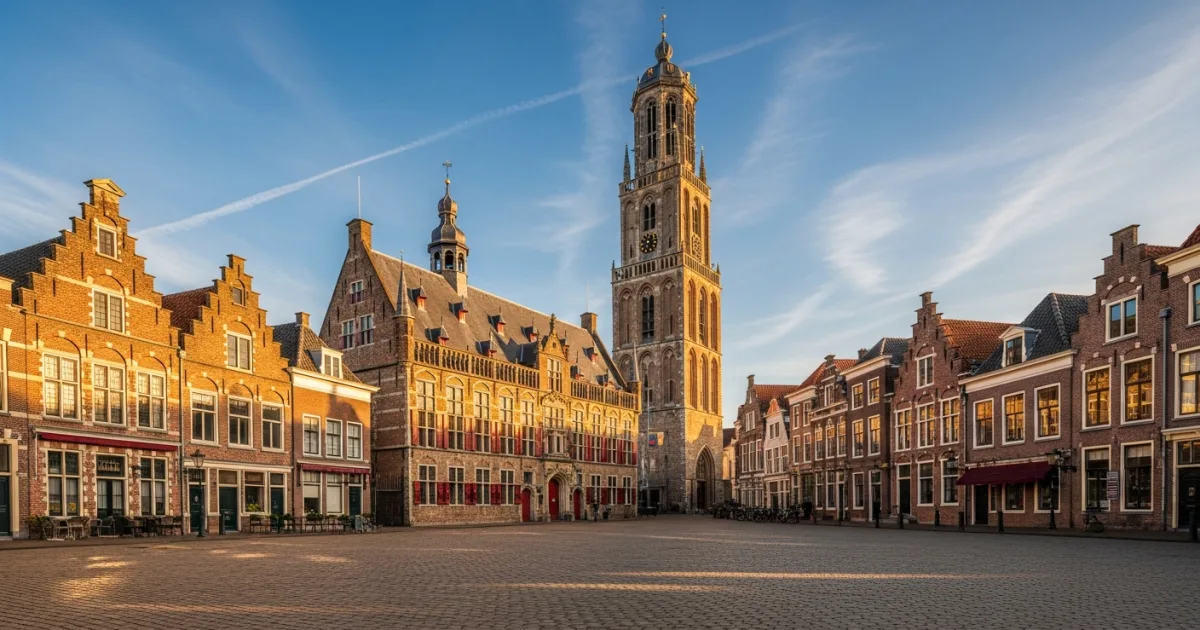
Bergen op Zoom functions as a primary cultural and historical hub in western North Brabant. The city's architectural landscape features the Sint-Gertrudiskerk, a church notable for its 62-meter-tall tower locally known as the 'Peperbus', which visitors can climb for panoramic views of the Scheldt river. The Grote Markt serves as the central square, bordered by historic facades and the Stadhuis (City Hall), which dates back to the 14th century. Urban planning in the city integrates historical preservation with modern commercial zones, creating a pedestrian-friendly core.
The surrounding Brabantse Wal region provides a unique geological feature where sandy soils meet clay polders, supporting specialized agriculture such as asparagus farming. Water management systems, including the Binnenschelde lake, offer recreational water sports and regulate local water levels. The local museum sector is anchored by the Markiezenhof, which houses collections detailing the region's nobility, carnival traditions, and industrial development.
Reasons to Visit
- Markiezenhof: The oldest late-Gothic city palace in the Netherlands, built in 1485, featuring courtyards and regional history exhibits.
- Gevangenpoort: A 14th-century prison gate that stands as one of the oldest remaining examples of medieval city fortifications in the country.
- Peperbus Tower: A 62-meter-high church tower offering 183 steps to an observation deck with views extending to the Belgian border.
- Brabantse Wal: A unique geological ridge reaching 20 meters above sea level, providing extensive hiking and cycling networks.
- Vastenavend: A highly traditional local variant of the Carnival festival, drawing tens of thousands of visitors annually in February or March.
Things to Avoid
- Driving in the historic center: Narrow, one-way cobblestone streets and limited parking make vehicular navigation inefficient.
- Ignoring bicycle lanes: The Netherlands utilizes strict traffic rules for dedicated cycle paths; pedestrians must avoid walking in these red-paved lanes.
- Assuming English is universally preferred: While English proficiency is high (over 90%), initiating conversations in Dutch is culturally appreciated.
- Unprepared outdoor excursions: Weather conditions on the Brabantse Wal can change rapidly, requiring layered clothing and windproof gear.
Local Transportation Tips
Public transportation in Bergen op Zoom relies on a network of regional buses operated by Arriva and national train services by NS (Nederlandse Spoorwegen). The central railway station processes approximately 6,000 passengers daily, connecting the city to major hubs like Rotterdam (45 minutes) and Amsterdam (90 minutes). Local bus routes service the suburban neighborhoods and neighboring villages such as Halsteren and Hoogerheide.
Bicycles represent the primary mode of local transit, supported by over 100 kilometers of dedicated cycle paths within the municipality. Bicycle rental facilities are available at the train station and various city center locations. Taxis operate from designated stands at the station and the Grote Markt, though ride-sharing applications like Uber have limited availability in this region.
Travel Etiquette
- Greeting: A firm handshake is standard for introductions, while close acquaintances exchange three kisses on the cheek.
- Punctuality: Dutch culture highly values arriving exactly on time for appointments, tours, and restaurant reservations.
- Tipping: Service charges are included in the bill by law; however, rounding up or leaving a 5-10% tip for exceptional service is customary.
- Dining: Wait to begin eating until the host says 'Eet smakelijk' (enjoy your meal).
Recommended Age Group
Bergen op Zoom offers a versatile environment suitable for various age demographics, supported by accessible infrastructure and diverse attractions.
- Babies (0-2 years): Neutral. Cobblestone streets in the historic center can make stroller navigation challenging, though public facilities generally offer changing stations.
- Kids (3-12 years): Recommended. The Markiezenhof offers interactive exhibits, and the nearby Klimbos Brabantse Wal provides outdoor climbing activities suitable for children.
- Teens (13-19 years): Recommended. The city offers a mix of historical exploration, shopping streets like the Wouwsestraat, and accessible cycling routes to the surrounding nature reserves.
- Adults (20-64 years): Recommended. Adults can fully engage with the architectural heritage, local gastronomy, and extensive walking or cycling networks across the Brabantse Wal.
- Seniors (65+ years): Recommended. The compact, walkable city center, abundance of benches, and accessible museums make it highly suitable for older travelers, despite some uneven historical paving.
Accessibility Level: Medium
- Public Transport: The Bergen op Zoom railway station is fully accessible, featuring elevators and ramps for wheelchair users. Arriva buses are equipped with low floors and designated wheelchair spaces.
- Museums: The Markiezenhof is largely wheelchair accessible, with elevators providing access to the upper floors, though some historical thresholds may require assistance.
- City Center: The Grote Markt and primary shopping streets are flat and pedestrianized, but the historic cobblestone paving can cause vibrations for wheelchair and mobility scooter users.
- Facilities: Accessible public restrooms are available in major municipal buildings, the library, and larger restaurants around the central square.
Did You Know?
Bergen op Zoom was heavily fortified by the famous Dutch military engineer Menno van Coehoorn in the early 18th century. The city's defenses were considered so impenetrable that it earned the nickname 'La Pucelle' (The Virgin) because it had never been successfully besieged until the French captured it in 1747.
Cool Statistics
- Year of city rights: 1212.
- Height of the Peperbus tower: 62 meters.
- Construction year of the Markiezenhof: 1485.
- Population of the municipality: Approximately 68,000.
- Distance to the Belgian border: 15 kilometers.







Buy a compatible power adapter for your trip