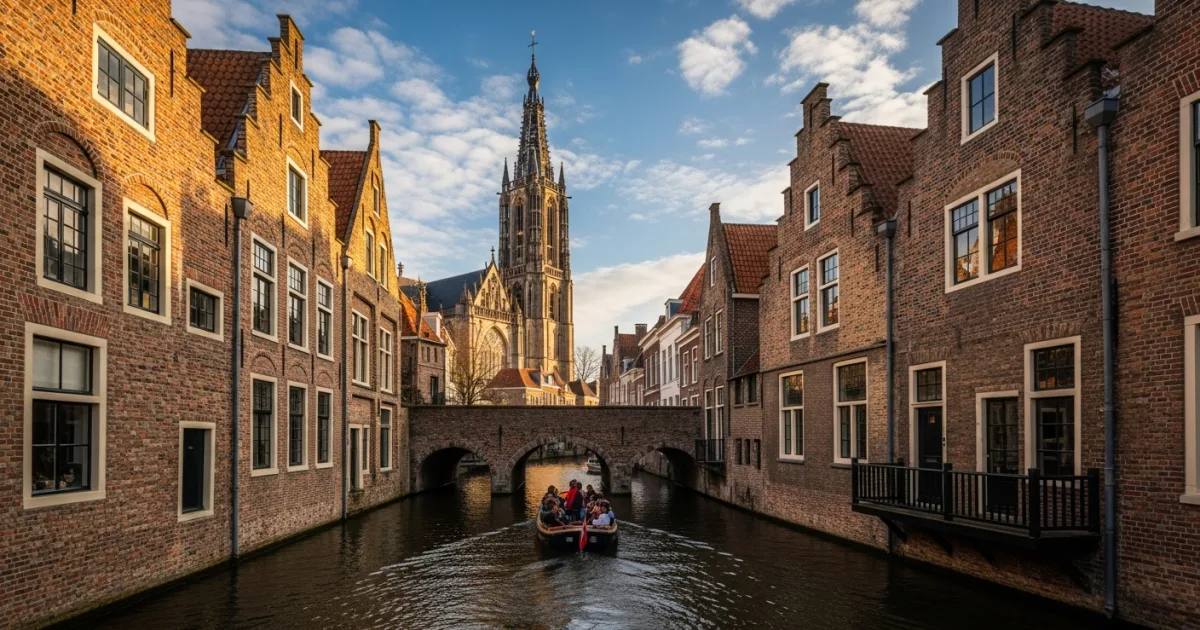
The urban morphology of 's-Hertogenbosch is defined by its historical status as a fortified garrison city. The Binnendieze, a network of rivers and canals spanning 22 kilometers, originally served as the city's open sewer and primary transport route. Today, a restored 3.6-kilometer section flows directly beneath medieval houses and streets, offering a unique subterranean perspective of the city's architectural heritage. The city walls, bastions, and the Citadel (a 17th-century fortress) remain largely intact, delineating the historic center from modern residential expansions.
Culturally, the city is inextricably linked to Hieronymus Bosch, the visionary Early Netherlandish painter born here around 1450. While none of his original paintings remain in the city, the Jheronimus Bosch Art Center provides comprehensive reproductions and contextual exhibits within a former church. The adjacent Noordbrabants Museum houses original works by other Dutch Masters, including Vincent van Gogh, who lived and painted in the nearby village of Nuenen. This concentration of art and history, combined with a thriving culinary scene centered around the Korte Putstraat, establishes 's-Hertogenbosch as a premier destination for cultural tourism in the southern Netherlands.
Reasons to Visit
- Sint-Janskathedraal: Constructed between 1220 and 1530, this cathedral is the largest Catholic church in the Netherlands and a prime example of Brabantine Gothic architecture, featuring 96 unique flying buttress figures.
- Binnendieze Canals: A historic 22-kilometer waterway network, with navigable subterranean sections that run directly beneath the city's medieval structures.
- Hieronymus Bosch Heritage: The city celebrates its most famous son through dedicated art centers, statues, and thematic walking tours exploring his 15th-century environment.
- Noordbrabants Museum: The premier institution for regional art and history, featuring a dedicated pavilion showcasing original works by Vincent van Gogh from his Brabant period.
- Culinary Culture: Home to the Korte Putstraat, widely regarded as one of the most concentrated and vibrant restaurant streets in the Netherlands, and the birthplace of the Bossche Bol pastry.
Things to Avoid
- Walking in designated bike lanes: Bicycle paths are marked with red asphalt and white bicycle symbols; pedestrians must stay on sidewalks to avoid collisions with fast-moving cyclists.
- Driving in the city center: The historic core is largely pedestrianized and features complex one-way systems; utilize the Park & Ride (P+R) facilities on the city outskirts instead.
- Assuming all shops are open late: Standard retail hours conclude at 18:00, except for Thursdays (Koopavond), when stores remain open until 21:00.
- Visiting museums on Mondays: The majority of cultural institutions, including the Noordbrabants Museum, observe Monday as their standard day of closure.
- Buying a Bossche Bol from a generic supermarket: For the authentic experience, purchase this signature pastry from traditional bakeries like Banketbakkerij Jan de Groot near the train station.
Local Transportation Tips
Public transportation in 's-Hertogenbosch is highly efficient, anchored by the central railway station ('s-Hertogenbosch Station) which serves as a major node in the Dutch railway network (NS). Intercity trains provide rapid connections to Amsterdam (55 minutes), Utrecht (30 minutes), and Eindhoven (20 minutes). Within the city, Arriva operates a comprehensive network of city buses (stadsbussen) and regional lines (streekbussen). Payment for all public transit is streamlined through the national OV-chipkaart system or via contactless debit/credit cards (OVpay). For localized travel, cycling is the dominant mode of transport; numerous rental shops and OV-fiets (public transport bicycles) are available at the station. The historic city center itself is compact, measuring approximately 1.5 kilometers across, making walking the most practical method for exploring the primary attractions.
Travel Etiquette
- Direct Communication: Dutch culture values directness and efficiency in conversation; this should not be misinterpreted as rudeness.
- Tipping Practices: Service charges are included by law in restaurant bills. However, rounding up the bill or leaving a 5-10% tip for good service is customary.
- Greeting: A firm handshake is the standard greeting in professional or formal contexts. Friends often greet with three kisses on alternating cheeks.
- Punctuality: Arriving on time for tours, reservations, and meetings is highly expected; being late is considered disrespectful of others' time.
- Queueing: Wait your turn patiently in shops and transit stations; cutting in line is socially unacceptable.
Recommended Age Group
The infrastructure and attractions of 's-Hertogenbosch cater effectively to a wide demographic, though the historic nature of the city presents specific considerations for mobility.
- Babies (0-2 years): Neutral. While the city is safe and family-friendly, the extensive cobblestone streets in the historic center can make navigating with standard strollers challenging.
- Kids (3-12 years): Recommended. The Binnendieze boat tours provide an engaging experience, and the city features numerous parks and interactive exhibits suitable for younger children.
- Teens (13-19 years): Recommended. The city offers safe cycling infrastructure, vibrant shopping districts, and accessible modern art and design museums that appeal to adolescent interests.
- Adults (20-64 years): Recommended. The concentration of historical architecture, fine dining, and cultural institutions provides a rich itinerary for adult travelers.
- Seniors (65+ years): Recommended. The compact, walkable nature of the city center, combined with excellent public transit and accessible major museums, makes it highly suitable for older visitors.
Accessibility Level: Medium
- The Noordbrabants Museum and Jheronimus Bosch Art Center are fully wheelchair accessible, featuring elevators and adapted restroom facilities.
- Sint-Janskathedraal provides ramp access at the main entrance, allowing wheelchair users to navigate the nave and side aisles.
- The Binnendieze boat tours offer specific vessels equipped with wheelchair lifts; these must be reserved in advance through the Kring Vrienden van 's-Hertogenbosch.
- Cobblestone streets in the medieval core (such as Uilenburg) can present mobility challenges for manual wheelchair users and those with walking aids.
- All Arriva city buses are equipped with low floors and extendable ramps to facilitate boarding for passengers with reduced mobility.
Did You Know?
During the Eighty Years' War, 's-Hertogenbosch was considered an impregnable fortress, earning the nickname 'The Swamp Dragon' (De Moerasdraak) due to the surrounding marshlands that complicated military sieges. It was eventually captured by Frederick Henry, Prince of Orange, in 1629 after a massive engineering effort to drain the surrounding swamps.
Cool Statistics
- 1185: The year 's-Hertogenbosch was granted city rights by Duke Henry I of Brabant.
- 73 meters: The height of the Sint-Janskathedraal's western tower, which dominates the city skyline.
- 22 kilometers: The total original length of the Binnendieze canal network within the city walls.
- 155,000: The approximate population of the 's-Hertogenbosch municipality as of recent census data.
- 96: The number of unique stone figures perched on the flying buttresses of the Sint-Janskathedraal.







Buy a compatible power adapter for your trip