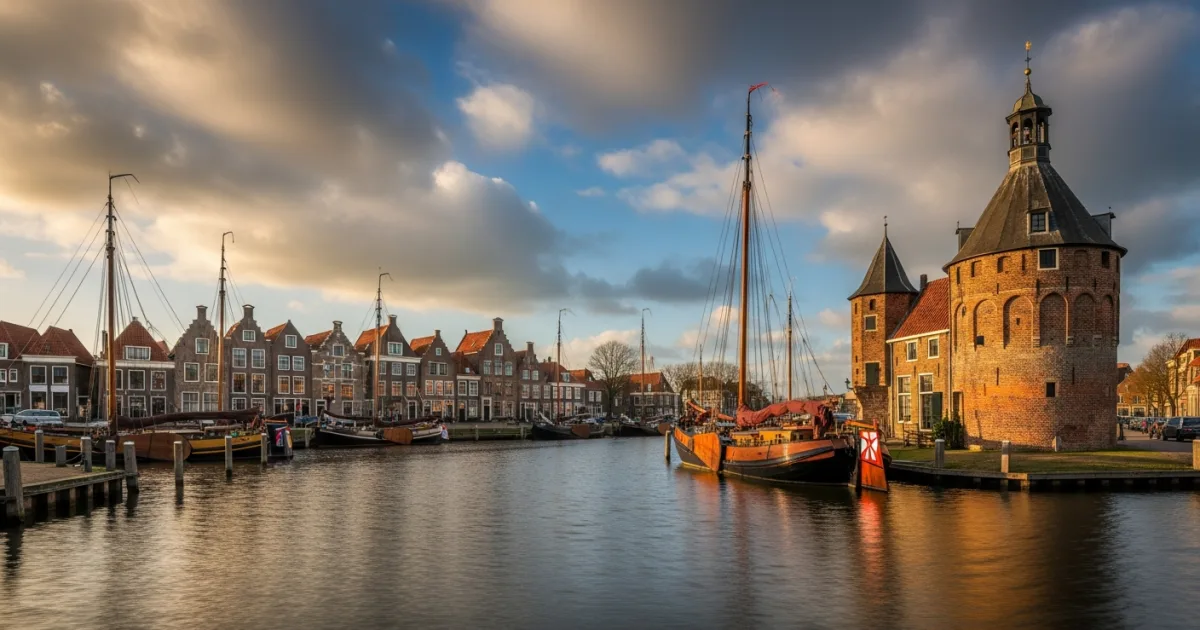
Hoorn's geographical position on the Markermeer (formerly the Zuiderzee) dictated its historical trajectory, transforming it from a small 8th-century settlement into a global maritime powerhouse by the 1600s. The city served as a crucial node for the Dutch East India Company (VOC) and the Dutch West India Company (WIC), launching expeditions that mapped new global trade routes. This immense wealth funded the construction of the elaborate step-gabled merchant houses, warehouses, and civic buildings that still define the city's skyline today. The Roode Steen, the central square, remains the historical heart of Hoorn, anchored by the 1632 Waag (weigh house) and a controversial statue of VOC governor-general Jan Pieterszoon Coen.
Beyond its historical core, Hoorn has evolved into a dynamic regional center for West Friesland. The city balances its preservation efforts with modern amenities, featuring a bustling retail sector along the Grote Noord and Kleine Noord streets. The harbor area, once packed with spice-laden galleons, now hosts a vibrant marina filled with recreational yachts and traditional flat-bottomed sailing ships (brown fleet). Cultural institutions like the Museum of the 20th Century, housed in a former prison on Oostereiland, provide diverse educational experiences, ensuring Hoorn appeals to both history enthusiasts and casual day-trippers seeking authentic Dutch culture away from the heavy crowds of Amsterdam.
Reasons to Visit
- Architectural Density: The city boasts over 300 designated national monuments within a compact radius, offering one of the best-preserved 17th-century streetscapes in the Netherlands.
- Maritime Heritage: The historic harbor features the 1532 Hoofdtoren defense tower and often hosts the Halve Maen, a replica of the VOC ship that explored New York harbor.
- Museum of the 20th Century: This unique museum on Oostereiland features extensive collections of everyday objects, toys, and technology from the 1900s, housed in a former 19th-century prison.
- Steam Tram Journey: The Museumstoomtram Hoorn-Medemblik operates historical steam trains from Hoorn to Medemblik, providing an immersive journey through the North Holland countryside.
- Accessibility: Located just 31 minutes by train from Amsterdam, Hoorn provides a highly accessible yet tranquil alternative to the capital's crowded tourist zones.
Things to Avoid
- Walking in Bike Lanes: Designated bicycle lanes (marked by reddish pavement or bicycle symbols) are strictly for cyclists; pedestrians walking in them risk collisions and local frustration.
- Ignoring Weather Forecasts: Coastal winds and sudden rain showers are common; failing to carry layers or an umbrella can quickly ruin an outdoor excursion.
- Over-Relying on Cash: Many modern Dutch businesses, including some public transport ticket machines and cafes, operate entirely cashless (PIN-only).
- Disrespecting Monuments: Climbing on historical statues or littering near the 17th-century harbor structures is strictly prohibited and heavily fined.
Local Transportation Tips
Public transportation in Hoorn is highly efficient, anchored by the Hoorn railway station which provides frequent Intercity and Sprinter services operated by NS (Nederlandse Spoorwegen). Within the city, walking is the most practical method for navigating the historic center due to its compact size and pedestrianized zones. For longer distances or exploring the coastline, cycling is the preferred local mode of transit; rental shops are available near the train station. Local bus services, operated by Connexxion, connect the city center to residential suburbs and neighboring West Frisian villages, utilizing the nationwide OV-chipkaart payment system or contactless debit/credit cards.
Travel Etiquette
- Direct Communication: Dutch culture values directness and honesty; do not mistake straightforward answers or lack of small talk for rudeness.
- Tipping Practices: Service is included in the bill by law. Tipping is not mandatory, but rounding up the bill or leaving 5-10% for excellent service in restaurants is appreciated.
- Bicycle Awareness: Always look both ways before crossing a street, prioritizing checks for silent, fast-moving bicycles which have the right of way in many intersections.
- Greeting Shopkeepers: It is customary to say 'Hallo' or 'Goedemorgen' (Good morning) when entering a small shop, and 'Tot ziens' (Goodbye) when leaving.
Recommended Age Group
Hoorn offers a versatile environment suitable for various age groups, characterized by its flat terrain, interactive museums, and relaxed pace.
- Babies (0-2 years): Neutral. The city is highly walkable and stroller-friendly, though cobblestone streets in the historic center may cause minor turbulence.
- Kids (3-12 years): Recommended. The Museum of the 20th Century features interactive exhibits and nostalgic toys, while the harbor offers engaging boat watching and the Halve Maen replica ship.
- Teens (13-19 years): Recommended. Independent exploration is safe and easy, with opportunities for cycling, water sports on the Markermeer, and accessible train connections to larger cities.
- Adults (20-64 years): Recommended. The dense concentration of Dutch Golden Age architecture, maritime history, and excellent local dining provides a rich cultural itinerary.
- Seniors (65+ years): Recommended. Flat pedestrian zones, abundant benches along the harbor, and easily accessible historical sites make navigation comfortable for older travelers.
Accessibility Level: Medium
- Terrain: The city is predominantly flat, making wheelchair navigation generally straightforward, though the historic center features uneven cobblestones that require caution.
- Museum Access: Major attractions like the Museum of the 20th Century and the Westfries Museum are equipped with elevators, ramps, and accessible restrooms.
- Public Transport: Hoorn railway station offers step-free access to platforms, and modern NS trains feature designated wheelchair spaces and accessible boarding ramps.
- Sidewalks: Most main shopping streets (like Grote Noord) have wide, smooth sidewalks, but narrower historic alleys may lack dropped curbs.
Did You Know?
Cape Horn, the southernmost headland of the Tierra del Fuego archipelago of southern Chile, was named 'Kaap Hoorn' in 1616 by Dutch navigator Willem Schouten in honor of his birthplace, the city of Hoorn.
Cool Statistics
- Population: Approximately 75,000 residents live within the Hoorn municipality.
- City Rights: Hoorn was officially granted city rights in the year 1357.
- National Monuments: The city center contains exactly 382 recognized Rijksmonumenten (national heritage sites).
- Transit Speed: An Intercity train covers the distance between Amsterdam Centraal and Hoorn in precisely 31 minutes.






Buy a compatible power adapter for your trip