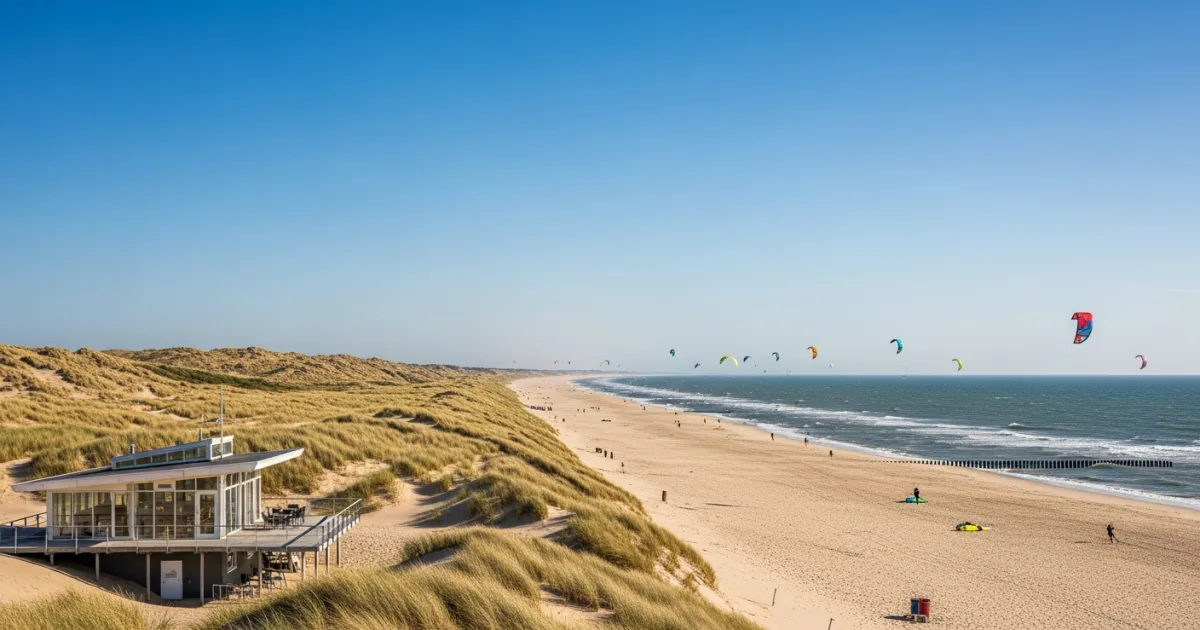
Zandvoort functions as a primary coastal destination in the Netherlands, characterized by its 9-kilometer stretch of continuous sandy beach. The town's infrastructure is heavily oriented toward tourism, featuring a wide promenade lined with over 30 seasonal beach pavilions that are constructed in the spring and dismantled in the autumn. Inland from the beach, the town center offers a mix of traditional Dutch architecture, retail shops, and dining establishments, while the eastern border is defined by the protected dune landscapes of the Zuid-Kennemerland National Park and the Amsterdamse Waterleidingduinen.
The integration of motorsport into the town's identity is significant, with the Circuit Zandvoort located directly in the dunes north of the residential area. Originally opened in 1948, the 4.259-kilometer track underwent major renovations to host the return of the Formula One Dutch Grand Prix in 2021. Beyond racing and beach activities, Zandvoort serves as a hub for outdoor recreation, offering extensive networks of paved cycling paths and hiking trails that allow visitors to observe local wildlife, including fallow deer and European bison, within the adjacent nature reserves.
Reasons to Visit
- Expansive Coastline: Zandvoort features 9 kilometers of wide, sandy beaches equipped with modern facilities, water sports rentals, and seasonal dining pavilions.
- Circuit Zandvoort: The historic 4.259-kilometer motorsport race track hosts the Formula One Dutch Grand Prix and offers public driving experiences.
- Zuid-Kennemerland National Park: This 3,800-hectare protected nature reserve borders the town, providing extensive trails for hiking and cycling among coastal dunes.
- Proximity to Amsterdam: A direct 30-minute train connection from Amsterdam Centraal makes Zandvoort highly accessible for day trips.
- Water Sports Infrastructure: The coastal winds and designated zones create optimal conditions for kiteboarding, windsurfing, and stand-up paddleboarding.
Things to Avoid
- Walking in Bicycle Lanes: Red-paved paths are strictly for bicycles and mopeds; pedestrians walking in these lanes risk collisions and fines.
- Ignoring Beach Warning Flags: Red flags indicate dangerous rip currents where swimming is strictly prohibited by local authorities.
- Driving During Peak Summer Weekends: Traffic congestion on the single main access road (N200) is severe; utilizing the train is highly recommended.
- Feeding Wildlife in the Dunes: Feeding the fallow deer or foxes in the surrounding national parks disrupts their natural diet and is prohibited.
Local Transportation Tips
Public transportation in Zandvoort is anchored by the Zandvoort aan Zee railway station, which serves as the terminus for direct NS (Nederlandse Spoorwegen) trains from Amsterdam and Haarlem. Local bus services, operated by Connexxion, provide routes connecting the town center to the surrounding residential areas and neighboring municipalities. Bicycles represent the most efficient mode of local transit, with numerous rental agencies available near the train station and town center, allowing visitors to utilize the extensive, well-maintained network of dedicated cycling paths.
Travel Etiquette
- Tipping: Service charges are included in restaurant bills by law, but rounding up or leaving a 5-10% tip for good service is customary.
- Cycling Rules: Always use hand signals when turning, stay in the designated red bike lanes, and use bicycle lights after dark.
- Beach Cleanliness: Dispose of all trash in the provided bins along the promenade; leaving litter on the beach is heavily frowned upon and subject to fines.
- Greeting: A brief 'Hallo' or 'Goedemorgen' (Good morning) is polite when entering small shops or interacting with service staff.
Recommended Age Group
Zandvoort provides a versatile coastal environment with infrastructure and activities suitable for all age demographics.
- Babies (0-2 years): Recommended. Paved promenades and family-friendly beach pavilions offer accessible environments for strollers.
- Kids (3-12 years): Recommended. Shallow coastal waters, dedicated play areas, and interactive nature trails in the dunes provide safe entertainment.
- Teens (13-19 years): Recommended. Surf schools, kiteboarding facilities, and the proximity to the Circuit Zandvoort appeal to active adolescents.
- Adults (20-64 years): Recommended. Beach clubs, motorsport events, and extensive cycling routes cater to diverse adult interests.
- Seniors (65+ years): Recommended. Flat walking paths, accessible public transport, and relaxed seaside dining ensure comfortable navigation.
Accessibility Level: Medium
- The Zandvoort aan Zee train station is fully equipped with ramps and elevators for wheelchair accessibility.
- Specialized beach wheelchairs (Jutters) with large pneumatic tires are available for rent at various pavilions to navigate the sand.
- The main promenade and town center feature flat, paved surfaces with dropped curbs at pedestrian crossings.
- Many modern beach pavilions and hotels offer accessible restrooms and step-free entrances.
Did You Know?
During World War II, Zandvoort was heavily fortified by occupying forces as part of the Atlantic Wall. Dozens of concrete bunkers were constructed in the dunes, and nearly all the town's coastal buildings were demolished to create a clear line of sight for artillery. Today, remnants of these bunkers can still be found hidden within the dune landscape.
Cool Statistics
- Beach Length: The continuous sandy coastline of Zandvoort stretches for exactly 9 kilometers.
- Train Travel Time: The direct NS train journey from Amsterdam Centraal to Zandvoort aan Zee takes precisely 30 minutes.
- Track Length: The Circuit Zandvoort measures 4.259 kilometers (2.646 miles) per lap.
- Annual Visitors: The municipality records over 4 million overnight tourist stays annually.
- Resort Founding: Zandvoort officially transitioned from a fishing village to a seaside resort in the year 1828.







Buy a compatible power adapter for your trip