Zwolle's historical significance stems from its membership in the Hanseatic League during the Middle Ages, which brought substantial wealth and architectural development to the region. The city center retains its original medieval street plan, characterized by cobblestone alleys, historic merchant houses, and remnants of the original city walls. Museum de Fundatie anchors the local art scene, exhibiting visual arts from the late Middle Ages to the present day within a striking architectural hybrid building.
The culinary landscape features regional specialties, notably Zwolse Mosterd (a coarse, spicy mustard) and Zwolse Balletjes (traditional sweets produced in a historic local shop since 1845). Transportation logistics are highly efficient, with Zwolle functioning as a major railway hub connecting the northern Netherlands to the central and southern provinces. Environmental sustainability remains a priority, evidenced by the extensive network of cycling paths and the preservation of parks like Park de Wezenlanden.
Reasons to Visit
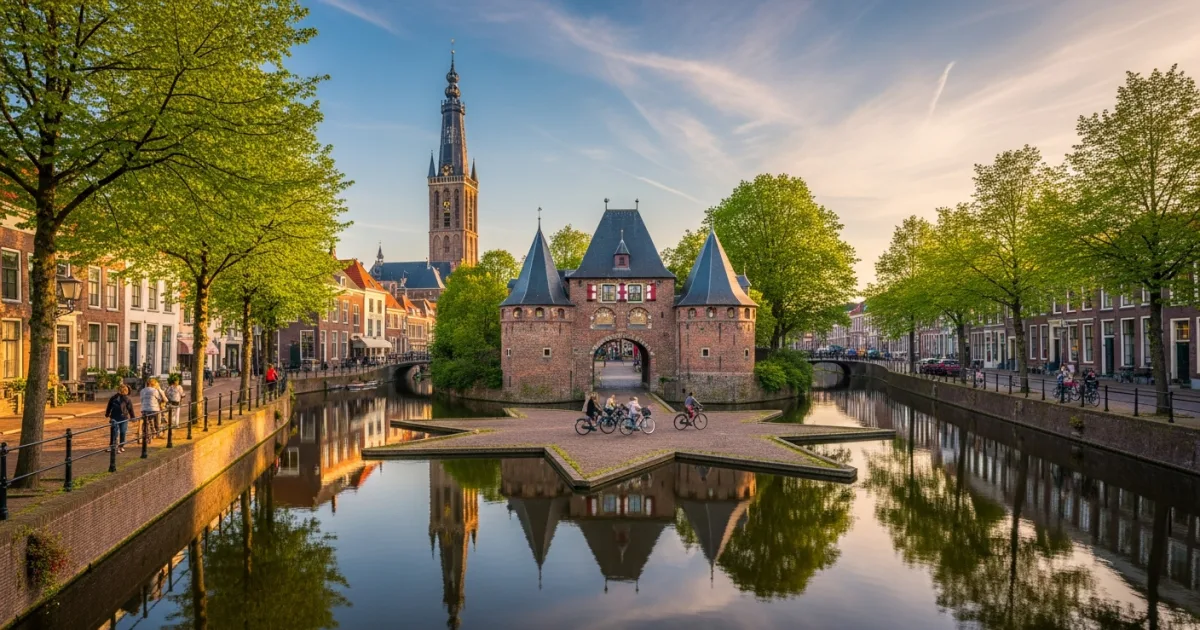
- Hanseatic History: Zwolle features exceptionally preserved 15th-century architecture, including the UNESCO-recognized Sassenpoort gate.
- Museum de Fundatie: This major art museum houses over 11,000 works, topped by the iconic 'Cloud' extension designed by Hubert-Jan Henket.
- Waanders In de Broeren: A 15th-century Broerenkerk transformed into a multi-level bookstore and café, representing adaptive reuse of religious heritage.
- The Peperbus: The 75-meter-tall Basilica of Our Lady of the Assumption tower offers panoramic views of the city after climbing 236 steps.
- Culinary Heritage: The city is home to De Librije, a three-Michelin-star restaurant, alongside traditional shops selling Zwolse Balletjes.
Things to Avoid
- Walking in Bike Lanes: Designated red asphalt paths are strictly for cyclists; pedestrians risk collisions and fines if they obstruct these lanes.
- Ignoring Opening Hours: Many independent shops and museums close on Mondays, requiring careful itinerary planning.
- Unprepared Weather Gear: The Dutch climate features sudden rain showers; relying solely on umbrellas is less effective than carrying a windproof rain jacket.
- Overlooking Public Transit Rules: OV-chipkaart or contactless payment is mandatory for buses; cash is generally not accepted by drivers.
Local Transportation Tips
Zwolle operates as the second-largest railway junction in the Netherlands, facilitating seamless connections to Amsterdam, Groningen, and Utrecht. The local transit network relies heavily on an extensive, well-maintained bicycle infrastructure, making cycling the most efficient mode of urban transport. Keolis operates the regional bus system, utilizing electric buses that require contactless payment or an OV-chipkaart for boarding. Pedestrian navigation is highly practical within the star-shaped city moat, as the historic center is compact and largely vehicle-restricted.
Travel Etiquette
- Punctuality: Dutch culture highly values being on time for tours, reservations, and meetings.
- Direct Communication: Locals communicate straightforwardly; this should be interpreted as honesty rather than rudeness.
- Tipping Practices: Service is included in bills, but rounding up or leaving 5-10% for exceptional service in restaurants is customary.
- Greeting Norms: A firm handshake with eye contact is standard for introductions, while close friends exchange three cheek kisses.
Recommended Age Group
Zwolle offers a versatile urban environment with accessible infrastructure and diverse cultural attractions suitable for various demographics.
- Babies (0-2 years): Recommended. The city features flat, paved pedestrian zones and numerous parks like Park de Wezenlanden, making stroller navigation straightforward.
- Kids (3-12 years): Recommended. Dinoland Zwolle provides extensive interactive dinosaur exhibits, while the city's safe cycling paths offer excellent family recreation.
- Teens (13-19 years): Recommended. The vibrant city center includes modern retail, historic tower climbs (Peperbus), and accessible water activities on the city moat.
- Adults (20-64 years): Recommended. High-end gastronomy, including Michelin-starred dining, and rich Hanseatic history appeal strongly to adult travelers.
- Seniors (65+ years): Recommended. Excellent public transportation, flat terrain, and concentrated cultural sites like Museum de Fundatie ensure a comfortable visit.
Accessibility Level: Medium
- Public Transit: Zwolle railway station and local Keolis buses are fully equipped with ramps, elevators, and designated wheelchair spaces.
- Museum Access: Major institutions like Museum de Fundatie and Waanders In de Broeren feature elevators and barrier-free entrances.
- Street Navigation: The historic center contains some cobblestones, but the majority of sidewalks and pedestrian zones are flat and well-paved.
- Facilities: Accessible public restrooms are available in municipal buildings, large retail centers, and major tourist attractions.
Did You Know?
Zwolle residents are historically nicknamed 'Blauwvingers' (Bluefingers) due to a 16th-century legend involving the sale of a church bell to the neighboring city of Kampen. Kampen paid for the bell with a massive amount of copper coins, forcing the Zwolle officials to count the money until their fingers turned blue from the copper oxidation.
Cool Statistics
- Population: Zwolle supports approximately 130,000 residents within its municipal boundaries.
- Peperbus Height: The iconic Onze Lieve Vrouwetoren stands exactly 75 meters tall.
- Museum de Fundatie Collection: The museum preserves and displays over 11,000 individual works of art.
- Railway Traffic: Zwolle railway station processes over 40,000 passengers daily, making it a critical national transit hub.







Buy a compatible power adapter for your trip