Veere stands as one of the most picturesque historic towns in the Dutch province of Zeeland, positioned on the northeastern fringe of Walcheren along the shore of the Veerse Meer. With roots dating back to the late 13th century, the settlement rose to international prominence in the 1500s when it was designated as the sole staple port for Scottish wool imported into the Netherlands. This unique commercial privileges fostered substantial wealth, fueling the construction of late-Gothic civic monuments, grand merchant residences, and heavily fortified harbors that survive in outstanding condition today.
Visitors strolling the calm streets will encounter landmarks such as the Grote Kerk, an enormous 14th-century church whose unfinished tower bears testimony to changing fortunes, and the 15th-century Town Hall with its graceful carillon. The harbor remains the social and scenic heart of Veere, hosting pleasure craft where trading vessels once docked. Flanked by lush grassy ramparts and adjacent inland waterways, Veere offers an unhurried, historically rich environment that highlights the coastal character and resilience of maritime Zeeland.
Reasons to Visit
- Exquisitely preserved 16th-century architecture including the Scottish Houses and the Town Hall.
- Direct access to the Veerse Meer for sailing, motorboating, paddleboarding, and windsurfing.
- Compact, walkable historic core that feels preserved in time without commercial overcrowding.
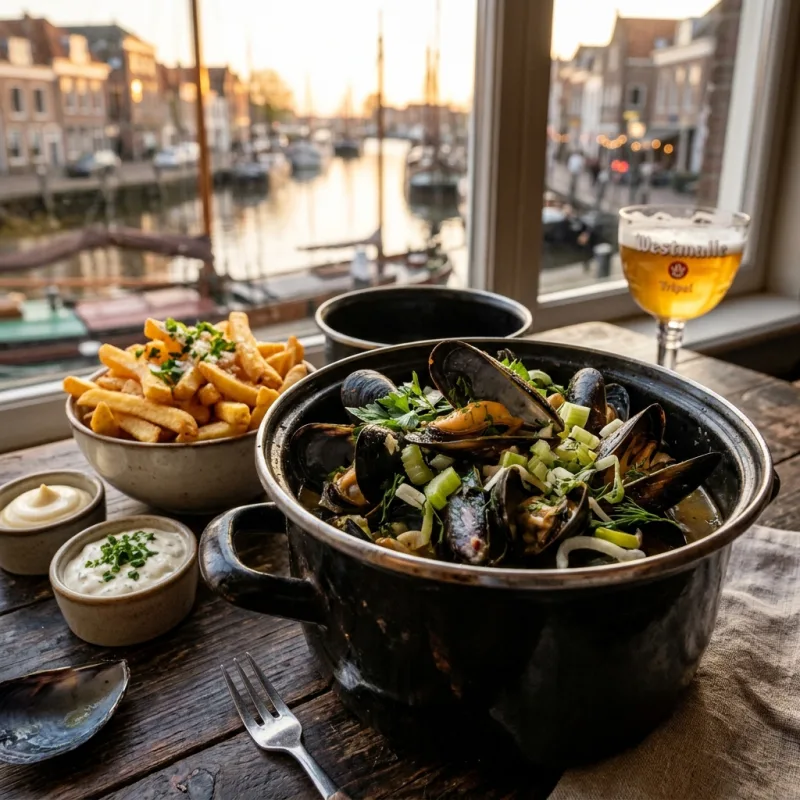
- Superb regional cuisine focused on fresh Zeeland shellfish, oysters, and traditional pastries.
- Seamless integration into the Walcheren cycling network connecting dunes, coastal villages, and polders.
Things to Avoid
- Avoid attempting to park deep inside the historic center; roads are narrow, pedestrian-heavy, and parking spaces are restricted.
- Avoid wearing thin-soled dress shoes or high heels, as the historic cobblestones can be difficult to navigate.
- Avoid visiting without a light windproof layer, as maritime gusts off the Veerse Meer can drop temperatures quickly.
- Avoid expecting lively late-night clubbing; Veere is an early-evening, restorative town focused on dining and tranquility.
Local Transportation Tips
The historical heart of Veere is an open-air museum that is best explored entirely on foot. Motor vehicles are restricted or charged premium rates in central zones, with large designated parking lots placed right along the town borders. For traveling beyond the immediate town, bicycles are the transport mode of choice; high-quality bike paths link Veere directly to Middelburg (25 minutes) and Vrouwenpolder (20 minutes). Regional bus lines connect the town to Middelburg railway station, which provides direct Intercity trains across the Netherlands.
Travel Etiquette
- Keep to the pedestrian areas and stay alert for quiet cyclists sharing narrow heritage lanes.
- Refrain from walking across private harbor quays or boarding moored private boats without an explicit invitation.
- Greet shopkeepers and staff with a polite 'Goedemorgen' or 'Hallo' upon entering neighborhood establishments.
- Maintain low noise levels during the evening hours, as residential homes are interspersed directly within the historic core.
Recommended Age Group
Veere caters smoothly to travelers seeking gentle sightseeing, historic charm, and leisurely waterfront recreation.
- Babies (0-2 years): Neutral. The cobblestone paving throughout the town center can make standard stroller rides bumpy, though waterside promenade paths are smoother.
- Kids (3-12 years): Neutral. Children enjoy the harbor boat excursions, sweet shops, and lakeside grassy bastions, though there are few dedicated high-energy theme parks.
- Teens (13-19 years): Neutral. Teens interested in water activities such as sailing or windsurfing on the Veerse Meer will enjoy the area, but nightlife is virtually nonexistent.
- Adults (20-64 years): Recommended. Ideal for cultural exploration, waterfront dining, cycling tours, and boutique lodging in a relaxing atmosphere.
- Seniors (65+ years): Recommended. Highly accessible, flat topography, compact footprint, and a gentle pace of life make it a favorite for mature travelers and history lovers.
Accessibility Level: Medium
- The historic core features flat topography, though traditional cobblestones and clinker bricks present vibrations and rolling friction for wheelchair users.
- Smooth paved walkways exist along portions of the perimeter ramparts and modern marina facilities.
- Accessible parking spaces are located at the Mauritsbolwerk lot outside the ancient town perimeter.
- Museum Veere has adapted interior exhibits to provide ground-floor access, although some upper levels in historical buildings have narrow staircases.
Did You Know?
During the Scottish wool staple era, Veere was home to a self-governing Scottish enclave with its own Lord Conservator, judicial court, and a tavern where Scottish merchants enjoyed duty-free beer and wine.
Cool Statistics
- Veere received its official city rights in the year 1355.
- The Town Hall carillon contains 47 bells that chime melodically across the quays.
- The massive Grote Kerk was repurposed as a military hospital by Napoleon's troops in 1809.






Buy a compatible power adapter for your trip