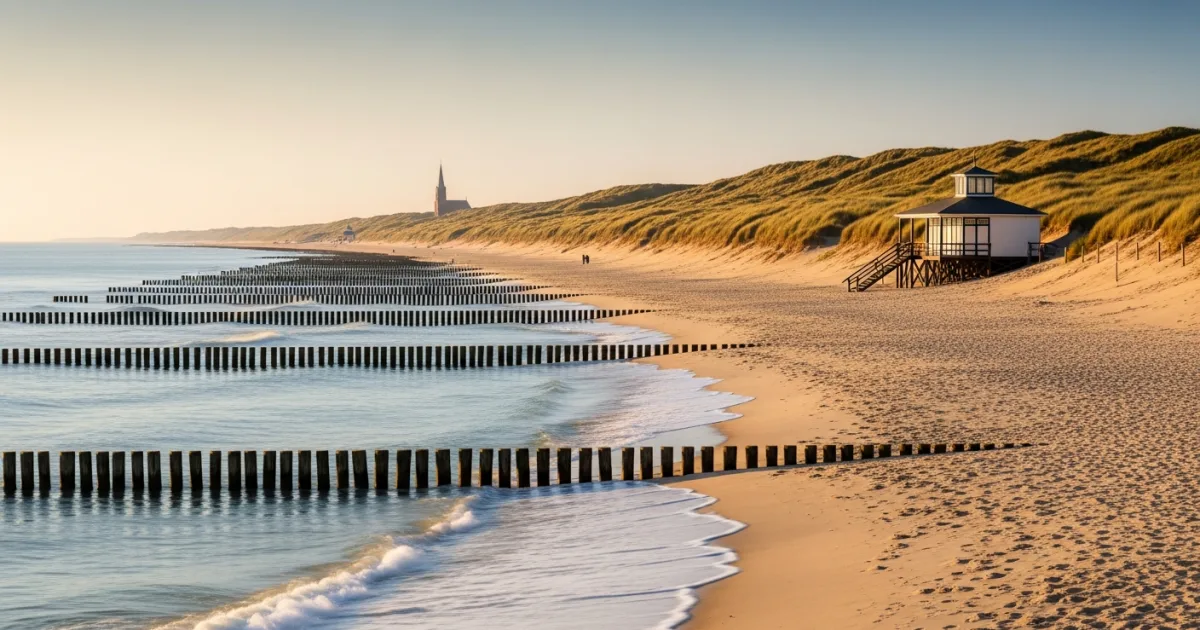
Domburg's geographical position on the northwestern edge of the Walcheren peninsula exposes it directly to the North Sea, shaping both its climate and its historical development. The village center features a compact grid of streets radiating from the central market square, dominated by the Protestant Church built in the 15th century. The coastal defense system relies on high sand dunes rather than concrete dikes, preserving a natural aesthetic while protecting the low-lying hinterland from storm surges.
The local infrastructure caters heavily to pedestrian and bicycle traffic, with extensive paved paths connecting Domburg to neighboring coastal villages like Westkapelle and Oostkapelle. The town's commercial sector is concentrated along the Ooststraat and Weststraat, housing boutique retail, equipment rental shops, and numerous dining establishments. Environmental conservation efforts are highly visible, particularly in the strict zoning laws that prevent high-rise developments from obstructing the historic skyline or damaging the fragile dune ecosystems.
Reasons to Visit
- Official Wellness Status: Domburg is one of only two Dutch coastal towns holding the European 'Badstatus', offering certified thalassotherapy treatments using local seawater.
- Artistic Heritage: The Marie Tak van Poortvliet Museum showcases the works of the early 20th-century Domburg Painters' Colony, including early sketches by Piet Mondrian.
- De Manteling Nature Reserve: This 740-hectare protected area features unique stunted oak forests shaped by sea winds, alongside 12th-century Westhove Castle.
- Pristine Beaches: The local beaches consistently receive the Blue Flag eco-label, indicating high water quality, safety standards, and environmental management.
- Domburgsche Golf Club: Established in 1914, this 9-hole links course is one of the oldest in the Netherlands, offering challenging play amid the coastal dunes.
Things to Avoid
- Walking on Unmarked Dunes: Straying from designated paths damages the marram grass, which is critical for preventing coastal erosion. Fines are actively issued.
- Ignoring Beach Flags: The North Sea features strong rip currents. Never swim when the red flag is flying at the lifeguard stations.
- Relying on Late-Night Transit: Regional bus services (Line 52) typically cease operations before midnight; plan taxi services in advance if staying out late.
- Parking in Residential Zones: Street parking in the village center is strictly reserved for permit holders; unauthorized vehicles face immediate towing or high fines.
Local Transportation Tips
Bicycles serve as the primary mode of transportation within Domburg and the surrounding Walcheren region. The area features a comprehensive network of segregated, paved cycle paths (fietspaden) utilizing the national numbered node system (knooppuntennetwerk) for easy navigation. For motorized public transit, Connexxion operates Bus Line 52, providing regular connections between Domburg and the central railway hub in Middelburg. Taxis are available but must generally be booked by phone in advance, as street hailing is uncommon in the village.
Travel Etiquette
- Cycling Rules: Always stay in the designated red cycle lanes, signal turns with your hand, and use lights after dusk; police actively fine cyclists without lights.
- Greeting Customs: It is customary to greet shopkeepers with a brief 'Hallo' or 'Goedemorgen' upon entering and 'Tot ziens' when leaving small boutiques.
- Beach Cleanliness: Pack out all trash. Municipal bins are provided at every beach crossing, and littering is socially unacceptable and heavily fined.
- Tipping: Service is included in restaurant bills by law. However, rounding up the bill or leaving a 5-10% tip for good service is standard practice.
Recommended Age Group
Domburg's infrastructure and attractions cater to a wide demographic, though its focus on nature and wellness makes it particularly suited for families and older adults.
- Babies (0-2 years): Recommended. The village features paved, stroller-friendly paths, and the beaches offer clean, safe environments with accessible pavilion facilities.
- Kids (3-12 years): Recommended. The wide sandy beaches, shallow tidal pools, and nearby attractions like the Terra Maris museum provide excellent educational and recreational opportunities.
- Teens (13-19 years): Neutral. While surfing and beach activities are available, the town lacks the vibrant nightlife or large-scale entertainment venues typically sought by this age group.
- Adults (20-64 years): Recommended. The combination of high-end dining, wellness spas, art history, and extensive cycling networks offers a well-rounded experience.
- Seniors (65+ years): Recommended. Flat terrain, abundant benches, accessible promenades, and specialized thalassotherapy treatments make it an ideal destination for older travelers.
Accessibility Level: Medium
- Beach Access: Several beach crossings in Domburg are equipped with paved ramps, and special beach wheelchairs (jutters) can be rented at local pavilions.
- Public Transport: Connexxion buses operating on Line 52 feature low floors and designated wheelchair spaces.
- Accommodation: Many modern hotels and renovated historic properties offer ground-floor rooms and elevator access, though verifying specific ADA-equivalent compliance prior to booking is advised.
- Paved Pathways: The village center and the primary trails through De Manteling are fully paved and flat, ensuring easy navigation for mobility devices.
Did You Know?
In the late 19th century, Domburg gained international prominence due to Dr. Johann Mezger, a pioneer of modern physiotherapy. His successful treatments attracted European royalty, including Empress Elisabeth of Austria (Sisi), who stayed at the local Villa Carmen Sylva, cementing the town's reputation as an elite health resort.
Cool Statistics
- 1834: The year Domburg officially established its first bathing pavilion, marking its birth as a seaside resort.
- 740 Hectares: The total area of the adjacent De Manteling nature reserve, protecting vital dune ecosystems.
- 1,650: The approximate permanent population of Domburg, which can increase tenfold during summer weekends.
- 1914: The founding year of the Domburgsche Golf Club, making it a historic fixture in Dutch sports.






Buy a compatible power adapter for your trip