Vlissingen occupies a critical geographic position at the mouth of the Scheldt river, serving as a gateway to the Port of Antwerp. The city's maritime history spans over 700 years, heavily influenced by the Dutch East India Company (VOC) and the Royal Netherlands Navy. The Scheldtkwartier, a massive urban regeneration project, is currently transforming the former Royal Schelde shipyard into a modern residential and cultural district, preserving industrial heritage like the Timmerfabriek and the Machinefabriek.
The city's cultural landscape is defined by its connection to the sea, celebrated annually during the Rescue Vlissingen event and various maritime festivals. Architectural landmarks include the 15th-century Sint-Jacobskerk and the Gevangentoren, a remnant of the 16th-century city walls that now functions as a restaurant. Vlissingen's strategic importance is further evidenced by the presence of the Oranjemolen, the closest windmill to the sea in the Netherlands, which played a role during the World War II Battle of the Scheldt.
Reasons to Visit
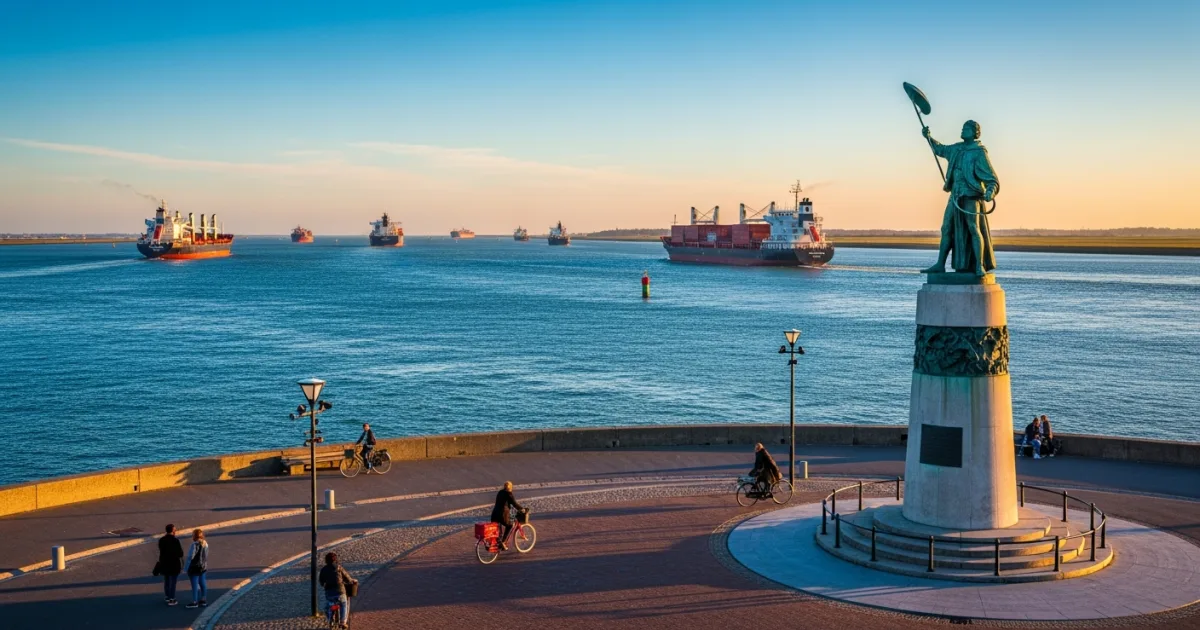
- Boulevard de Ruyter: The longest seaside promenade in the Netherlands, offering unobstructed views of massive cargo ships navigating the Westerschelde.
- Zeeuws maritiem muZEEum: A comprehensive museum detailing Zeeland's rich naval history, housed in a complex of 16th and 17th-century buildings.
- Het Arsenaal: A pirate-themed amusement park and marine aquarium, providing interactive exhibits focused on North Sea marine life.
- Badstrand: A clean, accessible urban beach located directly on the Boulevard, ideal for swimming and sunbathing during summer months.
- Michiel de Ruyter Statue: A prominent bronze monument honoring the famous 17th-century Dutch admiral, born in Vlissingen in 1607.
Things to Avoid
- Ignoring Beach Flags: The Westerschelde has dangerous currents; never swim when red flags are displayed.
- Walking on Dunes: Stick to designated paths to prevent erosion of the vital coastal defense system.
- Underestimating Wind Chill: Coastal winds can significantly lower the perceived temperature, even on sunny days.
- Walking in Bike Lanes: Red-paved paths are strictly for bicycles; pedestrians walking in these lanes risk collisions.
Local Transportation Tips
Vlissingen features a highly efficient and integrated public transportation network. The Vlissingen NS railway station serves as the terminus for the Zeeuwse Lijn, providing direct connections to major Dutch cities. Local transit is managed by Connexxion, operating a network of buses that connect the station, city center, and surrounding municipalities. Cycling remains the dominant mode of local transport, supported by extensive, well-maintained, and segregated bicycle paths throughout the city and along the coast. The Westerschelde Ferry provides a crucial link for pedestrians and cyclists traveling south to Breskens.
Travel Etiquette
- Cycling Rules: Always use hand signals when turning and ensure your bicycle has working lights if riding after dark.
- Tipping: Service is included in restaurant bills, but rounding up or leaving a 5-10% tip for good service is customary.
- Direct Communication: Dutch culture values directness; expect straightforward answers and clear communication without excessive pleasantries.
- Greeting: A firm handshake is the standard greeting for new acquaintances, while three kisses on the cheek are reserved for close friends and family.
Recommended Age Group
Vlissingen offers a versatile coastal experience suitable for various demographics, with a strong emphasis on maritime history and outdoor activities.
- Babies (0-2 years): Neutral. The paved boulevards are highly stroller-friendly, but strong coastal winds can be uncomfortable for infants.
- Kids (3-12 years): Recommended. Attractions like Het Arsenaal pirate park and the accessible sandy beaches provide excellent entertainment for children.
- Teens (13-19 years): Recommended. The area offers active pursuits such as windsurfing, cycling networks, and vibrant beach pavilions during the summer.
- Adults (20-64 years): Recommended. Adults can appreciate the deep maritime history, excellent seafood gastronomy, and extensive cycling routes across Walcheren.
- Seniors (65+ years): Recommended. The city features flat terrain, accessible museums, and numerous benches along the Boulevard for comfortable ship-watching.
Accessibility Level: Medium
- Flat Terrain: The city center and the main Boulevard are entirely flat and paved, ensuring easy navigation for wheelchair users.
- Public Transport: Vlissingen railway station and local Connexxion buses are equipped with ramps and designated spaces for reduced mobility passengers.
- Beach Access: During the summer season, special beach wheelchairs are available for rent, and paved ramps provide access to the sand.
- Museums: Major attractions like the Zeeuws maritiem muZEEum are fully wheelchair accessible, featuring elevators and adapted restroom facilities.
Did You Know?
Vlissingen was the first Dutch city to successfully rebel against Spanish rule in 1572, a pivotal moment in the Eighty Years' War that ultimately led to the independence of the Netherlands.
Cool Statistics
- 50,000: The approximate number of commercial ships that pass by Vlissingen's Boulevard annually.
- 2 kilometers: The length of the city's seaside promenade, the longest in the Netherlands.
- 1247: The year Vlissingen was officially granted city rights by Count Willem II of Holland.
- 1607: The birth year of Michiel de Ruyter, one of the most skilled admirals in Dutch history, born in Vlissingen.






Buy a compatible power adapter for your trip