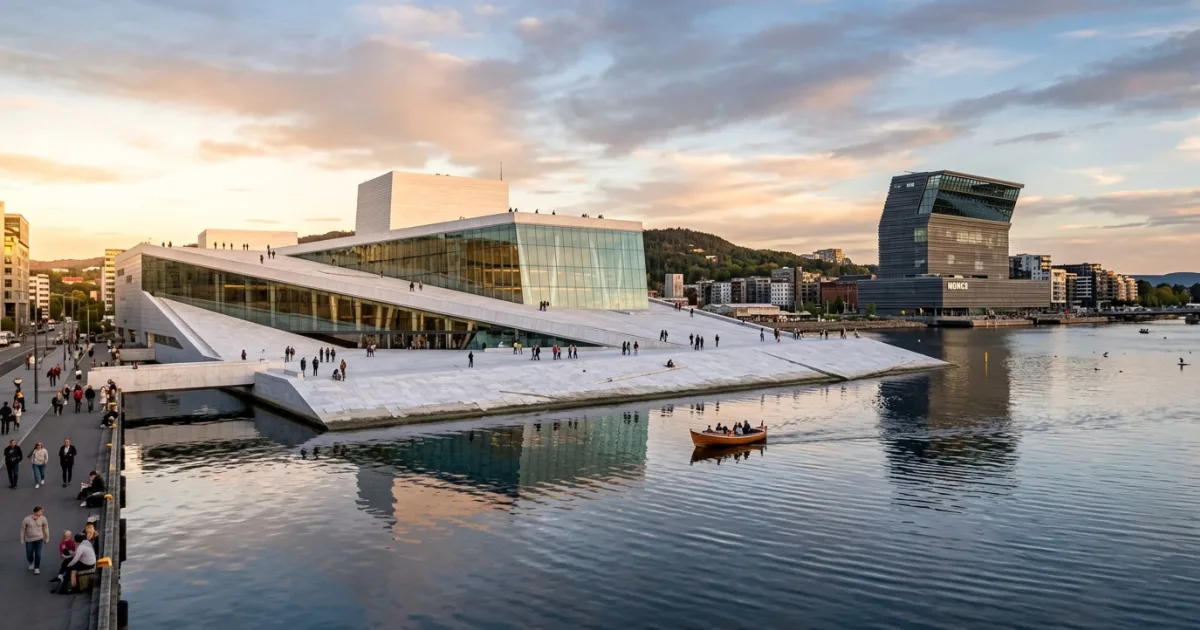
Oslo functions as both Norway's political hub and its modern architectural showcase. Situated between the serene Oslofjord and forested mountain ridges, it offers a rare convergence of metropolitan amenities and unspoiled nature. Over the past two decades, sweeping urban redevelopment projects along the harbor—such as the Barcode Project, Aker Brygge, and Bjørvika—have transformed the waterfront into an accessible, car-free cultural boulevard.
Cultural preservation exists harmoniously with experimental design. The city houses world-famous artistic collections, including Edvard Munch's seminal masterpieces and ancient 9th-century maritime artifacts. With clean air, quiet electric public transportation, and a deep commitment to environmental stewardship, Oslo presents an inspiring vision for 21st-century cities.
Reasons to Visit
- World-class architecture, highlighted by the Oslo Opera House, MUNCH Museum, and the Deichman Bjørvika Library.
- Year-round Nordic sauna culture featuring floating wood-fired saunas moored directly in the harbor.
- Pristine fjord archipelago easily explored using standard public transit ferries.
- Vast trail networks in Oslomarka, accessible directly via inner-city subway lines.
- Thriving New Nordic culinary culture and world-renowned specialty coffee roasting.
Things to Avoid
- Avoid exchanging foreign currency at airport kiosks; cards are universal and cash is rarely necessary.
- Do not buy single paper transit tickets on board vehicles; use the Ruter mobile app for lower fares.
- Avoid eating every meal in primary tourist plazas like Aker Brygge; venture into Grünerløkka or Torggata for superior quality and value.
- Do not walk in dedicated, marked bicycle lanes, as local cyclists travel at rapid commuting speeds.
Local Transportation Tips
Public transportation in Oslo is coordinated by Ruter and ranks among the cleanest and most efficient networks in Europe. The integrated system consists of the T-bane (subway), blue city trams, electric buses, and passenger ferries serving the inner fjord islands. All modes share a unified ticketing structure managed seamlessly via the official Ruter app. Single tickets are valid for 60 minutes across zone 1, while 24-hour and 7-day passes provide outstanding value for active travelers.
Travel Etiquette
- Respect personal space; Norwegians value quiet public environments and unhurried interactions.
- Wait for all passengers to exit buses and trains before stepping onto the carriage.
- Follow sauna etiquette: shower thoroughly with soap before entering, sit on a clean towel, and maintain moderate volume.
- Tipping is discretionary; rounding up the bill by 5-10% for attentive restaurant service is appreciated but never mandatory.
Recommended Age Group
Oslo's safety, accessible layout, and interactive attractions make it appealing across a wide demographic spectrum:
- Babies (0-2 years): Recommended. The city features drop-curb pavements, ubiquitous elevator access, and pristine baby-changing facilities across all cultural venues.
- Kids (3-12 years): Recommended. Outstanding science and natural history museums, expansive outdoor parks, and island ferry rides provide exceptional family stimulation.
- Teens (13-19 years): Recommended. Urban culture, outdoor paddleboarding, trendy thrift shopping in Grünerløkka, and winter ski slopes hold strong appeal.
- Adults (20-64 years): Recommended. World-class art collections, waterfront dining, innovative architecture, and thriving nightlife suit independent adults perfectly.
- Seniors (65+ years): Recommended. Flat harbor promenades, reliable public transit with low-floor trams, and universal barrier-free access ensure effortless travel.
Accessibility Level: High
- Low-floor trams, kneeling electric buses, and step-free T-bane subway stations with tactile guidance paths.
- Zero-threshold entries and high-capacity elevators at all major cultural institutions, including the National Museum and Opera House.
- Smooth, accessible wooden boardwalks connecting the waterfront districts from Sørenga to Tjuvholmen.
- Public island ferries equipped with hydraulic boarding ramps suitable for standard manual and power wheelchairs.
Did You Know?
Oslo's Vigeland Park is the world's largest sculpture park created by a single artist, displaying over 200 bronze, granite, and wrought iron works by Gustav Vigeland across 80 rolling acres.
Cool Statistics
- Over 68% of Oslo's municipal territory consists of protected forests, waterways, and agricultural green zones.
- Nearly 100% of the city's public transit bus and ferry fleet is fully electric or powered by renewable biofuel.
- The Nobel Peace Prize is awarded annually inside the Oslo City Hall every December 10th.







Buy a compatible power adapter for your trip