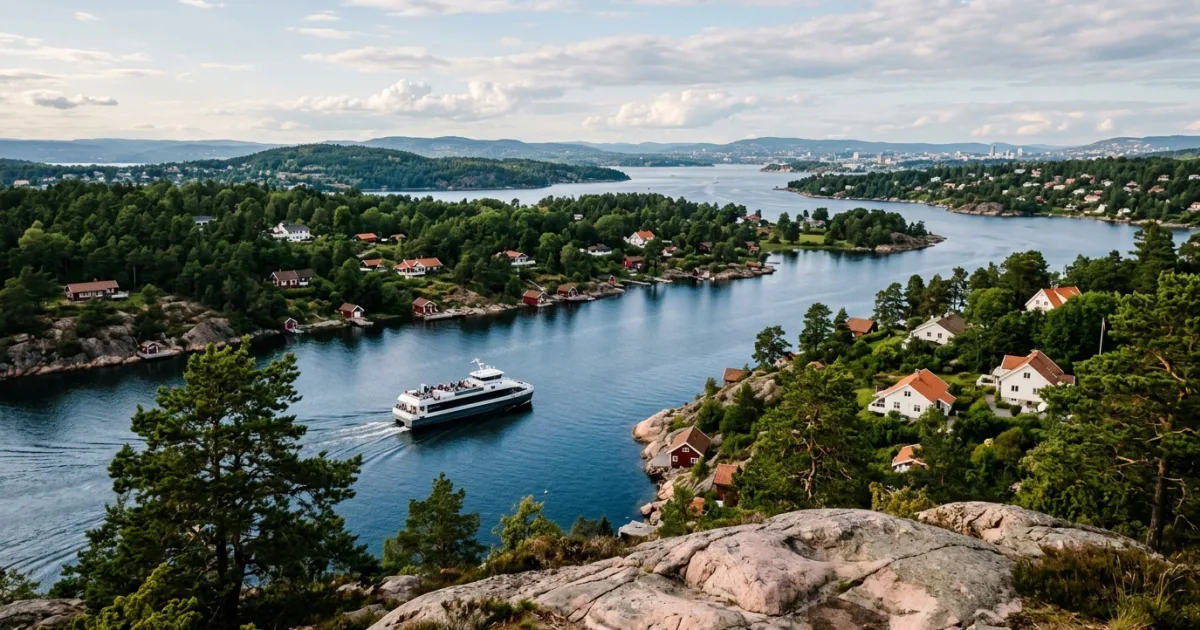
The Oslofjord Region forms the historical, cultural, and geographic heart of eastern maritime Norway. Spanning from the bustling waterfront architecture of inner Oslo down to the broad oceanic expanse bordering Sweden and the Skagerrak, this glaciated inlet features thousands of islands, islets, and sheltered straits. The terrain transitions from dense pine-forested headlands and steep rocky shores in the north to gentle sandy beaches and polished granite outcrops across the outer archipelago.
Historically serving as Norway's primary gateway to continental Europe, the fjord is lined with fortifications, trading hubs, and artists' colonies. Edvard Munch drew lifelong inspiration from Åsgårdstrand's pale summer light, while maritime defense towns like Oscarsborg Fortress played pivotal roles in modern European history. Today, the Oslofjord serves as an exemplary showcase of modern ecological living, featuring solar-electric passenger ferries, floating thermal saunas, and sustainably managed marine reserves that invite low-impact exploration.
Reasons to Visit
- Effortless island hopping across car-free archipelago outposts via clean electric passenger ferries
- A thriving coastal sauna culture pairing wood-fired thermal heat with bracing fjord plunges
- Rich historic architecture ranging from preserved 17th-century star fortresses to Viking burial mounds
- Scenic coastal trails (Kyststien) trace hundreds of kilometers of accessible shoreline and pine forests
- World-class open-air sculpture parks, modern galleries, and historic artist studios overlooking the sea
Things to Avoid
- Avoid attempting to pay with physical cash, as numerous public transit operators, cafes, and kiosks do not accept currency notes
- Do not ignore marine safety warnings or step onto wet, seaweed-slicked granite rocks during heavy coastal swells
- Avoid booking rental cars for exploring the inner fjord islands, where vehicles are strictly prohibited and unnecessary
- Do not neglect insect repellant and tick checks when hiking through coastal brush and grassy headlands during summer
Local Transportation Tips
Public transportation in the Oslofjord Region is exceptionally efficient, punctual, and environmentally advanced. The regional railway operator (Vy) runs modern trains along both the western and eastern shores, stopping at principal fjord hubs including Drammen, Moss, Fredrikstad, and Tønsberg. Local public transit authorities—most notably Ruter—operate fleets of electric passenger ferries linking downtown harbors with inner fjord islands like Hovedøya, Gressholmen, and Lindøya. For outer coastal journeys, local buses and inter-island passenger shuttles provide seamless year-round connectivity.
Travel Etiquette
- Embrace the outdoors in all weather conditions; locals live by the motto that there is no bad weather, only bad clothing
- Keep noise levels down in nature reserves and adhere strictly to quiet hours when visiting residential or summer cabin islands
- Always strip your shoes when entering private Norwegian homes, saunas, and designated indoor guesthouse areas
- Pack out all trash and respect the Leave No Trace principles encoded in Norwegian environmental law
Recommended Age Group
The Oslofjord Region offers safe, clean, and flexible infrastructure that caters remarkably well across the life stages.
- Babies (0-2 years): Recommended. Smooth paved coastal promenades, spotless public nursing facilities, and stroller-friendly electric passenger ferries make travel straightforward.
- Kids (3-12 years): Recommended. Safe, calm swimming coves, historic fortress ramparts to explore, and exciting island ferry adventures captivate younger travelers.
- Teens (13-19 years): Recommended. Stand-up paddleboarding, sea kayaking, urban fjord saunas, and vibrant modern art scenes provide strong independence and active engagement.
- Adults (20-64 years): Recommended. Fine coastal dining, coastal vineyard and cider tours, world-class design, and peaceful nature trails deliver a premier Nordic escape.
- Seniors (65+ years): Recommended. Flat boardwalks, accessible public transit, step-free ferry gangways, and exceptional medical infrastructure ensure high comfort.
Accessibility Level: Medium
- Modern electric passenger ferries feature step-free boarding ramps and designated wheelchair tie-down bays
- Paved coastal promenades in major fjord towns offer flat, barrier-free access with frequent tactile paving
- Many public fjord sauna facilities and bathing jetties incorporate gentle access ramps and handrails into the water
- Regional Vy trains feature automated step lifts, accessible restrooms, and low-floor passenger platforms
Did You Know?
Despite being called a fjord, the Oslofjord is not technically a true glacial fjord in the strict geological sense compared to the deep, cliff-walled valleys of western Norway. Rather, it is an ancient rift valley formed by tectonic forces millions of years ago, which was subsequently smoothed, broadened, and carved down by prehistoric ice sheets.
Cool Statistics
- 100+ kilometers total length of the fjord from Oslo Harbor to the open sea at Færder
- Over 1,000 charted islands, islets, and rocky skerries dot the calm waters of the fjord basin
- Oscarsborg Fortress sank the German cruiser Blücher here in April 1940, altering the course of Norwegian wartime history







Buy a compatible power adapter for your trip