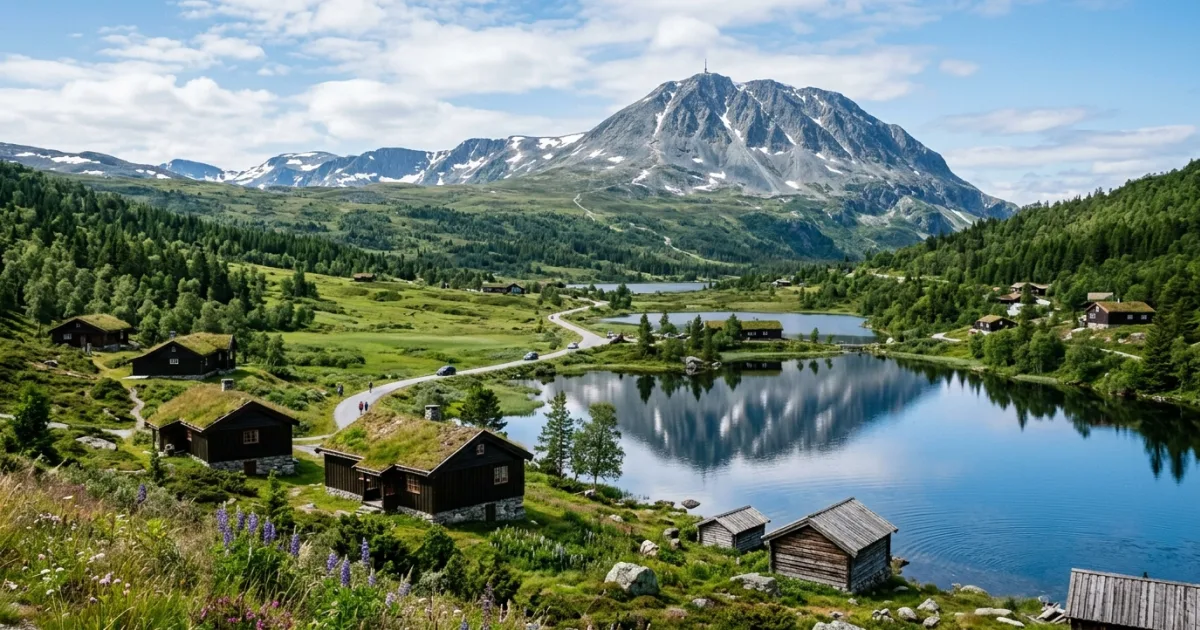
Telemark is a historically rich region in Eastern Norway celebrated for its diverse geography, encompassing dramatic mountains, dense pine forests, deep valleys, and peaceful inland waterways. The region is often dubbed 'Norway in miniature' because it seamlessly integrates coastal archipelagos in the south with vast sub-arctic tundra atop Hardangervidda in the north. Steeped in folklore and engineering ambition, Telemark is also universally acknowledged as the birthplace of modern ski sports, popularized by Sondre Norheim in the 19th century.
Beyond its natural splendor, Telemark features remarkable architectural and industrial monuments. Here stands Heddal Stave Church, Norway's largest preserved medieval wooden church, alongside the monumental heavy water plant at Vemork in Rjukan, an engineering marvel tied to pivotal World War II saboteur actions. Whether navigating the historic 18-step locks of the Telemark Canal aboard vintage passenger vessels or ascending the peak of Gaustatoppen, travelers encounter an authentic cross-section of Norwegian wilderness and cultural persistence.
Reasons to Visit
- Gaustatoppen Summit: Hike or take the historic interior railway to one of Norway's most iconic peaks with vistas stretching over one-sixth of the country.
- The Telemark Canal: Experience a 19th-century marvel of manual water locks carved directly into granite rock faces.
- Heddal Stave Church: Marvel at the soaring triple-nave architecture of Norway's grandest 13th-century stave church.
- UNESCO World Heritage in Rjukan: Discover industrial innovation, the dramatic Vemork hydroelectric station, and the WWII heavy water sabotage museum.
- Cradle of Skiing in Morgedal: Explore the origins of modern alpine and slalom skiing through interactive exhibits and pastoral mountain tracks.
Things to Avoid
- Avoid hiking high alpine routes like Gaustatoppen in standard running shoes; rocky scree can cause ankle injuries without proper boot support.
- Do not rely entirely on public transport if your itinerary focuses on remote trailheads, cabins, or stave churches.
- Avoid assuming all mountain passes remain open year-round; always check road status during late autumn and early spring transitions.
- Do not carry large sums of physical cash, as most ticket booths, transport services, and shops operate card-only terminals.
- Avoid wild camping on fenced farmland or within 150 meters of residential dwellings without express landowner consent.
Local Transportation Tips
Navigating Telemark is easiest by private vehicle or rental car, which allows direct access to scenic mountain bypasses such as the Suleskarvegen and trail parking areas. Public regional buses operated by Farte connect municipal centers including Skien, Porsgrunn, Bø, and Seljord. The Bratsbergbanen railway line links Notodden and Porsgrunn, while the Sørlandsbanen train connects Bø and Neslandsvatn with Oslo and Kristiansand. During the summer navigation window, heritage passenger ships provide transport along the Telemark Canal.
Travel Etiquette
- Respect the principle of Allemannsretten (Right to Roam) by packing out all litter and closing livestock pasture gates behind you.
- Greet fellow hikers on mountain trails with a friendly 'Hei' or nod.
- Remove shoes or change into indoor slippers when entering private homes and many traditional mountain lodges.
- Respect quiet hours at campgrounds and lakeside rest spots, generally observed between 23:00 and 07:00.
Recommended Age Group
Telemark offers well-balanced infrastructure accommodating diverse physical abilities and interests.
- Babies (0-2 years): Neutral. Long driving distances between mountain sights and rough terrain on trails make navigation with strollers challenging, though scenic canal rides and peaceful cabin rentals are comfortable.
- Kids (3-12 years): Recommended. Canal ship rides through manual stone locks, cable cars, swimming in freshwater lakes, and living farm museums provide engaging outdoor entertainment.
- Teens (13-19 years): Recommended. High-adrenaline activities such as mountain biking, climbing, alpine skiing, and discovering WWII sabotage history at Vemork appeal directly to active youth.
- Adults (20-64 years): Recommended. Premier trekking routes, historic stave church visits, scenic road trips, and gourmet local dining suit adult leisure travelers and adventure seekers.
- Seniors (65+ years): Recommended. Gentle boat voyages on the canal, interior mountain funicular access up Gaustatoppen, and accessible cultural heritage centers allow comfortable exploration.
Accessibility Level: Medium
- The Gaustabanen funicular railway provides subterranean railway and lift access near the top of Gaustatoppen for visitors unable to hike the rocky trail.
- Main passenger vessels on the Telemark Canal feature boarding ramps, though interior stairways on historic boats can be narrow; contact operators ahead for manual wheelchair assistance.
- Major museums such as the Norwegian Industrial Workers Museum (Vemork) provide ramped access, elevators, and paved pathways.
- Heddal Stave Church grounds are wheelchair accessible, though narrow medieval timber doorways restrict interior wheelchair navigation.
Did You Know?
During World War II, Norwegian resistance saboteurs carried out Operation Gunnerside at the Vemork hydroelectric plant in Rjukan, successfully destroying Nazi heavy water production and thwarting atomic weapon development without firing a single shot.
Cool Statistics
- 1883 meters: The elevation of Gaustatoppen, Telemark's highest and most prominent peak.
- 105 kilometers: The total length of the Telemark Canal, descending through 18 manual locks across 72 vertical meters.
- 1200s: The approximate construction century of the colossal Heddal Stave Church in Notodden.
- 1/6: The proportion of Norway's mainland surface visible from the crest of Gaustatoppen on a clear day.







Buy a compatible power adapter for your trip