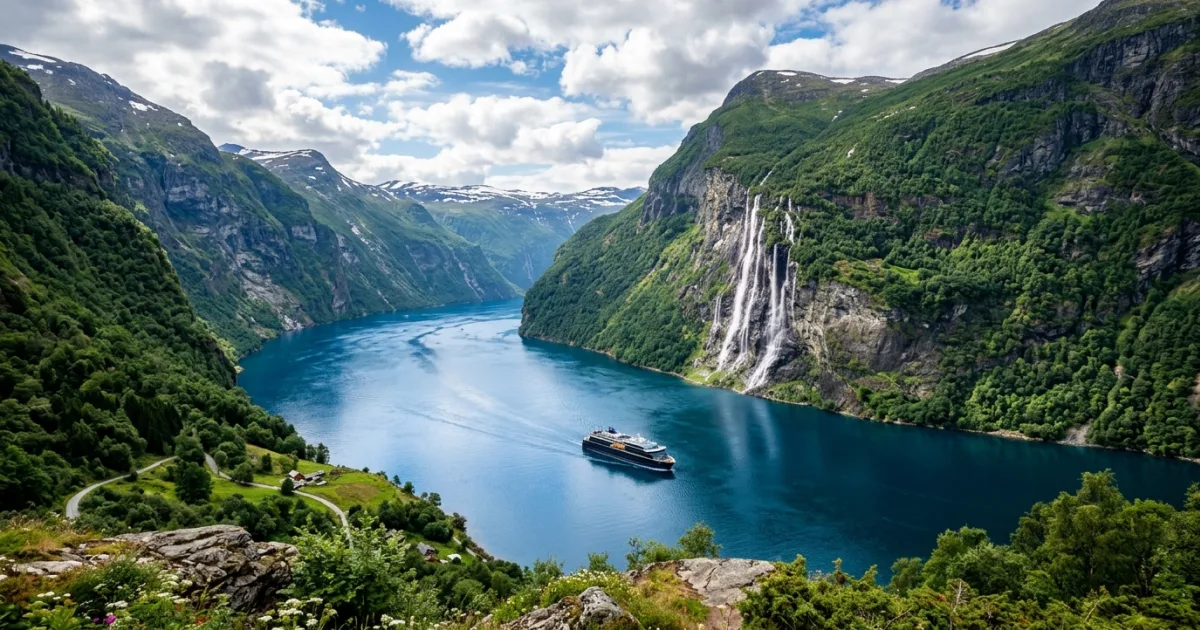
Western Norway is a masterpiece of geological history, where the Ice Age carved deep, steep-sided valleys that eventually flooded with the sea. The result is a labyrinth of fjords that stretch far inland, creating a dramatic and awe-inspiring landscape. The region is anchored by vibrant coastal cities: Bergen, known for its historic Bryggen wharf and surrounding seven mountains; Stavanger, the gateway to the Lysefjord and a hub of street art and gastronomy; and Ålesund, famous for its unique Art Nouveau architecture.
Beyond the cities, the true draw is the wilderness. The Sognefjord, Norway's longest and deepest fjord, branches into the narrow, UNESCO-protected Nærøyfjord. Further south, the Hardangerfjord offers a softer landscape of fruit orchards and the spectacular Vøringsfossen waterfall. Whether you are navigating the hairpin turns of the Trollstigen mountain road, kayaking on mirror-glass waters, or standing on the edge of the iconic Pulpit Rock, Western Norway delivers a profound connection to nature.
Reasons to Visit
- The Fjords: Experience UNESCO World Heritage sites like Geirangerfjord and Nærøyfjord, offering some of the most spectacular scenery on earth.
- Epic Hiking: Tackle world-renowned trails including Preikestolen (Pulpit Rock), Kjeragbolten, and Trolltunga.
- Scenic Routes: Drive along National Tourist Routes featuring architectural viewpoints, dramatic bridges, and mountain passes.
- Flåm Railway: Ride one of the steepest and most beautiful train journeys in the world, descending from the mountains to the fjord.
- Coastal Culture: Explore the Hanseatic history of Bergen and the Art Nouveau streets of Ålesund.
Things to Avoid
- Underestimating Driving Times: Distances look short on a map, but winding roads, speed limits, and ferry crossings make travel slow.
- Hiking Unprepared: Never hike in jeans or sneakers. Weather changes rapidly; always bring waterproofs, layers, and sufficient food/water.
- Buying Bottled Water: It is an unnecessary expense and environmentally unfriendly when tap water is pristine.
- Ignoring Ferry Schedules: Missing the last ferry of the day can leave you stranded on the wrong side of a fjord.
Local Transportation Tips
Navigating Western Norway is an adventure in itself. The region relies heavily on a network of car ferries that cross the fjords, seamlessly connecting the road system. Renting a car or campervan offers the ultimate freedom to explore at your own pace. For those without a vehicle, the public transport system is highly efficient. Express boats (Hurtigbåt) connect coastal towns, while regional buses (like Skyss and Kolumbus) navigate the inland routes. The famous Hurtigruten and Havila coastal ferries also serve as a scenic way to travel between major ports from Bergen northwards.
Travel Etiquette
- Respect Nature: Adhere strictly to the 'Leave No Trace' principles. Pack out all trash and respect wildlife.
- Punctuality: Norwegians value time. Transport departs exactly on schedule, and arriving late to tours or reservations is considered rude.
- Personal Space: Norwegians appreciate personal space and quietness in public areas; avoid loud conversations on public transport.
- Tipping: Service charge is included in the bill. Tipping is not mandatory, though rounding up or leaving 5-10% for exceptional service in restaurants is appreciated.
Recommended Age Group
Western Norway offers diverse experiences that cater to various age groups, though the rugged terrain requires consideration for mobility.
- Babies (0-2 years): Neutral. While Norwegians are very family-friendly and facilities are excellent, long driving days, ferry waits, and limited stroller access on nature trails can be challenging.
- Kids (3-12 years): Recommended. Children will love the interactive Viking museums, easy nature walks, funicular rides in Bergen, and the excitement of fjord cruises.
- Teens (13-19 years): Recommended. The region is an adventure playground offering kayaking, RIB boat safaris, glacier hiking, and iconic photo opportunities.
- Adults (20-64 years): Recommended. Perfect for scenic driving, challenging hikes, and enjoying local seafood, cider tasting, and cultural history.
- Seniors (65+ years): Recommended. The region is highly accessible via scenic trains (like Flåmsbana), comfortable electric fjord cruises, and well-paved viewpoints, allowing for spectacular sightseeing without strenuous physical exertion.
Accessibility Level: Medium
- Public Transport: Major trains, express buses, and ferries are generally well-equipped for wheelchair users, featuring ramps and accessible restrooms.
- Attractions: Many top viewpoints along the National Scenic Routes have been architecturally designed with accessibility in mind, offering flat, paved paths.
- Cities: Historic areas like Bergen's Bryggen feature cobblestones which can be bumpy, but modern museums and restaurants are fully accessible.
- Nature: While deep wilderness trails are rugged, there are numerous accessible boardwalks and paved paths near major waterfalls and fjord edges.
Did You Know?
Western Norway is home to the Lærdal Tunnel, the longest road tunnel in the world. Stretching 24.5 kilometers (15.2 miles), it features three large, colorfully lit caverns designed to break up the monotony of the drive and keep drivers alert.
Cool Statistics
- Norway has over 1,000 fjords, with the vast majority located in the Western Norway region.
- The Sognefjord is the longest navigable fjord in the world, stretching 204 kilometers inland.
- Hornindalsvatnet, located in the region, is the deepest lake in Europe at 514 meters deep.
- Bergen experiences an average of 239 days of precipitation per year, making it one of the rainiest cities in Europe.







Buy a compatible power adapter for your trip