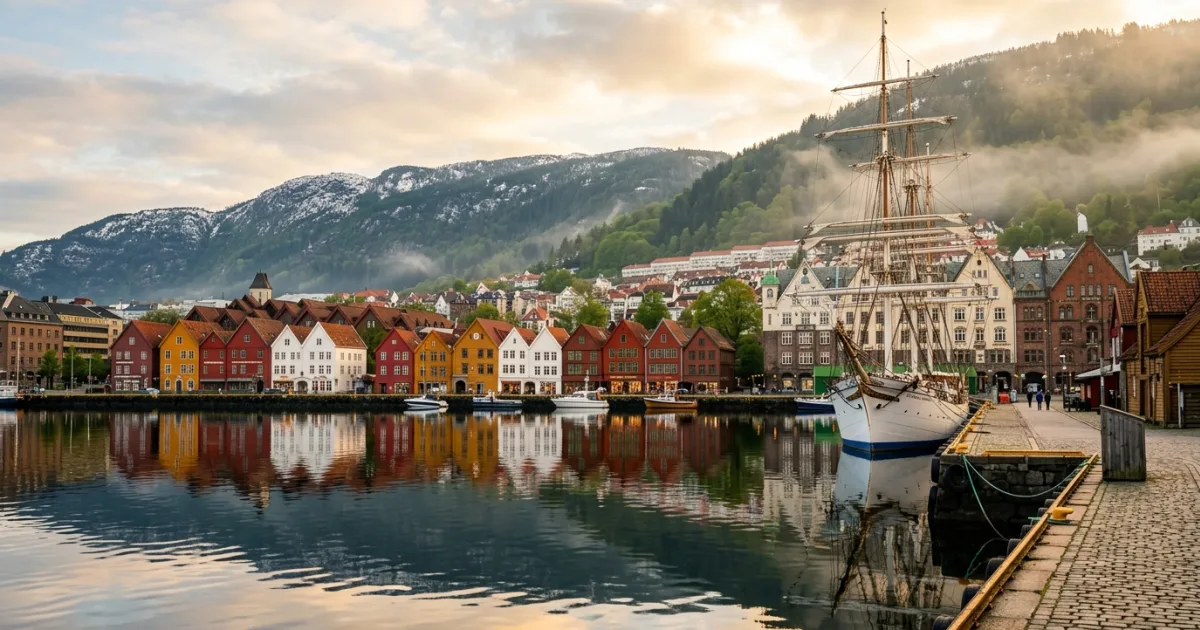
Bergen stands as Norway's historic cultural gateway, framed by seven dramatic mountains and the North Sea. Founded in the 11th century, the city grew into one of Northern Europe's vital commercial hubs under the Hanseatic League, an economic legacy preserved in the wooden merchant quarters of Bryggen. Today, Bergen effortlessly blends maritime traditions with cutting-edge Nordic design, world-class art collections, and an internationally celebrated culinary scene.
Beyond its urban core, the city acts as the primary starting point for exploring Western Norway's celebrated fjords, including the Hardangerfjord and Sognefjord. With the Fløibanen funicular delivering hikers straight from downtown streets to alpine trails, Bergen offers an exceptional balance of cultural immersion and outdoor exploration.
Reasons to Visit
- Bryggen Wharf: Walk through narrow timber alleyways inside this preserved 14th-century Hanseatic trading quarter, recognized by UNESCO.
- Panoramic Mountain Access: Ascend Mount Fløyen on the Fløibanen funicular or Mount Ulriken via modern cable car for sweeping views of the archipelago.
- Fjord Gateways: Depart straight from the central harbor on scenic cruises reaching the narrow cliffs of Mostraumen and the Nærøyfjord.
- UNESCO City of Gastronomy: Sample arctic seafood, creamy fish soups, and seasonal wild berries in historic warehouses and modern dockside restaurants.
- Edvard Grieg's Legacy: Tour Troldhaugen, the composer's preserved lakeside villa and museum, complete with a turf-roofed concert hall.
Things to Avoid
- Avoid purchasing one-way or return tickets on public transit with cash, as drivers do not take cash or levy heavy surcharges; download the Skyss Billett app instead.
- Do not head out onto mountain trails without waterproof gear, even under clear blue skies, as weather can shift within 20 minutes.
- Avoid tourist-trap sit-down fish vendors at the outdoor Fisketorget market without verifying per-kilo prices first.
- Do not rely on standard taxis for long journeys; they carry high baseline flag-drop and weekend tariffs in Norway.
Local Transportation Tips
Bergen features a clean, punctual, and fully integrated transit network operated by Skyss. The Bybanen light rail system connects the downtown terminal at Byparken to southern suburbs and Bergen Airport (Line 1). An extensive network of electric and hybrid buses covers all outlying districts. The Skyss Billett app allows travelers to purchase single, 24-hour, or weekly tickets seamlessly. The Fløibanen funicular operates continuously until late evening from downtown to Mount Fløyen.
Travel Etiquette
- Cashless transactions: Pay with credit, debit, or smart devices; merchants generally prefer not to handle coins or banknotes.
- Personal space: Norwegians value personal privacy and quiet speech in public transit and waiting areas.
- Trail manners: Always yield to ascending hikers on mountain tracks and pack out every scrap of personal trash to support Norway's right-to-roam ('allemannsretten') principles.
- Punctuality: Arrive on time for tours, train connections, and dinner reservations, as schedules operate with strict precision.
Recommended Age Group
Bergen accommodates a broad spectrum of travelers with its walkable urban core, clean infrastructure, and safe transit.
- Babies (0-2 years): Neutral. Cobblestone corridors around Bryggen and steep switchbacks on Mount Fløyen can challenge strollers, though public transport is exceptionally baby-friendly.
- Kids (3-12 years): Recommended. Children enjoy the Fløibanen funicular ride, the interactive Bergen Aquarium (Akvariet), and the Mount Fløyen troll forest playground.
- Teens (13-19 years): Recommended. Thrilling fjord ribs, mountain ziplining, scenic hiking routes, and high-tech science centers offer great engagement.
- Adults (20-64 years): Recommended. Perfect mix of world-class museums, scenic fjord expeditions, culinary venues, and hiking trails.
- Seniors (65+ years): Recommended. Excellent flat transit, elevator-equipped funiculars, accessible catamaran cruises, and clean, safe streets.
Accessibility Level: Medium
- The Bybanen light rail provides step-free, level boarding across all platforms from the airport to the city center.
- The Fløibanen funicular and Mount Ulriken cable car feature dedicated wheelchair-accessible boarding ramps and glass observation viewing platforms.
- Bryggen's historic timber walkways feature rough, uneven wooden planks and narrow thresholds that may require assistance for manual wheelchairs.
- Major museums, including KODE Art Museums and the Bergen Maritime Museum, are fully equipped with elevators and accessible restrooms.
Did You Know?
Bergen's historic Bryggen wharf has survived multiple catastrophic city fires throughout the centuries, and several of its timber warehouses still lean noticeably because their foundations rest on medieval strata.
Cool Statistics
- Averages over 200 days of recorded rainfall each year, inspiring local rainwear fashion brands.
- Home to Bryggen's 62 preserved wooden buildings, dating to post-fire reconstruction in 1702.
- Mount Ulriken rises 643 meters (2,110 feet) above sea level, providing the highest viewpoint over the city.
- Operates an electric harbor ferry, the Beffen, which has carried passengers across Vågen harbor since 1894.







Buy a compatible power adapter for your trip