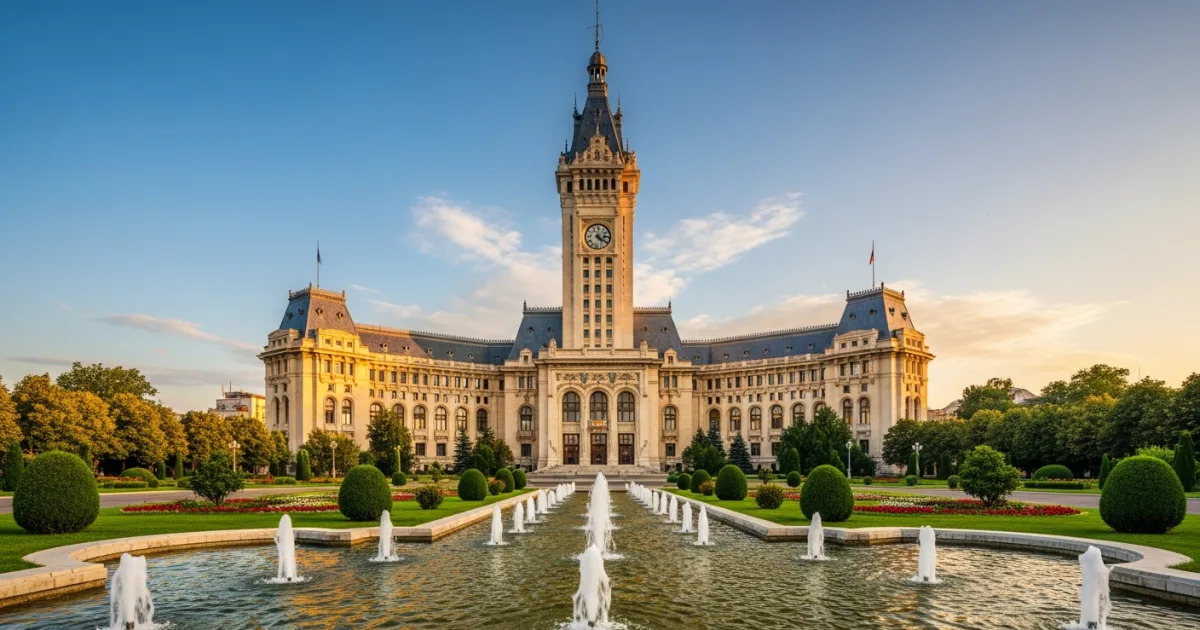
Iasi stands as a proud testament to Romania's rich cultural and intellectual history. As the former capital of the Principality of Moldavia, the city is steeped in historical significance, evident in its grand boulevards and monumental architecture. The Palace of Culture, a neo-Gothic masterpiece, dominates the city skyline and houses four major museums, making it the cultural heart of Iasi. Beyond its historical facade, Iasi is a dynamic university town, home to the oldest university in Romania, Alexandru Ioan Cuza University. This infuses the city with a youthful, energetic vibe, bustling cafes, and a thriving arts scene. Visitors can easily spend days wandering between centuries-old monasteries, lush botanical gardens, and lively public squares, all while enjoying the warm hospitality and affordable prices that characterize the Moldavia region.
Reasons to Visit
- Palace of Culture: A stunning architectural marvel housing multiple museums and a beautiful clock tower.
- Religious Heritage: Known as the 'City of a Hundred Churches,' featuring the intricate Trei Ierarhi Monastery and the grand Metropolitan Cathedral.
- Copou Park: A serene, historic public park perfect for leisurely strolls, home to the oldest university and Eminescu's Linden Tree.
- Affordability: Offers a rich European cultural experience at a fraction of the cost of Western capitals.
- Vibrant Atmosphere: A lively university city with excellent cafes, restaurants, and a youthful energy.
Things to Avoid
- Avoid relying solely on taxis hailed off the street; use rideshare apps like Uber or Bolt to ensure fair pricing.
- Don't forget to validate your public transport ticket immediately upon boarding the tram or bus to avoid fines.
- Avoid visiting outdoor attractions during the peak heat of summer afternoons; plan park visits for the morning or evening.
Local Transportation Tips
Iasi has an extensive and efficient public transportation system primarily consisting of trams and buses operated by CTP Iasi. The tram network is particularly useful for tourists, connecting major attractions, the train station, and residential areas. Tickets can be purchased from kiosks at major stops or via mobile apps, and must be validated onboard. For more direct routes, ridesharing apps like Uber and Bolt are widely available, reliable, and inexpensive. The city center is also highly walkable, with many key sights located within a short distance of each other.
Travel Etiquette
- Dress modestly when visiting churches and monasteries; shoulders and knees should be covered.
- It is customary to leave a 10% tip in restaurants and cafes if the service was good.
- Greet shopkeepers and locals with a polite 'Bună ziua' (Good day) when entering a store or starting a conversation.
- Always ask for permission before taking close-up photographs of locals or religious ceremonies.
Recommended Age Group
Iasi is a versatile destination that caters well to visitors of all ages, offering a mix of history, nature, and modern amenities.
- Babies (0-2 years): Recommended. The city has many large, stroller-friendly parks like Copou Park and the Botanical Garden, though some historic streets may be uneven.
- Kids (3-12 years): Recommended. Children will enjoy the open spaces, the Palace of Culture's impressive architecture, and nearby family-friendly attractions.
- Teens (13-19 years): Recommended. The vibrant student atmosphere, affordable cafes, and engaging museums make it an interesting city for teenagers.
- Adults (20-64 years): Recommended. Adults will appreciate the rich history, architectural beauty, culinary scene, and nightlife.
- Seniors (65+ years): Recommended. The city is generally flat in the central areas, with accessible public transport and plenty of relaxed, cultural sightseeing opportunities.
Accessibility Level: Medium
- The city center and major attractions like the Palace of Culture have made significant improvements in wheelchair accessibility, including ramps and elevators.
- Public transportation is modernizing, with many low-floor trams and buses now in operation, though older models are still in use.
- Some historic sites and older churches may have steps or uneven cobblestone paths, which can pose challenges for mobility-impaired travelers.
- Accessible restrooms are available in major museums, shopping malls, and larger restaurants.
Did You Know?
Iasi was the capital of Romania twice in its history: first between 1859 and 1862, and again temporarily during World War I from 1916 to 1918 when Bucharest was occupied by the Central Powers.
Cool Statistics
- The Palace of Culture has exactly 298 rooms and a floor area of over 34,000 square meters.
- Iasi is home to the oldest university in Romania, founded in 1860.
- The city's Botanical Garden is the oldest and largest in Romania, covering over 100 hectares.
- The Trei Ierarhi Monastery is famous for its exterior, which is entirely covered in intricate stone carvings featuring over 30 different non-repeating patterns.







Buy a compatible power adapter for your trip