Disclosure: This site contains affiliate links. We may earn a commission if you make a purchase, at no extra cost to you.

>
>
>
>
Curtea de Arges

Curtea de Arges

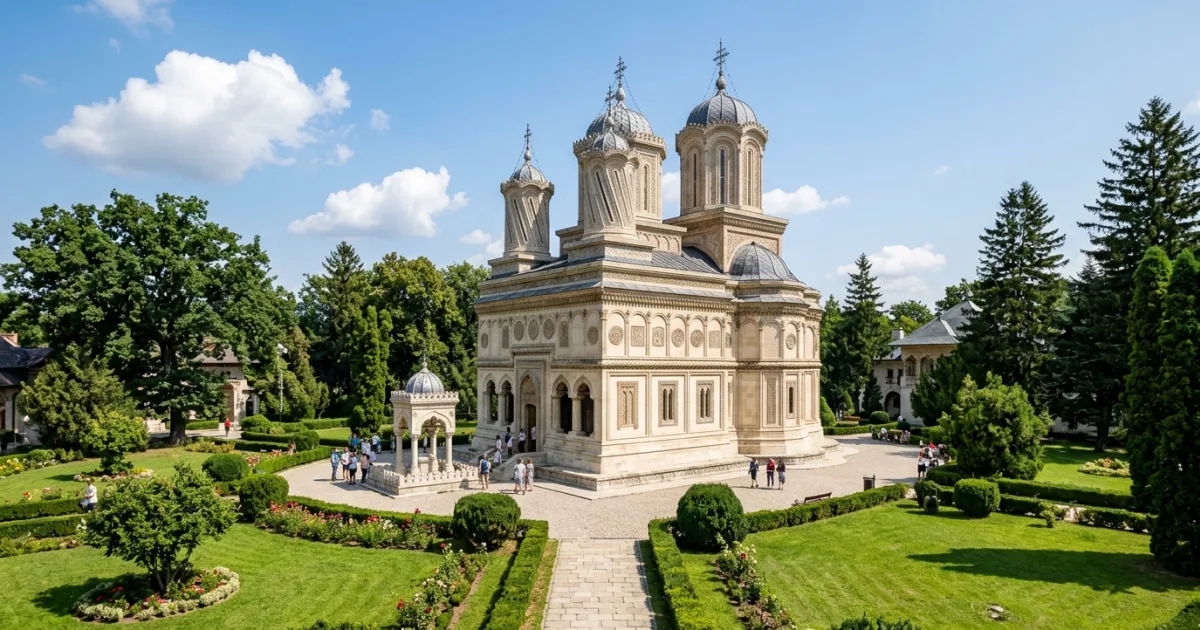
Curtea de Arges Monastery in Wallachia, Romania

Curtea de Arges Overview & Key Highlights

Curtea de Arges serves as one of the oldest towns in Romania and the first capital of Wallachia. Founded in the early 14th century, this historical gem is nestled in the valley of the Arges River, surrounded by the foothills of the Carpathian Mountains. Visitors are drawn to its profound historical significance, most notably the Curtea de Arges Monastery, which stands as a masterpiece of Byzantine architecture and the royal necropolis for Romania's monarchs. The town offers a tranquil atmosphere where centuries-old legends, such as the myth of Master Manole, are woven into the very fabric of its monuments. Beyond its architectural marvels, Curtea de Arges acts as the southern gateway to the famous Transfagarasan Highway, making it an essential stop for road-trippers and nature enthusiasts. The ruins of the Princely Court (Curtea Domnească) and the 14th-century Princely Church of St. Nicholas provide a captivating glimpse into medieval Wallachian life. Travelers can easily explore the compact town center on foot, enjoying local cafes and traditional Romanian eateries along the way. Whether you are tracing the footsteps of ancient royalty or preparing for an alpine adventure, this town delivers a rich blend of culture, history, and natural beauty.

Curtea de Arges Travel Guide: Logistics & In-Depth Tips

Curtea de Arges is a destination where Romanian history and mythology deeply intertwine. As the first capital of the medieval principality of Wallachia, the town is anchored by the ruins of the Princely Court (Curtea Domnească), which dates back to the 14th century. Here, the Princely Church of St. Nicholas stands as one of the oldest monuments of Romanian feudal art, preserving stunning original frescoes that offer a window into the Byzantine influence on the region.

The crown jewel of the town is undoubtedly the Curtea de Arges Monastery. Consecrated in the early 16th century, its striking pale limestone facade, adorned with intricate Moorish and Caucasian motifs, makes it one of the most beautiful religious buildings in Eastern Europe. It serves as the final resting place for the Romanian royal family, including King Carol I and Queen Elisabeth. Beyond the town limits, the landscape dramatically shifts as the road winds north toward the Vidraru Dam and the spectacular Transfagarasan Highway, offering travelers a seamless transition from deep historical exploration to breathtaking alpine adventure.

Reasons to Visit

  • Explore the breathtaking Curtea de Arges Monastery, a masterpiece of Romanian architecture and royal burial site.
  • Discover the 14th-century ruins of the Princely Court and the beautifully preserved frescoes of the Princely Church.
  • Use the town as the perfect starting point for driving the world-famous Transfagarasan Highway.
  • Learn about fascinating local folklore, including the tragic legend of Master Manole.
  • Visit the nearby Poenari Citadel, the authentic cliffside fortress of Vlad the Impaler.

Things to Avoid

  • Avoid planning a drive on the full Transfagarasan Highway between November and June, as the high-altitude pass is closed due to snow.
  • Don't wear revealing clothing when visiting the monasteries and churches; modest dress is required.
  • Avoid relying solely on credit cards, as many small vendors and rural attractions only accept cash.
  • Don't underestimate the climb to Poenari Castle—it involves nearly 1,500 steep steps and requires a moderate level of fitness.

Local Transportation Tips

Curtea de Arges is a compact town, and its main historical sites, including the Princely Court and the Monastery, can easily be explored on foot. For traveling outside the town to attractions like the Vidraru Dam or Poenari Castle, renting a car is highly recommended as public transportation in the rural mountainous areas is limited. Taxis are available in the town center and are relatively inexpensive for short trips.

Travel Etiquette

  • Dress modestly when entering religious sites: shoulders and knees should be covered for both men and women.
  • Speak quietly and avoid using flash photography inside the churches and monasteries.
  • Leave a small tip (around 10%) at restaurants if the service was good, as it is customary in Romania.
  • Greet shopkeepers and locals with a polite 'Bună ziua' (Good day) when entering establishments.

Recommended Age Group

Curtea de Arges offers a mix of accessible history and nearby outdoor adventures, making it suitable for various age groups.

  • Babies (0-2 years): Neutral. While the town is peaceful, navigating the cobblestone paths of the Princely Court and the steps of nearby attractions with a stroller can be challenging.
  • Kids (3-12 years): Recommended. Children will enjoy the open spaces around the historical ruins and the impressive Vidraru Dam nearby.
  • Teens (13-19 years): Recommended. The dark, fascinating legends of Master Manole and the proximity to the real Dracula's fortress (Poenari) offer high engagement for teenagers.
  • Adults (20-64 years): Recommended. Adults will appreciate the deep historical context, stunning architecture, and the opportunity to drive the scenic Transfagarasan.
  • Seniors (65+ years): Recommended. The town center is compact and walkable, and the main attraction (the Monastery) is easily accessible with flat, paved surrounding gardens.

Accessibility Level: Medium

  • The grounds of the Curtea de Arges Monastery are generally flat and accessible for wheelchair users, though entering the church itself involves a small step.
  • The ruins of the Princely Court feature uneven terrain and cobblestones, which may pose challenges for those with limited mobility.
  • Nearby attractions like Poenari Castle are strictly inaccessible to wheelchair users due to the steep 1,480-step climb.
  • Accessible public restrooms are limited, so it is best to use facilities at modern restaurants or your accommodation.

Did You Know?

Did you know that the Curtea de Arges Monastery features twisted cupolas that create an optical illusion? As you walk past the building, the towers appear to lean and twist, a unique architectural feature designed to symbolize the spiritual yearning to reach heaven.

Cool Statistics

  • Founded in: Early 14th century (around 1330).
  • Number of steps to nearby Poenari Castle: 1,480.
  • Distance to Bucharest: Approximately 150 kilometers.
  • Monastery Consecration Year: 1517, by Neagoe Basarab.

Address:

Curtea de Arges, Romania

Find Nearby Accommodations

Basic Info

address icon

COUNTRY & Region

Romania,
Europe

ACCESSIBILITY LEVEL​

Medium
Currency icon

LOCAL CURRENCY​

Romanian Leu (RON)
Price level icon
Low
Safety Level icon

SAFETY LEVEL

Duration icon

Recommended Duration

• Full day
• 1-7 days

Electricity

electricity icon

Electricity

220-240V, 
50Hz
Plug Socket icon

Plug Type

• Type C (Round pin)
• Type F (Two round pins with earth clips)
Plug types
Click To View Plug Types
Curtea de Arges is part of our
Medieval Trails collection

Activities To Do In Curtea de Arges

Best Time To Visit Curtea de Arges

The best time to visit Curtea de Arges is from late spring to early autumn (May to September). During these months, the weather is pleasantly warm, making it ideal for exploring historical sites and driving the nearby mountain passes.

  • Spring (May): Mild temperatures and blooming landscapes; fewer crowds at the monastery.
  • Summer (June - August): Peak tourist season with warm weather; essential if you plan to drive the Transfagarasan Highway, which is only fully open during these months.
  • Autumn (September - October): Crisp air and stunning fall foliage in the surrounding Carpathian foothills.

Average Temperatures Per Month

Remember to check the weather forecast a few days before the trip and before heading to the airport.

Safety Level icon

Safety Level

Curtea de Arges is a very safe, quiet town with low crime rates. Standard travel precautions apply: keep an eye on your belongings in crowded areas, especially around the main monastery during religious holidays. If driving the nearby mountain roads, ensure your vehicle is in good condition and check weather advisories, as mountain weather can change rapidly.

The rating is based on multi-year peace, crime, and security indices. Before you go, always verify current conditions through official government travel advisories.

Emergency Numbers

Police: 112 (Universal)
Ambulance: 112 (Universal)

No internet needed • Includes local translations • Free for TravelingWiz readers

Spoken Languages

Romanian is the official language. English is commonly spoken by younger generations and staff in the hospitality sector, though older locals may only speak Romanian or some French.

Learn The Language

  • Bună ziua (Good afternoon/Hello)
  • Mulțumesc (Thank you)
  • Vă rog (Please)
  • Cât costă? (How much does it cost?)
  • Unde este toaleta? (Where is the bathroom?)
  • Vorbiți engleză? (Do you speak English?)
  • O masă pentru doi, vă rog (A table for two, please)
  • La revedere (Goodbye)
Travel Booking Partner - TravelingWiz

Trip Cost & Budgeting for Curtea de Arges, 2026

Everything you need to know about money while traveling
Is Curtea de Arges expensive for tourists in 2026? No, it remains an extremely budget-friendly destination in Romania. According to Human Verified prices, you can expect to pay around 13 RON for a cappuccino, 11 RON for a pint of domestic beer, and 50 RON for a standard restaurant meal. Accommodation and transportation costs are also quite reasonable throughout town. Use the data table below to calculate your specific daily budget based on your travel style.
Currency icon

LOCAL CURRENCY​:

Romanian Leu (RON)
Price level icon
Low
Credit cards are accepted at hotels and larger restaurants, but cash is essential for small shops, taxis, and tips.

Per person, per day – pocket cash for small purchases.

Local: 35
Romanian Leu (RON)
≈ 8 USD

Full daily spend estimation (accommodation, food, transportation, attractions).

Travel Style
Romanian Leu (RON)
≈ USD ($)
Budget
200
45
Mid-range
360
80
Comfort
790
176

The Prices, Daily costs, and calculator results are estimates for planning purposes only. Actual costs may vary based on season, booking timing, personal spending habits, and currency fluctuations. TravelingWiz cannot be held responsible for discrepancies between these estimates and your final trip expenses.

  • • Visit the famous Curtea de Arges Monastery, which offers very affordable or free entry compared to major European landmarks.
  • • Eat at local bakeries (covrigarii) for traditional snacks like covrigi and pastries for just 3 to 6 RON.
  • • Take local buses or trains from Bucharest or Pitesti rather than expensive private taxi transfers.
  • • Stay in local family-run guesthouses (pensiuni) for authentic hospitality at a fraction of big hotel prices.

Pre-Order Tickets

Avoid disappointment when tickets sell out — and skip the long lines by booking online in advance. You’ll often save up to 20% too.
Save up to 20%

Travel Discounts & Coupons

Save on hotels, attractions, transport, and gear — find verified discounts for smarter travel spending.
Verified Coupons

What To Pack

  • Comfortable walking shoes for navigating cobblestone streets and historical ruins.
  • Modest clothing (covering shoulders and knees) for visiting the monasteries and churches.
  • A light jacket or sweater, as evenings near the Carpathian foothills can be cool even in summer.
  • A camera to capture the intricate architecture of the Curtea de Arges Monastery.
  • Motion sickness pills if you plan to drive the winding Transfagarasan Highway nearby.
We couldn't find tips for Curtea de Arges.
If you got any, please share

Recommended Itineraries for Traveling to Curtea de Arges

We couldn't find itineraries for Curtea de Arges.
you can contact us for custom trip plan

Food & Drink Highlights

Local Food Overview

The local cuisine in Curtea de Arges reflects traditional Wallachian flavors, characterized by hearty, comforting dishes. Expect plenty of grilled meats, rich soups soured with borș, and staples like mămăligă (polenta) paired with local sheep's milk cheeses.
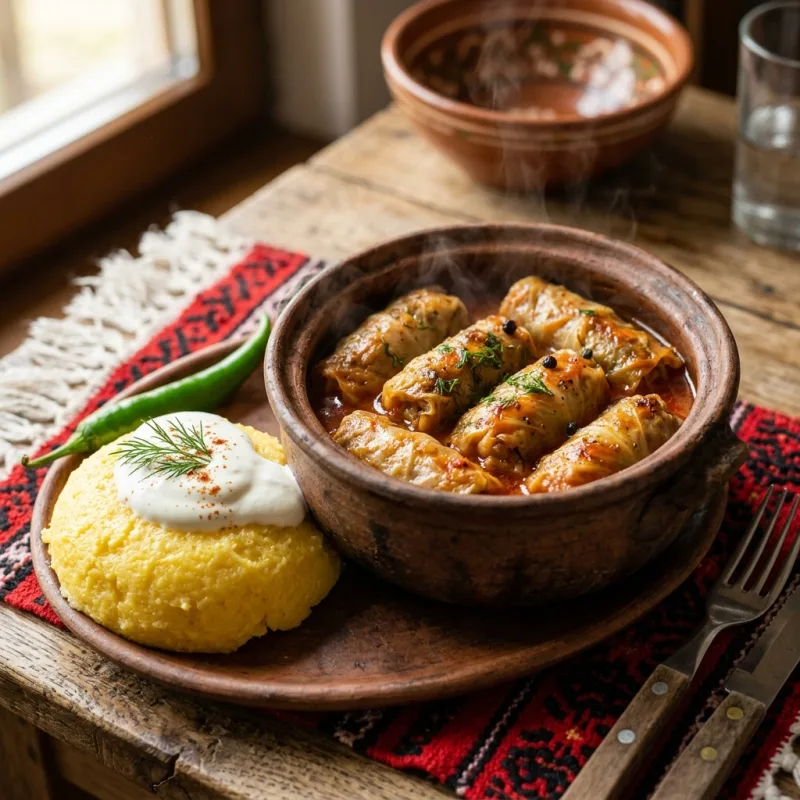
Traditional Romanian Sarmale with polenta and sour cream

Must Try Dish

Sarmale cu mămăligă - Traditional Romanian cabbage rolls stuffed with a savory mixture of minced pork, rice, and caramelized onions, slow-cooked in tomato sauce. They are traditionally served steaming hot alongside creamy polenta, a dollop of sour cream, and a spicy green pepper.
Food Experiences Title Icon

Food
Experiences

Discover cooking classes, tastings and local food tours

No food experience found
Maya, the human travel expert at TravelingWiz, offering curated, non-AI expertise

Maya’s Final Checklist for Curtea de Arges

Logistics shouldn’t be the focus of your trip—the experience should. I’ve hand-vetted these essential partners to ensure your arrival, stay, and exploration are as smooth as an Athenian breeze.

Where to Stay

From boutique hotels to local apartments—compare thousands of options and find the perfect stay in the best neighborhood.

Air Travel

Getting there should be seamless. Compare the best routes and prices across top airlines to start your journey on the right note.

Local Guides

Connect with experts who know the destination best. Get personalized advice and insider tips to help you plan your perfect trip.

Travel Protection

The “Engineer’s” rule: always have a backup. Secure your trip with a plan that covers every “what if” and unexpected change.

Car Rentals

Explore at your own pace with total freedom. Compare reliable rental options and find the right vehicle for your adventure.

Visa Services

Don’t let paperwork slow you down. Get expert assistance with your application to ensure all your entry documents are in order.

FAQs

Curtea de Arges is about a 2 to 2.5-hour drive from Bucharest via the A1 highway to Pitesti, then taking the DN7C. There are also regular minibuses (maxitaxi) and trains connecting Bucharest to Curtea de Arges, though trains require a transfer in Pitesti.
No, the high-altitude section of the Transfagarasan Highway is typically only open from July 1st to October 31st due to heavy snow. However, you can drive from Curtea de Arges up to the Vidraru Dam year-round.
The legend says that Master Manole, the chief architect of the Curtea de Arges Monastery, had to wall his wife, Ana, alive into the monastery’s walls to prevent the structure from collapsing during construction, symbolizing the ultimate sacrifice for art.
Yes, Poenari Castle, the real fortress of Vlad the Impaler (Dracula), is located about 25 kilometers north of the town. Note that reaching the ruins requires climbing 1,480 steps.

Your Insights Matter

TravelingWiz grows through the stories of our community. If you’ve recently explored ,Curtea de Arges share your tips and stories to help us perfect our guides for the next traveler.

Related Articles

Check out our related articles and blog posts to learn even more about the destination.

No related articles found

Don’t Travel Alone

Share with your friends and family

Where should we send your offline card?

We hate spam just as much as you do

newsletter_consent *