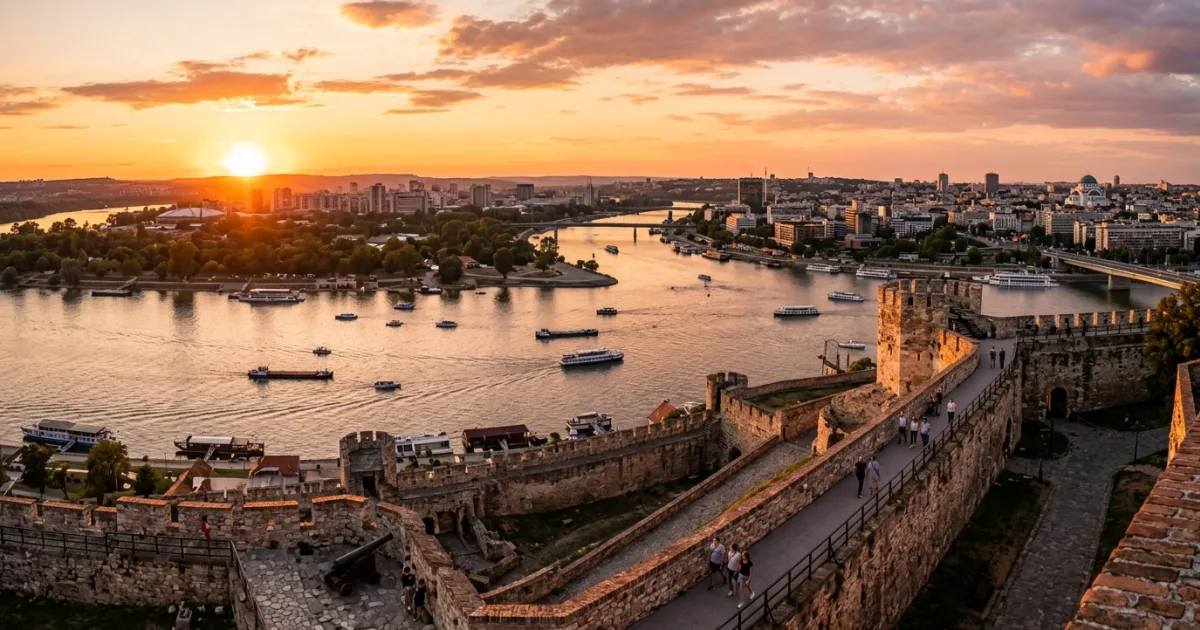
Belgrade commands an extraordinary geographical position perched above the intersection of the Danube and Sava rivers. Its layered heritage is visible in every neighborhood, from the Ottoman cobbled alleys of upper Dorćol to the grandeur of King Milan Boulevard and the striking concrete shapes of New Belgrade (Novi Beograd). Far from a manicured tourist museum, the city pulses with an unpretentious, raw urban energy driven by a youthful creative scene and century-old hospitality customs.
Visitors spend daytime hours wandering through the vast defensive walls and leafy grounds of Kalemegdan Park, marveling at the colossal white marble and gold mosaic interiors of the Temple of Saint Sava, or browsing the vintage boutiques of Savamala. As dusk falls, the city transforms into one of Europe's premier entertainment capitals, featuring riverside dining barges, bohemian street performances along Skadarska Street, and relaxed craft beer gardens open late into the night.
Reasons to Visit
- Kalemegdan Fortress: Explore centuries of fortifications, Roman wells, and military displays overlooking panoramic river sunsets.
- Temple of Saint Sava: Stand beneath one of the largest Orthodox church domes in the world, adorned with over 15,000 square meters of gold mosaics.
- Vibrant Riverfront Splavovi: Experience unique floating restaurants and music clubs docked along the banks of the Sava and Danube.
- Bohemian Skadarlija: Stroll 19th-century cobbled pedestrian streets filled with historic kafanas, acoustic folk musicians, and authentic grilled fare.
- Exceptional Affordability: Enjoy premium farm-to-table dining, specialty coffee, and boutique lodging at a fraction of Western European rates.
Things to Avoid
- Avoid hailing unmetered, unlicensed taxis directly outside the airport or main train terminal; use official voucher desks or dispatch apps.
- Do not attempt to pay street vendors or small shopkeepers with foreign currency like Euros or US Dollars.
- Avoid discussing sensitive regional political conflicts unless locals initiate the conversation in a reflective context.
- Do not forget to validate your public transit ticket, as roving municipal inspectors conduct frequent spot checks.
Local Transportation Tips
Belgrade's extensive public transit network includes buses, trolleybuses, and trams operated by GSP Belgrade. Single-ride and daily digital transit passes can be purchased via SMS using a local SIM card or through the official Belgrade Plus mobile app. For private transit, app-based platforms such as Car:Go and Pink Taxi provide fixed, predictable fares across central zones and outer districts like Zemun.
Travel Etiquette
- Always greet shop owners and restaurant staff with a polite 'Dobar dan' upon entering.
- When toasting with rakija, maintain direct eye contact and say 'Živeli' with enthusiasm.
- Remove shoes if invited into a local family home unless the host explicitly tells you to keep them on.
- Dress respectfully and refrain from loud conversations when touring Orthodox monasteries and churches.
Recommended Age Group
Belgrade offers dynamic attractions across various demographics, though urban infrastructure and lifestyle rhythms particularly cater to independent adults and older youth.
- Babies (0-2 years): Neutral. Historic cobblestones in Skadarlija and steep fortress inclines make stroller mobility challenging, though locals are exceptionally welcoming to infants.
- Kids (3-12 years): Neutral. Belgrade Zoo, the riverside green spaces of Ada Ciganlija, and Nikola Tesla Museum offer fun outings, but indoor venues often lack interactive play zones.
- Teens (13-19 years): Recommended. Teenagers will appreciate the lively urban street art, trendy thrift shops, interactive science exhibits, and expansive riverfront cycling trails.
- Adults (20-64 years): Recommended. Perfect match for culinary explorations, architectural walking tours, deep historical discoveries, craft brewery visits, and renowned nightlife.
- Seniors (65+ years): Neutral. While cultural landmarks and tree-lined avenues are delightful, uneven pavements, frequent staircases, and limited elevator access in older buildings require careful planning.
Accessibility Level: Medium
- Historic tourist areas like Kalemegdan Fortress and Skadarlija feature steep gradients, gravel paths, and rough cobblestones that pose obstacles for manual wheelchairs.
- Modern low-floor buses and trams run on select key routes, but many older fleet vehicles still require navigating steep entry steps.
- Major contemporary museums, including the Museum of Contemporary Art in New Belgrade, offer step-free access and modern elevators.
- Accessible public restrooms remain relatively scarce outside large shopping centers and international hotel chains.
Did You Know?
Belgrade is home to the historic hotel and tavern named '?', located on Kralja Petra Street. Built in 1823, it was given a question mark as a temporary name during a dispute between the owner and the Serbian Orthodox Church, and the moniker has remained unchanged for over 130 years.
Cool Statistics
- Continuous settlement on Belgrade's territory spans more than 7,000 years, beginning with the Neolithic Vinča culture.
- Kalemegdan Fortress has witnessed battles during more than 115 separate historical military conflicts.
- The Temple of Saint Sava features a central dome weighing over 4,000 metric tons, which took 40 days to hoist into place using specialized hydraulic jacks.






Buy a compatible power adapter for your trip