Subotica is the second-largest city in the Autonomous Province of Vojvodina and the administrative center of the North Bačka District. Established near historical trade routes connecting the Danube and Tisza river basins, the settlement evolved from a medieval fortification into a prosperous Austro-Hungarian commercial hub during the late nineteenth and early twentieth centuries. Following the connection to the railway network in 1869, local municipal leaders and affluent merchants hired visionary architects to transform the city's skyline with flamboyant Hungarian Secessionist structures that integrated folk motifs, floral curves, and Zsolnay ceramic tile embellishments.
Today, the city retains a distinctive cosmopolitan rhythm shaped by the harmonious cohabitation of Serbian, Hungarian, Croat, and Jewish cultural heritage. The historic core is largely pedestrianized, inviting visitors to observe decorative façades, visit independent art galleries, and relax in leafy park squares. Just a short trip outward, Lake Palić provides a tranquil retreat characterized by wooden carved piers, Art Nouveau water towers, thermal mineral facilities, and welcoming lakeside wine cellars.
Reasons to Visit
- Marvel at the Subotica Synagogue, the second-largest synagogue in Europe and an Art Nouveau architectural triumph.
- Climb the tower of the Grand City Hall (Gradska Kuća) for panoramic vistas over the Pannonian plains.
- Explore the Raichle Palace, a fairytale residential villa housing the Modern Art Gallery Likovni Susret.
- Unwind at nearby Lake Palić, experiencing heritage promenades, sailing, and shaded natural parks.
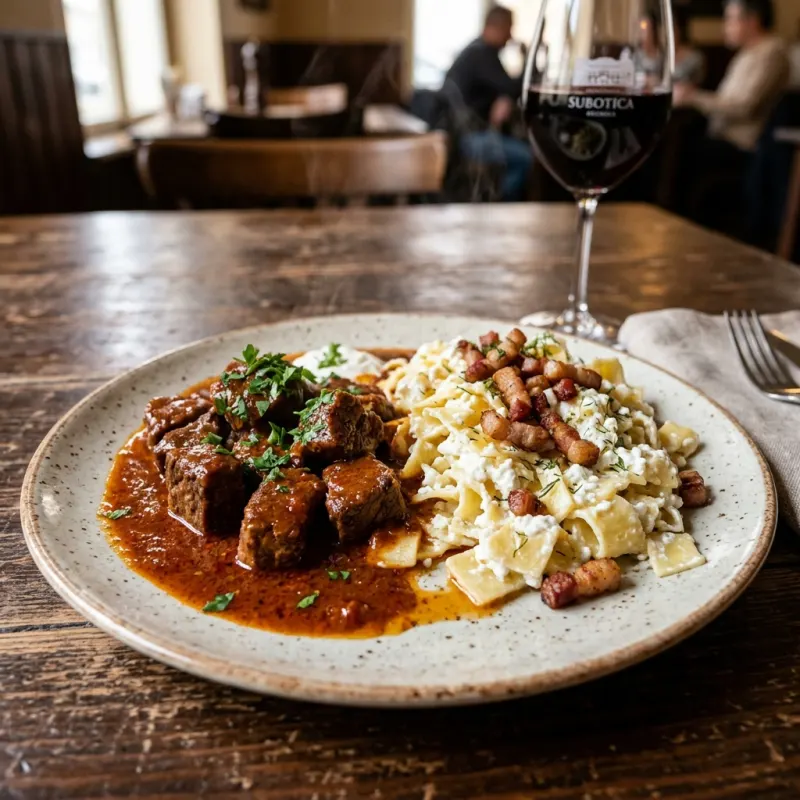
- Savor unique borderland culinary traditions combining fiery Hungarian paprika, game meats, and Vojvodina pastries.
Things to Avoid
- Avoid expecting widespread credit card acceptance at small outdoor farmers' markets or neighborhood bakeries; carry local dinars.
- Do not rush through the architectural sights in half a day; interior tours of the City Hall council chambers require advance booking or specific scheduled hours.
- Avoid swimming in unauthorized sections of Lake Palić, as certain zones are reserved for natural ecological revitalization and wildlife preservation.
- Do not miss the early evening 'korzo' (promenade) down Korzo Street when locals gather to socialize and stroll.
Local Transportation Tips
Subotica is an exceptionally walkable city, with almost all primary architectural landmarks located within a 15-minute radius of the central Trg Slobode square. For transit to Lake Palić or the outer residential neighborhoods, the municipal bus system operated by 'Subotica-Trans' runs frequent, affordable services, particularly Line 6. Bicycles are widely popular due to the region's completely flat topography, and rental bikes are readily accessible. Taxis operate on licensed meters and provide an economical way to travel between the train station, center, and outlying farmsteads.
Travel Etiquette
- Dress respectfully and maintain quiet decorum when touring active religious sites, including the Synagogue, Catholic Cathedral of St. Teresa of Avila, and Orthodox churches.
- Acknowledge the multi-lingual fabric of the city; greetings in either Serbian or Hungarian are accepted warmly by local merchants.
- Tipping between 10% and 15% in sit-down restaurants and taverns is customary practice for attentive service.
- Respect photography guidelines inside museum interiors and heritage council chambers, particularly where flash restrictions are posted.
Recommended Age Group
Subotica offers accessible and culturally enriching experiences, particularly suited for adults, cultural travelers, and older visitors appreciating historic architecture and leisurely strolls.
- Babies (0-2 years): Neutral. The flat terrain accommodates strollers easily, though some heritage buildings have steep stairs and lack elevators.
- Kids (3-12 years): Neutral. Children enjoy the open lakeside parks and Palić Zoo, but downtown activities center mainly around architectural and historical appreciation.
- Teens (13-19 years): Neutral. Architecture enthusiasts and young photographers will enjoy the striking aesthetics, but vibrant youth-oriented nightlife is limited compared to Belgrade.
- Adults (20-64 years): Recommended. Perfect demographic for self-guided architectural walking tours, wine tasting, art exhibitions, and regional dining.
- Seniors (65+ years): Recommended. Highly accessible, flat city geography, peaceful tree-shaded parks, restorative spa facilities at Palić, and an unhurried, safe urban atmosphere make it exceptionally comfortable.
Accessibility Level: Medium
- The primary pedestrian spine (Korzo Street) and main squares are completely flat with smooth paving stones suitable for wheelchair users and mobility equipment.
- Subotica Synagogue features zero-threshold ground-floor entry and accessible ramps for visitors with mobility impairments.
- City Hall offers ramp access to its ground-floor administrative wings, though accessing the high observation tower requires ascending steep historic staircases without elevator access.
- Lake Palić provides wide, continuous asphalt and paved pedestrian footpaths along the lakeshore that are barrier-free.
Did You Know?
The Subotica City Hall contains over 16,000 square meters of floor space and required two years just to complete the ornate interior wood carvings and Zsolnay ceramic roof tiles, making it one of the largest municipal palaces built in the Austro-Hungarian Empire.
Cool Statistics
- 1902: The year architect Ferenc Raichle completed his masterwork family palace in Subotica.
- 45 Meters: The height of the City Hall observation deck overlooking the historic urban core.
- 4,000+: The number of historic Jewish community members remembered at the municipal memorial site in the Synagogue courtyard.
- 8 Kilometers: The short distance separating downtown Subotica from the shores of Lake Palić.






Buy a compatible power adapter for your trip