Zaragoza, the fifth-largest municipality in Spain, serves as the historic and administrative heart of Aragon. Settled as Roman Caesaraugusta under Emperor Augustus, the city flourished under Muslim rule as the Taifa of Saraqusta before evolving into a crowning seat of the Crown of Aragon. This centuries-long interplay of civilizations created an exceptional architectural tapestry, highlighted by the Mudéjar style—a UNESCO World Heritage-designated synthesis of Christian construction and Islamic aesthetic tradition visible in the vibrant brick towers and decorative tilework of La Seo Cathedral and San Pablo Church.
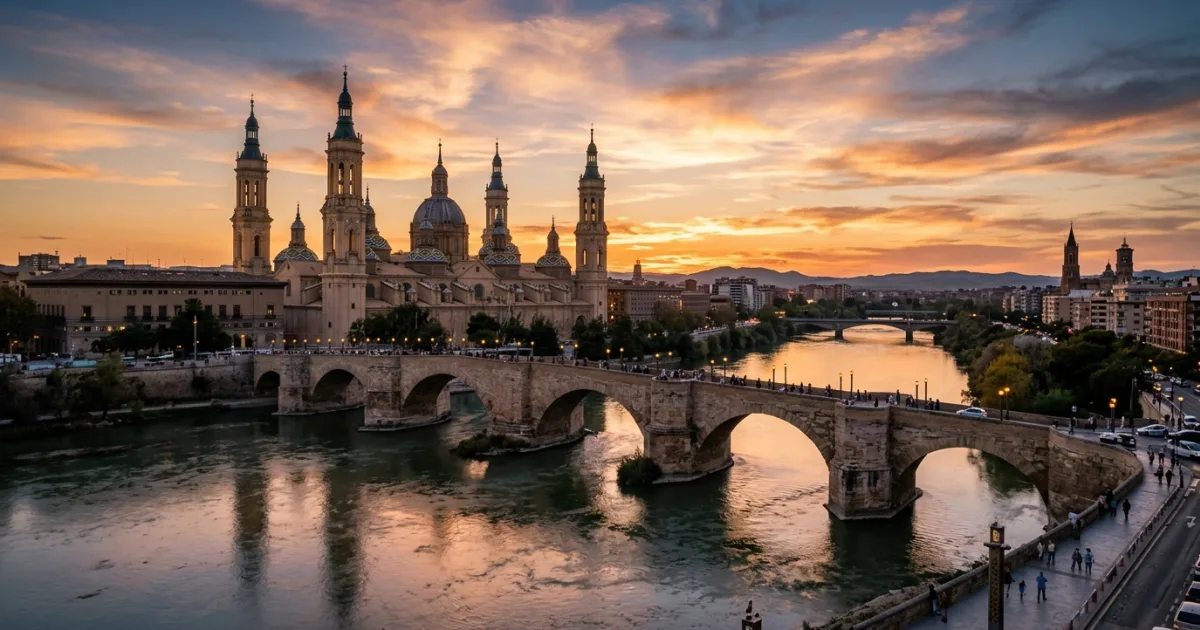
Today, the city pairs its heritage with an efficient modern layout. The vast expanse of Plaza del Pilar forms one of Europe's largest pedestrian spaces, anchored by the iconic multi-domed Basílica de Nuestra Señora del Pilar on the Ebro waterfront. Zaragoza acts as an accessible nexus for art lovers exploring Francisco de Goya's formative murals, cultural travelers seeking authentic heritage away from mass tourism, and food enthusiasts pursuing time-honored tavern hopping.
Reasons to Visit
- Basílica del Pilar: Marvel at one of Christendom's premier pilgrimage sanctuaries, featuring soaring domes, sacred chapels, and original ceiling frescoes by Francisco de Goya.
- Palacio de la Aljafería: Tour an exceptional 11th-century Islamic palace featuring intricate horseshoe arches, ornate plasterwork, and a tranquil courtyard of orange trees.
- El Tubo Gastronomy: Experience vibrant nightlife through tight alleyways packed with specialized tapas bars serving wild mushrooms, cured meats, and regional wines.
- UNESCO Mudéjar Heritage: Discover striking brickwork and ornate glazed ceramics decorating the exterior bell towers of La Seo Cathedral and Iglesia de San Pablo.
- Roman Archaeological Route: Walk through excavated subterranean vestiges including the Roman Forum, Public Baths, Theater, and River Port across the old city.
Things to Avoid
- Avoid planning major sightseeing outdoors between 2:00 PM and 5:00 PM in July and August, when summer heat peaks and smaller shops close for siesta.
- Avoid skipping advance reservations for the Aljafería Palace, as guided access slots frequently sell out days ahead.
- Do not rely solely on late-evening taxis during the Fiestas del Pilar in mid-October; use the city's 24-hour festival tram lines instead.
- Avoid dressing disrespectfully inside active cathedrals; sleeveless tops and short athletic gear may lead to restricted access.
Local Transportation Tips
Zaragoza features a highly streamlined and modern public transit system. The single north-south Tranvía (light rail) line runs directly through the pedestrianized historic center, connecting the suburban peripheries with Plaza del Pilar and major retail corridors. An extensive municipal bus network (Avanza Zaragoza) reaches peripheral attractions and the Zaragoza-Delicias rail terminal. Fares can be paid via contactless credit card or rechargeable Tarjeta Bus cards. Because the historical downtown is flat and compact, walking remains the most practical method for daily exploration.
Travel Etiquette
- Greet shopkeepers and bartenders with a friendly 'Buenos días' or 'Buenas tardes' upon entering local establishments.
- Observe Spanish dining times: lunch is typically eaten between 1:30 PM and 3:30 PM, while dinner rarely begins before 8:30 PM or 9:00 PM.
- Stand at the bar counter when ordering quick tapas and cañas in El Tubo, rather than waiting to be formally seated at small tables.
- Maintain modest volume and turn off camera flashes inside religious sanctums, particularly near the Holy Chapel of the Virgin.
Recommended Age Group
Zaragoza features broad pedestrian squares, minimal inclines, and accessible historic landmarks that accommodate travelers across every generation.
- Babies (0-2 years): Recommended. The flat river promenades and expansive car-free Plaza del Pilar make stroller navigation straightforward and stress-free.
- Kids (3-12 years): Recommended. Interactive attractions like the Zaragoza River Aquarium, Parque Grande José Antonio Labordeta, and historical Roman ruins capture young imaginations.
- Teens (13-19 years): Recommended. The high-energy tapas corridors, street art scenes, and vibrant urban plazas offer an engaging atmosphere for older youth.
- Adults (20-64 years): Recommended. Ideal for cultural heritage, Goya art collections, deep gastronomic exploration, and relaxed evening socializing.
- Seniors (65+ years): Recommended. Level walking surfaces, reliable tram connectivity, dense cluster of monuments, and manageable tourist volume make sightseeing comfortable.
Accessibility Level: Medium
- The Tranvía tram network features 100% low-floor boarding with zero-step entry and dedicated wheelchair zones at every platform.
- The expansive Plaza del Pilar and adjoining avenues present smooth stone paving devoid of steep gradients or mandatory stairs.
- The Basílica del Pilar provides ramped exterior entryways and level access throughout the main sanctuary floor.
- The Aljafería Palace incorporates modern ramps and interior elevators for wheelchair users, though select historic upper chambers retain slight step thresholds.
Did You Know?
The Basílica del Pilar houses two unexploded aerial bombs suspended on its interior walls. Dropped during the Spanish Civil War in August 1936, both munitions pierced the basilica ceiling but failed to detonate, an event locals and pilgrims historically regard as a miracle.
Cool Statistics
- Home to over 680,000 residents, ranking it as the 5th most populous city in Spain.
- Plaza del Pilar spans over 500 meters in length, making it one of the largest pedestrianized public plazas in Europe.
- Direct AVE high-speed trains reach Madrid in 75 minutes and Barcelona in 85 minutes.









Buy a compatible power adapter for your trip