Disclosure: This site contains affiliate links. We may earn a commission if you make a purchase, at no extra cost to you.
Palma de Mallorca

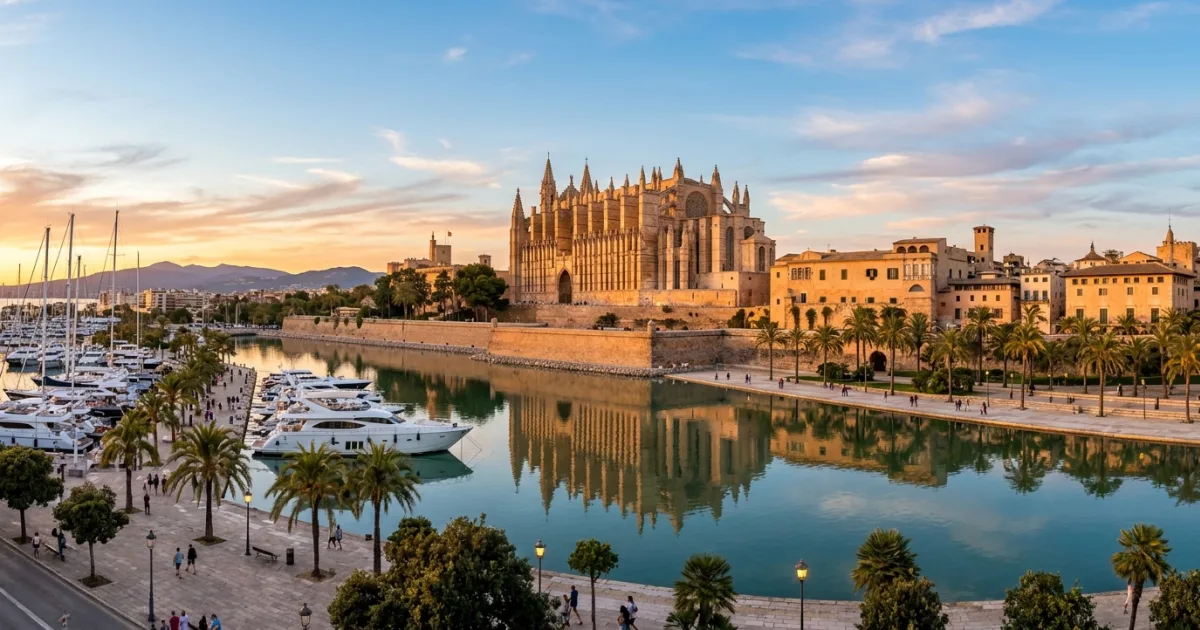
Panoramique view of Palma de Mallorca Cathedral overlooking the Mediterranean marina and palm trees at golden hour

Basic Info

COUNTRY & Region

Spain,
Europe

ACCESSIBILITY LEVEL​

  • High: Widely accessible with good facilities for disabilities.
  • Medium: Some accessible options, but limitations exist.
  • Low: Limited accessibility; many barriers for disabilities.
Medium

LOCAL CURRENCY​

Euro (EUR)

Price Level

Low – budget‑friendly basics

Medium – moderate mid‑range costs

High – pricey lodging, dining & transport

Medium

SAFETY LEVEL

5 shields = Excellent – very low crime or conflict.

4 shields = Safe – low risk, routine care.

3 shields = Relatively safe – use normal street smarts.

2 shields = Use caution – higher crime or periodic unrest.

1 shields = Avoid – active conflict or extreme danger.

Scores are derived from multi-year peace, homicide and security indices blended into a single 1-to-5 scale.

Recommended Duration

1-7 days, Full day

Palma de Mallorca Overview & Key Highlights

Palma de Mallorca is the vibrant coastal capital of the Balearic Islands, anchored by its dramatic 14th-century Gothic cathedral, Santa María (La Seu), which sits directly above the Mediterranean shoreline. The city showcases an architectural legacy shaped by Moorish rulers, Aragonese kings, and Catalan modernists, resulting in a maze of sandstone alleyways, shaded courtyards, and palatial residences. Beyond its historical center, Palma functions as a sophisticated European city boasting bustling produce markets, contemporary art galleries, Michelin-starred gastronomy, and a world-renowned marina. Travelers navigate between the atmospheric labyrinth of the Old Town (Casco Antiguo) and the vibrant, bohemian culinary hub of Santa Catalina. Broad seafront promenades along the Passeig Marítim provide panoramic harbor views, while nearby urban beaches like Platja de Can Pere Antoni offer immediate access to turquoise waters. Operating as an all-season Mediterranean retreat, Palma balances island relaxation with rich cultural depth, dependable transport infrastructure, and accessible day excursions into the dramatic Serra de Tramuntana mountains.

Palma de Mallorca Travel Guide: Logistics & In-Depth Tips

Palma de Mallorca serves as the cultural and political capital of the Balearic Islands, resting inside a broad Mediterranean bay on Mallorca's southern coast. Its landmark monument is the 13th-century Cathedral of Santa María, known locally as La Seu, renowned for its immense rose window and Gothic flying buttresses rising dramatically above the maritime Parc de la Mar. Adjacent to the cathedral stands the Royal Palace of La Almudaina, an ancient Moorish fortress converted into a royal residence for the Spanish crown.

The city's urban footprint reflects successive historical eras, characterized by quiet residential alleys centered on private Renaissance courtyards with carved stone staircases and ironwork grilles. Beyond historical monuments, Palma houses the vibrant food market of Mercat de l'Olivar, the contemporary arts museum Es Baluard built into the city’s defensive sea ramparts, and the leafy Passeig del Born boulevard lined with high-end boutiques and shaded cafes. With an active international harbor and excellent intermodal transport at Plaça d'Espanya, Palma operates as a year-round urban hub balancing classic Balearic maritime character with cosmopolitan infrastructure.

Reasons to Visit

  • La Seu Cathedral: Inspect one of the tallest Gothic cathedrals in Europe, featuring internal modifications designed by Antoni Gaudí and contemporary artist Miquel Barceló.
  • Castell de Bellver: Tour a rare 14th-century circular Gothic castle perched in pine forests overlooking the entire Bay of Palma.
  • Santa Catalina Quarter: Experience Palma’s culinary epicenter, filled with independent bakeries, vermouth taverns, and international bistros surrounding a century-old food market.
  • Passeig Marítim & Marina: Stroll along miles of paved waterfront promenade admiring historic tall ships, superyachts, and panoramic coastal sunrises.
  • Historic Courtyard Trail: Wander the quiet alleyways of the Casco Antiguo to view preserved historic courtyards (patios) showing centuries of aristocratic Mallorcan architecture.

Things to Avoid

  • Avoid driving into the historic center; restricted access zones (ACIRE) carry automatic traffic camera fines for unauthorized vehicles.
  • Do not rely on catching taxis late at night in Santa Catalina during summer weekends without booking ahead via radio taxi or apps.
  • Avoid eating at generic restaurants situated directly along the tourist-heavy front steps of the Cathedral without checking local reviews or prices first.
  • Do not forget to validate public bus tickets or scan cards upon boarding, as transit inspectors conduct frequent spot checks.

Local Transportation Tips

Palma's core transit network is operated by EMT (Empresa Municipal de Transports), consisting of clean, air-conditioned blue-and-white buses connecting all urban neighborhoods, the beach districts, and the airport. Single bus tickets cost €2.00 (€5.00 for the airport route) and can be paid with contactless credit cards directly on the reader. For excursions outside the city, the underground Estació Intermodal at Plaça d'Espanya serves as the central hub for TIB island-wide trains, metro lines, and regional interurban coaches, which accept tap-on/tap-off contactless credit card ticketing with automatic distance-based discounts.

Travel Etiquette

  • Dress appropriately when entering religious sites; avoid swimwear, tank tops, or short beach shorts inside La Seu or parish churches.
  • Greet shopkeepers and restaurant staff with a polite 'Bon dia' (Catalan) or 'Buenos días' (Spanish) when entering businesses.
  • Tipping is discretionary in Spain: rounding up to the nearest euro for casual drinks or leaving 5% to 10% for attentive restaurant table service is customary.
  • Keep voices down in quiet residential streets of the Old Town, particularly late at night, as sound carries across narrow alleys.

Recommended Age Group

Palma de Mallorca is well-suited for diverse age profiles, offering easy walking routes along the flat seaside alongside rich cultural programming.

  • Babies (0-2 years): Neutral. The smooth seafront Passeig Marítim is ideal for strollers, but the historic center's cobbled lanes, high curbs, and stone steps can be cumbersome to navigate.
  • Kids (3-12 years): Recommended. Families enjoy Bellver Castle's pine park playgrounds, safe pedestrian squares, and the Palma Aquarium situated just down the coast.
  • Teens (13-19 years): Recommended. Water sports, beachfront bike rentals, vibrant shopping districts around Passeig del Born, and boat tours provide ample excitement.
  • Adults (20-64 years): Recommended. Superb gastronomy, rooftop cocktail lounges, world-class sailing, and contemporary art galleries make it an exceptional urban getaway.
  • Seniors (65+ years): Recommended. Flat coastal walking paths, reliable air-conditioned public transit, top-tier healthcare infrastructure, and compact cultural sites ensure comfortable visits.

Accessibility Level: Medium

  • The Passeig Marítim and central boulevards like Passeig del Born offer flat, wide, step-free walking paths with dropped curbs.
  • All municipal EMT buses feature low-floor boarding ramps, kneeling suspension, and designated spaces for manual and power wheelchairs.
  • Major historic sites such as La Seu Cathedral have step-free access ramps, though Bellver Castle has restricted access to its upper tower battlements due to stone spiral stairs.
  • The intermodal transit station at Plaça d'Espanya is fully equipped with accessible elevators, visual departure displays, and audible announcement systems.

Did You Know?

Bellver Castle is one of only a handful of circular-plan medieval fortresses surviving in Europe, featuring a central circular keep surrounded by round towers linked by an arched bridge.

Cool Statistics

  • La Seu Cathedral features a Gothic rose window containing 1,236 pieces of glass measuring over 12 meters (39 feet) in diameter, known as the 'Gothic Eye'.
  • The city of Palma is home to over 400,000 residents, accounting for nearly half of Mallorca's total island population.
  • The port of Palma accommodates over 1.5 million ferry and cruise ship transit passengers annually.

Address:

Palma de Mallorca, Spain

Find Nearby Accommodations

Electricity

220-240V, 
50Hz

Plug Type

Type C (Round pin), Type F (Two round pins with earth clips)
Plug types
Click To View Plug Types
Palma de Mallorca is part of our
Solo Female Friendly collection

Activities To Do In Palma de Mallorca

Best Time To Visit Palma de Mallorca

Palma enjoys a Mediterranean climate characterized by mild winters, warm transitional seasons, and hot, sunny summers.

  • Spring (April to June): Optimal for sightseeing, hiking, and patio dining with daytime temperatures ranging from 18°C to 26°C (64°F–79°F) and low rainfall.
  • Summer (July to August): Best for swimming and sailing, though temperatures routinely exceed 31°C (88°F) alongside significant tourist volumes.
  • Autumn (September to October): Sea temperatures remain warm enough for swimming, while crowds thin and cultural programming resumes.
  • Winter (November to February): Cool and crisp with daily highs around 15°C (59°F), offering uncrowded museums, cheaper accommodation, and quiet historic streets.

Average Temperatures Per Month

Average monthly temperaturesMonthly source values, with Celsius and Fahrenheit equivalents in the following data table.5°41°13°55°20°68°28°82°35°95°JanJan: 11°C / 52°FFebFeb: 12°C / 54°FMarMar: 14°C / 57°FAprApr: 16°C / 61°FMayMay: 20°C / 68°FJunJun: 24°C / 75°FJulJul: 27°C / 81°FAugAug: 27°C / 81°FSepSep: 23°C / 73°FOctOct: 20°C / 68°FNovNov: 16°C / 61°FDecDec: 13°C / 55°F
View temperature data
Average monthly temperatures
Month°C°F
Jan1152
Feb1254
Mar1457
Apr1661
May2068
Jun2475
Jul2781
Aug2781
Sep2373
Oct2068
Nov1661
Dec1355

Remember to check the weather forecast a few days before the trip and before heading to the airport.

Safety Level

5 shields = Excellent – very low crime or conflict.

4 shields = Safe – low risk, routine care.

3 shields = Relatively safe – use normal street smarts.

2 shields = Use caution – higher crime or periodic unrest.

1 shields = Avoid – active conflict or extreme danger.

Scores are derived from multi-year peace, homicide and security indices blended into a single 1-to-5 scale.

Palma de Mallorca maintains a low violent crime rate, making it secure day and night. Pickpocketing remains the chief concern in congested zones, specifically surrounding the Cathedral plaza, Plaça Major, and along public transport routes like Airport Bus 1. Keep your backpack zipped in front of you in crowded spaces and avoid leaving phones or wallets unattended on outdoor dining tables. Ignore individuals offering rosemary sprigs or unsolicited street petitions around the cathedral steps, as these are common distraction ruses.

The rating is based on multi-year peace, crime, and security indices. Before you go, always verify current conditions through official government travel advisories.

Emergency Numbers

Police: 091
Ambulance: 061

No internet needed • Includes local translations • Free for TravelingWiz readers

Spoken Languages

Spanish (Castilian) and Catalan (Mallorquín) are co-official. English and German are widely spoken across hospitality and retail venues.
Travel Booking Partner - TravelingWiz

Learn The Language

  • Bon dia – Good morning (Catalan)
  • Hola – Hello (Spanish)
  • Por favor – Please (Spanish)
  • Gràcies / Gracias – Thank you (Catalan / Spanish)
  • Quant costa? – How much does this cost? (Catalan)
  • La cuenta, por favor – The bill, please (Spanish)
  • On és…? – Where is…? (Catalan)
  • Adeu / Adiós – Goodbye (Catalan / Spanish)

Trip Cost & Budgeting for Palma de Mallorca, 2026

Everything you need to know about money while traveling
Is Palma de Mallorca expensive for tourists in 2026? While pricier than mainland Spain, Palma remains moderately priced compared to major Western European cities. Expect to pay around €2.70 for a cappuccino, €4.00 for a pint of domestic draft beer, and €20.00 for a standard mid-range restaurant meal. Based on our Human Verified prices, daily expenses stay manageable with smart choices. Use the data table below to calculate your specific daily budget based on your travel style.

LOCAL CURRENCY​:

Euro (EUR)

Price Level:

Low – budget‑friendly basics

Medium – moderate mid‑range costs

High – pricey lodging, dining & transport

Medium

Cards Vs. Cash

Credit cards and mobile payments are accepted almost everywhere in Palma, though small cash is useful for local markets.

How Much Cash to Carry (on you)

Per person, per day – pocket cash for small purchases.

Local: 17
Euro (EUR)
≈ 19 USD

Average Daily Costs (per person)

Full daily spend estimation (accommodation, food, transportation, attractions).

Travel Style
Euro (EUR)
≈ USD ($)
Budget
95
104
Mid-range
170
187
Comfort
370
406
Note

The Prices, Daily costs, and calculator results are estimates for planning purposes only. Actual costs may vary based on season, booking timing, personal spending habits, and currency fluctuations. TravelingWiz cannot be held responsible for discrepancies between these estimates and your final trip expenses.

Best Value Tips

  • • Take TIB and EMT public buses instead of taxis for low-cost island and airport transport.
  • • Enjoy the fixed-price menu del día at local restaurants during lunchtime for affordable multi-course dining.
  • • Buy fresh produce, cheeses, and snacks at local markets like Mercat de l'Olivar instead of tourist cafes.
  • • Book accommodation and car rentals several months in advance to avoid peak summer surge pricing.

Tours & Tickets

Explore tours, attractions, and ticket options to plan your visit.
Plan ahead

Travel Offers & Coupons

Browse travel offers and coupons from our affiliate partners.
Affiliate partner offers

What To Pack

  • Breathable linen and cotton clothing for warm, humid summer days.
  • Comfortable walking shoes with sturdy rubber soles for slick cobblestones.
  • A lightweight jacket or wrap for cool evening sea breezes, especially in spring and autumn.
  • Modest clothing covering shoulders and knees to meet entry rules at La Seu Cathedral and historic churches.
  • EU-compatible Type C or F plug adapters.
  • UV sunglasses, mineral sunscreen, and a wide-brim hat for Mediterranean sun exposure.
  • A reusable water bottle to refill at city fountains.
Only the good stuff!
Browse recommended travel gear
Check out our free packing list tool

Recommended Itineraries for Traveling to Palma de Mallorca

Take your itinerary with you

Choose a ready-made itinerary, plan your own trip, and keep TravelingWiz by your side while you travel.

Get the TravelingWiz app

Food & Drink Highlights

Local Food Overview

Mallorcan cuisine highlights Mediterranean produce, pork charcuterie, olive oils, and fresh seafood. Specialties include sobrassada (a soft, paprika-cured pork spread), tumbet (a layered vegetable bake of fried aubergine, potatoes, and red peppers in tomato sauce), and fresh seafood caught along the Balearic shelf. Dining routines follow traditional Spanish hours: lunch peaks between 14:00 and 16:00, while dinner services rarely open before 20:30.

Must Try Dish

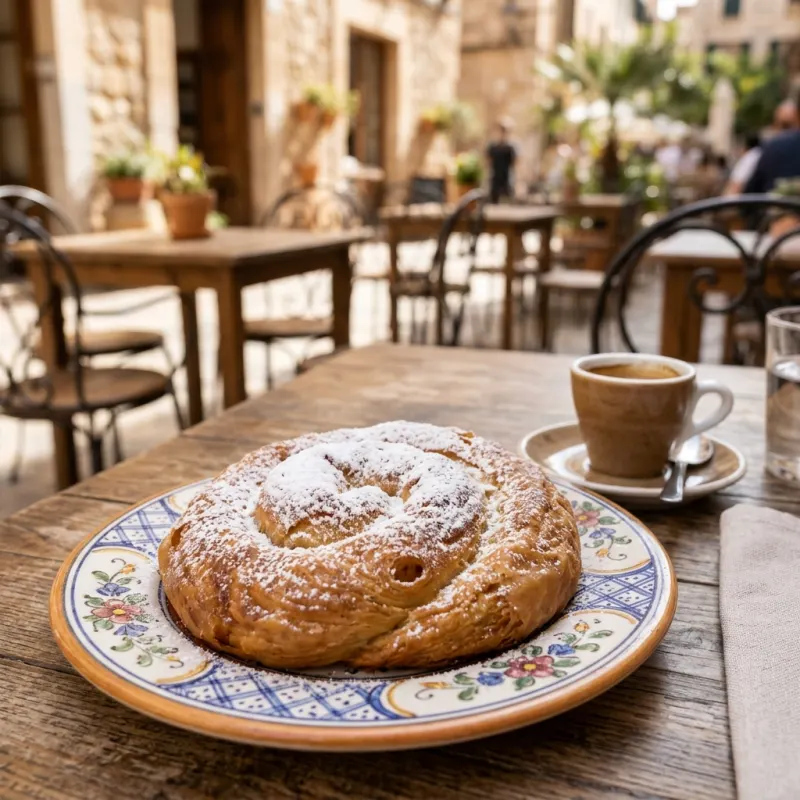
Ensaïmada de Mallorca - A traditional spiral pastry made from slow-fermented sweet dough, enriched with lard, and dusted generously with powdered sugar. Best enjoyed warm for breakfast alongside an espresso or filled with sweet pumpkin strands (cabell d'àngel).
Authentic Mallorcan ensaimada pastry dusted with powdered sugar on a ceramic plate

Maya’s Final Checklist for Palma de Mallorca

Logistics shouldn’t be the focus of your trip—the experience should. I’ve hand-vetted these essential partners to ensure your arrival, stay, and exploration are as smooth as an Athenian breeze.

Maya, the human travel expert at TravelingWiz, offering curated, non-AI expertise

Where to Stay

Compare accommodation options and choose a stay that suits your plans and budget.

Air Travel

Compare flight options and find a route that fits your plans.

Local Guides

Connect with local guides for personalized help planning and exploring.

Travel Protection

The “Engineer’s” rule: always have a backup. Secure your trip with a plan that covers every “what if” and unexpected change.

Car Rentals

Compare rental options and choose a car that suits your trip.

Visa Information

Don’t let paperwork slow you down. Get expert assistance with your application to ensure all your entry documents are in order.

FAQs

A stay of 2 to 3 days provides ample time to explore the Gothic Cathedral, Bellver Castle, royal palaces, markets, and coastal promenades. A longer 5 to 7 day stay lets you use Palma as a central base for exploring the Tramuntana mountain villages and coastal coves.
Yes, Palma’s historic Casco Antiguo and waterfront promenade are exceptionally compact and pedestrian-friendly. Most major historic sights, restaurants, and shops can be navigated easily on foot.
A car is unnecessary and counterproductive within Palma due to tight streets and expensive parking. However, renting a car is beneficial if you intend to venture into rural Mallorca or remote mountain calas.
EMT Bus Route A1 runs every 10 to 15 minutes between Palma Airport and the city center (Plaça d’Espanya), costing €5 one-way. Taxis cost roughly €20 to €25 and take around 15 minutes.

Your Insights Matter

TravelingWiz grows through the stories of our community. If you’ve recently explored ,Palma de Mallorca share your tips and stories to help us perfect our guides for the next traveler.

Where should we send your offline card?

We hate spam just as much as you do

newsletter_consent *