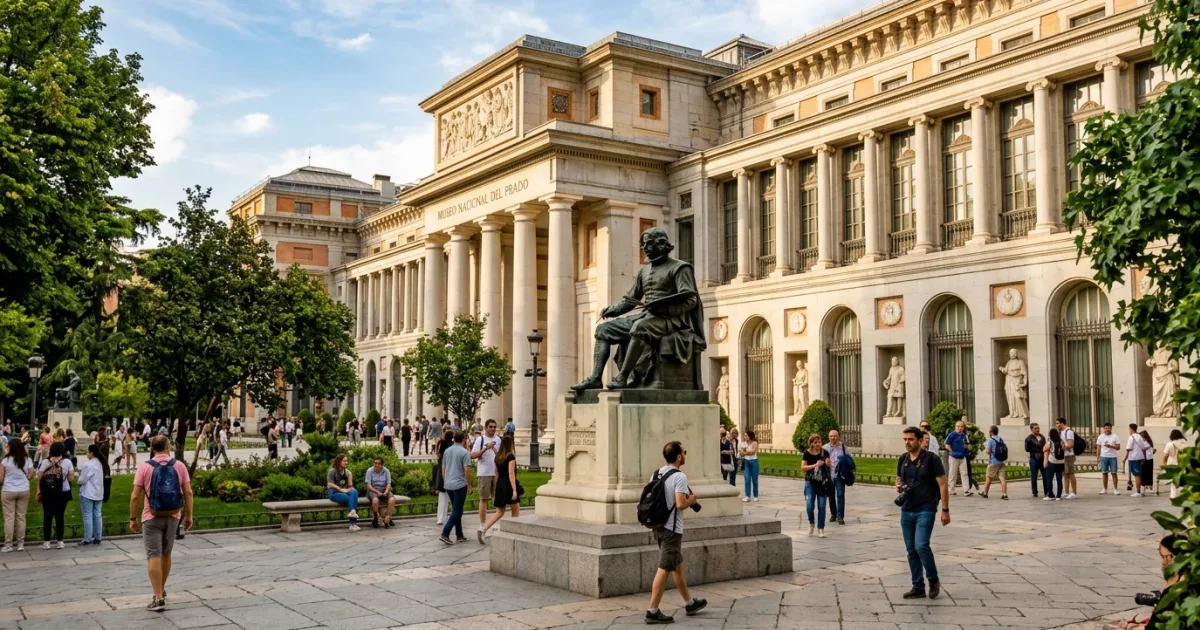
The Museo Nacional del Prado is the main Spanish national art museum, located in central Madrid. It is widely considered to house one of the world's finest collections of European art, dating from the 12th century to the early 20th century. Founded as a museum of paintings and sculpture in 1819, it also contains important collections of other types of works. The numerous works by Francisco Goya, the single most extensively represented artist, as well as by Hieronymus Bosch, El Greco, Peter Paul Rubens, Titian, and Diego Velázquez, are some of the highlights of the collection.
Reasons to Visit
- View Velázquez's iconic masterpiece, 'Las Meninas'.
- Explore the largest collection of works by Francisco Goya, including his haunting 'Black Paintings'.
- Marvel at Hieronymus Bosch's intricate and surreal 'The Garden of Earthly Delights'.
- Experience the architectural beauty of the Villanueva Building itself.
Things to Avoid
- Avoid visiting during peak midday hours on weekends if you want to escape the largest crowds.
- Do not bring large backpacks or umbrellas, as you will be forced to wait in the cloakroom line.
- Avoid trying to see every single painting in one visit; it leads to museum fatigue.
Local Transportation Tips
The Prado Museum is highly accessible via Madrid's excellent public transportation system. The closest Metro stations are Banco de España (Line 2) and Estación del Arte (Line 1). Numerous city buses stop right outside the museum on the Paseo del Prado. Walking from nearby central areas like Puerta del Sol or Retiro Park is also a pleasant and scenic option.
Travel Etiquette
- Maintain a quiet voice while inside the galleries to respect other visitors.
- Do not touch the artworks, frames, or pedestals under any circumstances.
- Adhere strictly to the no-photography rule enforced by museum staff.
Recommended Age Group
The Prado Museum offers a profound cultural experience, though its appeal varies by age.
- Babies (0-2 years): Neutral. Strollers are allowed, but the quiet environment and lack of interactive elements make it more for the parents' benefit.
- Kids (3-12 years): Recommended. The museum offers family itineraries and audio guides designed specifically for children to keep them engaged.
- Teens (13-19 years): Recommended. Older children studying history or art will find the vast collection of European masterpieces highly educational.
- Adults (20-64 years): Recommended. Art lovers and history enthusiasts will appreciate the depth and breadth of the royal collections.
- Seniors (65+ years): Recommended. The museum is fully accessible with elevators, ramps, and wheelchairs available for loan, making it comfortable for older visitors.
Accessibility Level: Medium
- The museum provides free wheelchair loans at the cloakrooms.
- All public areas, galleries, and restrooms are fully accessible via ramps and elevators.
- Sign language guided tours and tactile models for visually impaired visitors are available upon prior request.
Did You Know?
During the Spanish Civil War, the museum's most precious masterpieces were evacuated to Switzerland to protect them from the bombings in Madrid, safely returning only after the conflict ended.
Cool Statistics
- The museum's collection comprises around 8,200 drawings, 7,600 paintings, 4,800 prints, and 1,000 sculptures.
- It welcomes nearly 3 million visitors annually, making it one of the most visited sites in Spain.
- The building was originally designed in 1785 to house the Natural History Cabinet before being repurposed as an art museum.









Buy a compatible power adapter for your trip