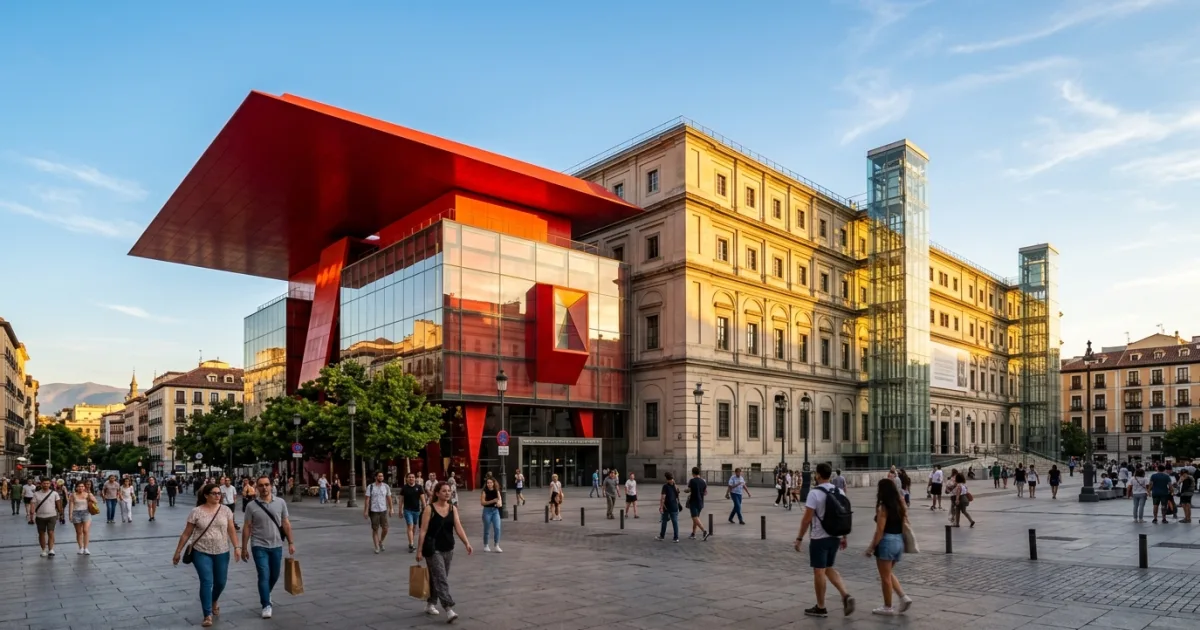
The Reina Sofia Museum is a cornerstone of Madrid's cultural landscape, offering an unparalleled deep dive into 20th-century art. The museum is divided into two main structures: the Sabatini Building, a stark, neoclassical former hospital designed in the 18th century, and the Nouvel Building, a sleek, futuristic extension added in 2005. This architectural duality perfectly mirrors the museum's collection, which bridges the gap between historical context and contemporary innovation.
While Picasso's Guernica is undoubtedly the crown jewel, drawing millions to witness its powerful anti-war message, the museum's true strength lies in its comprehensive narrative of Spanish art. Visitors can trace the evolution of Cubism, Surrealism, and abstract movements through the works of Juan Gris, Salvador Dalí, and Joan Miró. The museum also places a strong emphasis on the intersection of art and politics, particularly during the Spanish Civil War and the subsequent dictatorship, providing a profound educational experience alongside aesthetic appreciation.
Reasons to Visit
- Picasso's Guernica: Stand before one of the most famous and powerful political artworks in human history.
- Spanish Masters: Explore an unmatched collection of works by Salvador Dalí, Joan Miró, and Juan Gris.
- Architectural Marvel: Experience the striking contrast between the 18th-century Sabatini building and the modern Jean Nouvel extension.
- Free Entry Hours: Take advantage of the generous free admission periods offered several evenings a week.
- Central Location: Conveniently located near Atocha Station and within walking distance of the Prado Museum and Retiro Park.
Things to Avoid
- Visiting during peak weekend hours: The museum gets incredibly crowded on Saturday mornings and Sunday afternoons.
- Bringing large bags: Backpacks and large bags must be checked in the cloakroom, which can have long lines.
- Taking photos in restricted areas: Photography is strictly forbidden in the Guernica room and certain temporary exhibitions.
- Rushing the visit: The museum is massive; trying to see everything in one hour will lead to museum fatigue.
Local Transportation Tips
The Reina Sofia Museum is exceptionally well-connected to Madrid's public transportation network. It is located directly across from the Estación del Arte Metro station (Line 1) and is just a two-minute walk from Madrid Atocha, the city's primary railway station for high-speed and commuter trains. Numerous city buses also stop right outside the museum. For those exploring the city center, it is an easy and scenic 15-minute walk from the Prado Museum along the Paseo del Prado.
Travel Etiquette
- Maintain a quiet and respectful demeanor, especially in rooms dealing with heavy historical themes like the Spanish Civil War.
- Do not touch any of the artworks or lean on the display cases.
- Turn off your camera flash, as it can damage sensitive paintings and photographs.
- Respect the queues, particularly the line that often forms to view Guernica.
Recommended Age Group
The Reina Sofia Museum offers a diverse cultural experience that appeals to various age groups, though its focus on modern art and historical themes makes it particularly suited for older children and adults.
- Babies (0-2 years): Neutral. Strollers are permitted and elevators are available, but the environment requires quiet, which can be challenging with infants.
- Kids (3-12 years): Neutral. While some modern art might be abstract or intense, the museum offers family workshops and the large, colorful sculptures can be visually engaging for children.
- Teens (13-19 years): Recommended. Teens studying history or art will find the political and social themes of the 20th-century exhibits highly engaging and thought-provoking.
- Adults (20-64 years): Recommended. The extensive collection of modern masterpieces provides deep cultural and historical insights perfect for adult travelers.
- Seniors (65+ years): Recommended. The museum is fully accessible with ramps, elevators, and plenty of seating areas for resting during the visit.
Accessibility Level: Medium
- The museum is fully wheelchair accessible, with step-free access at the main entrances.
- Elevators connect all floors in both the Sabatini and Nouvel buildings.
- Wheelchairs and walking sticks with seats are available to borrow free of charge at the cloakroom.
- Accessible restrooms are located on multiple floors throughout the museum.
- Tactile tours and sign language guides can be arranged in advance for visitors with visual or hearing impairments.
Did You Know?
Before becoming a world-class art museum, the Sabatini building served as the General Hospital of Madrid from the late 18th century until 1965. Rumors and local legends suggest that the building is haunted by the spirits of former patients, and some museum guards have reported unexplained phenomena during night shifts.
Cool Statistics
- The museum welcomes over 3 million visitors annually, making it one of the most visited art museums in the world.
- The permanent collection houses more than 20,000 artworks, though only a fraction are on display at any given time.
- Picasso's Guernica measures a massive 3.49 meters (11 ft 5 in) tall and 7.76 meters (25 ft 6 in) wide.
- The museum officially opened its doors to the public in 1992.









Buy a compatible power adapter for your trip