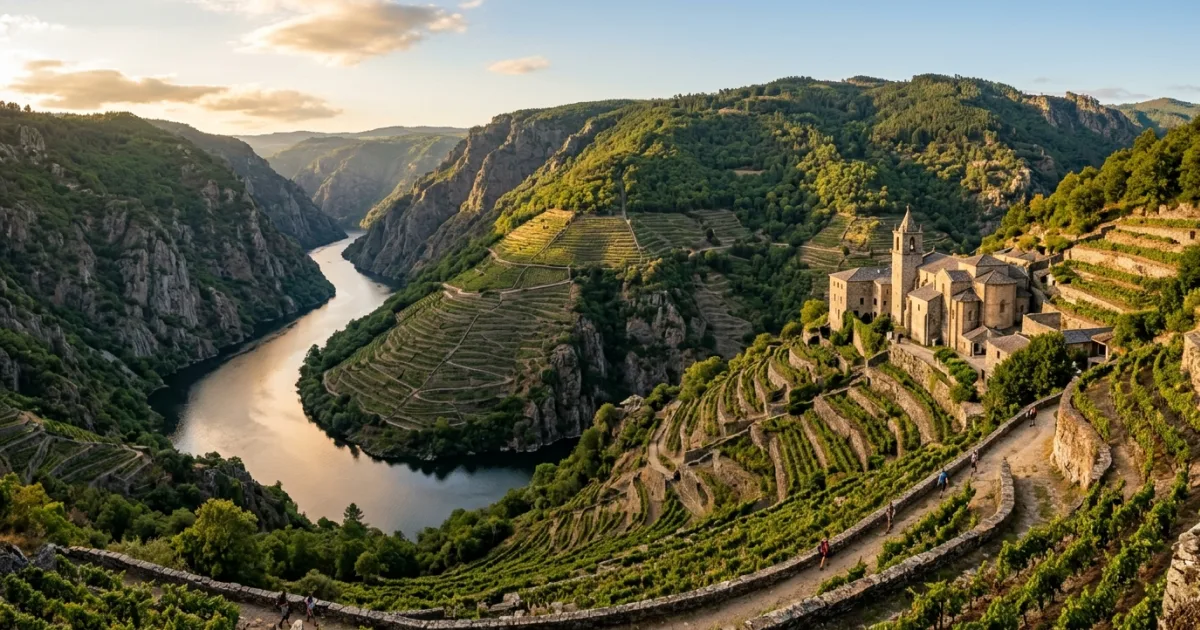
Ribeira Sacra, translating to 'Sacred Riverbank', is one of Northern Spain's most visually stunning and culturally rich inland treasures. Formed by the deep gorges of the Sil and Miño rivers where the provinces of Lugo and Ourense converge, this protected territory encapsulates millennia of spiritual contemplation and dramatic human landscape engineering. The microclimate created by the river basins generates mild, sheltered conditions that enabled early Christian monks to establish monastic communities beginning as early as the 6th century, leading to an extraordinary concentration of Romanesque architecture.
Today, visitors come to witness the dizzying verticality of terraced vineyards clinging to slate and granite precipices, maintained through heroic viticulture by generational winemakers. The landscape is dotted with picturesque stone viewpoints like the Balcones de Madrid and Miradoiro de Cabo do Mundo, offering panoramic vistas over river bends. Combined with luxurious stays in converted historic paradores, authentic culinary traditions, and tranquil waterway navigation, Ribeira Sacra provides an immersive escape for travelers seeking nature, heritage, and world-class wine far removed from congested coastal tourist circuits.
Reasons to Visit
- Heroic Viticulture: Experience sheer vertical vineyard terraces carved into river gorge cliffs, producing celebrated Mencía reds and Godello whites.
- Canyon Boat Excursions: Glide between towering 500-meter granite cliff faces aboard modern catamarans traversing the calm waters of the Sil and Miño rivers.
- Romanesque Monastery Trail: Explore serene, impeccably preserved medieval stone cloisters such as Mosteiro de Santo Estevo, Santa Cristina de Ribas de Sil, and San Pedro de Rocas.
- Dramatic Miradores: Stand high above the clouds at iconic canyon vantage points including Balcones de Madrid, Miradoiro de Vilouxe, and Cabo do Mundo.
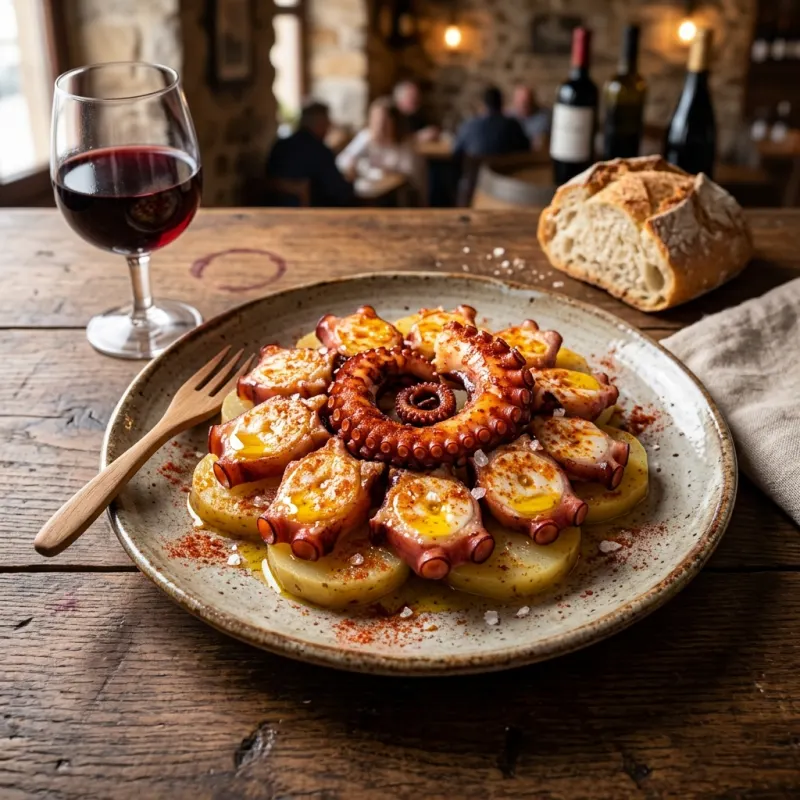
- Authentic Gastronomy: Indulge in classic Galician fare, including pulpo á feira, rich empanadas, and artisanal cheeses in atmospheric village taverns.
Things to Avoid
- Do not rely exclusively on public buses or trains; reaching rural monasteries, trailheads, and river embarcaderos requires a private car or specialized tour.
- Avoid planning overly tight driving itineraries; mountain roads are winding and require slower speeds than standard highway transit.
- Do not show up at small family-run bodegas without an advance reservation, as winemakers are frequently working out on the vineyard terraces.
- Do not wear slick-soled footwear or high heels when touring rural chapels and forest paths, which often feature slick river stones and damp moss.
- Avoid ignoring fuel gauge levels; rural gas stations are sparse throughout the deep canyons, so fill up in larger hubs like Monforte de Lemos or Chantada.
Local Transportation Tips
Personal vehicle rental is the most practical and flexible method for exploring Ribeira Sacra. Major car rental agencies operate from arrival gateways including Santiago de Compostela, Ourense, and Vigo. Roads throughout the region are well-maintained asphalt, though drivers should be prepared for steep inclines, hairpin turns, and single-lane stretches through historic stone villages. Catamarans serve as scenic tourist transport along designated river stretches between official piers (embarcaderos) like Doade, Santo Estevo, Belesar, and Abeleda. Taxis can be hired in larger towns such as Monforte de Lemos, but ride-sharing apps (like Uber or Cabify) are virtually nonexistent across the rural canyon landscape.
Travel Etiquette
- Greetings are warm and polite; standard practice is to say 'Buenos días' or 'Boas' upon entering small shops, cafes, and bodegas.
- Respect the serenity of active and historical sacred sites; lower your speaking voice inside monasteries and ancient hermitages.
- Never walk onto active vineyard terraces without explicit permission, as topsoil on the vertical slopes is fragile and easily eroded.
- Tipping is modest compared to North American customs; rounding up to the nearest euro or leaving 5 to 10 percent for attentive sit-down service is appreciated.
- Support local commerce by purchasing wine and artisanal pantry goods directly from small producers and community co-ops.
Recommended Age Group
Ribeira Sacra's steep topography, quiet pace, and heritage-focused activities cater naturally to older youth and adult travelers, while remaining enjoyable for active multi-generational families with mindful planning.
- Babies (0-2 years): Neutral. Cobblestone paths, ancient monastery steps, and steep viewpoints make standard strollers unusable; high-quality front or back baby carriers are strictly necessary.
- Kids (3-12 years): Neutral. Catamaran river cruises and gentle valley walks are engaging, but long drives along switchbacks and winery-focused itineraries may test younger attention spans.
- Teens (13-19 years): Recommended. Active teenagers will enjoy Sil river kayaking, mountain biking, suspension bridge trails, and dramatic photo opportunities along cliff-edge lookouts.
- Adults (20-64 years): Recommended. An idyllic destination for adults seeking world-class viticulture, historical exploration, scenic drives, gourmet dining, and boutique rural lodging.
- Seniors (65+ years): Recommended. Highly rewarding for mature travelers who appreciate leisurely catamaran cruises, historic parador comfort, scenic road trips, and cultural heritage, though uneven surfaces require sturdy footing.
Accessibility Level: Medium
- Topography Challenges: The landscape is characterized by severe vertical relief, historic flagstone walkways, and uneven gravel trails that present obstacles for manual wheelchair users.
- Accessible Catamarans: Major passenger catamaran docks, such as the Embarcadero de Santo Estevo and Doade, feature ramped walkways down to modern vessels equipped with step-free boarding access.
- Parador Accessibility: Parador de Santo Estevo and Parador de Monforte de Lemos feature dedicated elevator access, accessible guest suites, and ramped entryways through historic stone courtyards.
- Accessible Viewpoints: Several key miradores, including Miradoiro de Cabezoás and Miradoiro de Soutochao, offer paved pathways and designated barrier-free observation platforms.
Did You Know?
Ribeira Sacra contains the highest concentration of rural Romanesque ecclesiastical architecture in Europe, featuring over 80 medieval churches and monastic settlements scattered across its forested river valleys.
Cool Statistics
- Some vineyard slopes in the Sil Canyon reach dizzying inclines of up to 85% (around 40 degrees).
- The Sil Canyon reaches vertical depths plunging over 500 meters down to the river floor.
- The region spans more than 1,200 hectares of protected D.O. Ribeira Sacra vineyards across 20 municipalities.
- Monastic habitation in the area dates back over 1,400 years, beginning with early hermit settlements in the 6th century.









Buy a compatible power adapter for your trip