Disclosure: This site contains affiliate links. We may earn a commission if you make a purchase, at no extra cost to you.

>
>
>
>
Santiago de Compostela

Santiago de Compostela

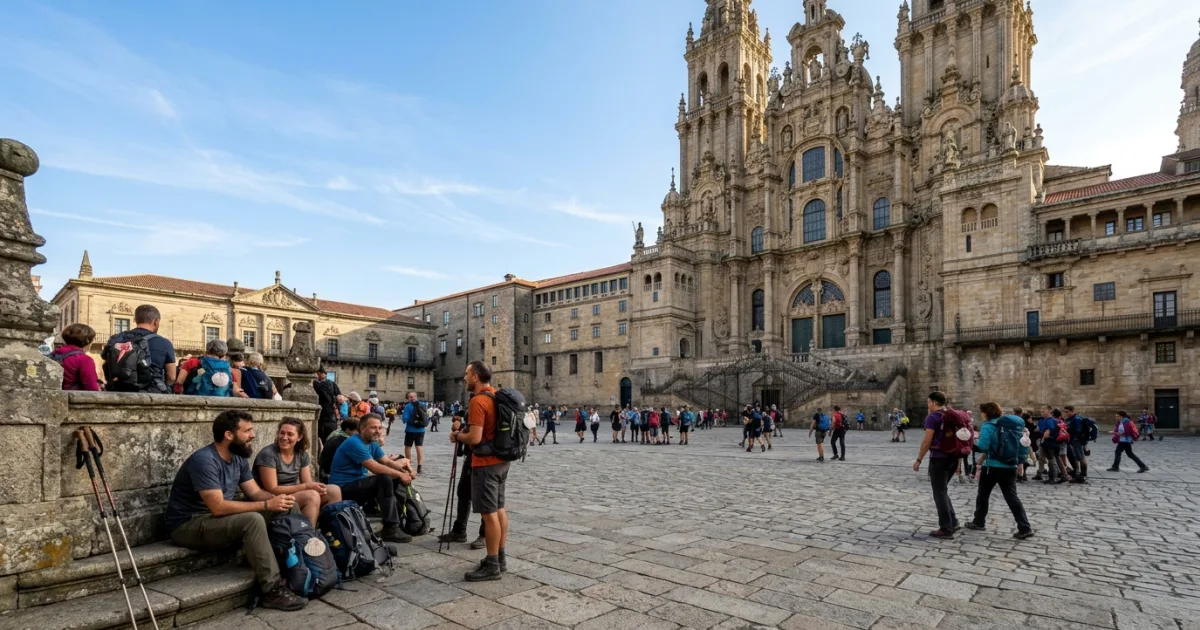
Panoramic view of Praza do Obradoiro and the Cathedral of Santiago de Compostela

Santiago de Compostela Overview & Key Highlights

Santiago de Compostela stands as the historic capital of Galicia in northwestern Spain, renowned globally as the final destination of the Camino de Santiago pilgrimage route. The city centers on the monumental Praza do Obradoiro and its Romanesque, Gothic, and Baroque Cathedral, where pilgrims have gathered for over a millennium to venerate the relics of Saint James. Beyond its sacred monuments, the city is defined by rain-washed granite arcades, ancient universities, and verdant public parks like Alameda, offering sweeping views of the old quarter. Galician gastronomy thrives within the surrounding labyrinth of cobbled lanes, particularly along Rúa do Franco and inside the vibrant Mercado de Abastos. Fresh Atlantic seafood, artisan cow-milk cheeses, and crisp Albariño wines define the culinary landscape alongside traditional tapas bars. With its dynamic student population, deep spiritual heritage, and mild maritime climate, Santiago de Compostela offers travelers a reflective, culturally rich experience distinct from sun-and-sand Iberian destinations.

Santiago de Compostela Travel Guide: Logistics & In-Depth Tips

Santiago de Compostela is the spiritual capital of Galicia and an enduring UNESCO World Heritage City nestled in Spain's lush northwestern corner. Famous across centuries as the terminus of the legendary Camino de Santiago, the city boasts a dramatic concentration of Romanesque, Gothic, and Baroque architecture carved from local granite that glints gold in the sunshine and takes on a reflective sheen in the Atlantic rain. The pulse of the city converges on Praza do Obradoiro, where weary pilgrims drop their backpacks to marvel at the soaring west facade of the Cathedral of Saint James.

Beyond its sacred heritage, Santiago is a vibrant contemporary university town. Over 25,000 students attend the historic Universidade de Santiago de Compostela, injecting youthful vitality into centuries-old tavern streets like Rúa do Franco and Rúa da Raiña. The culinary culture here is an art form, driven by Galicia's renowned seafood, grass-fed beef, artisanal cheeses, and Atlantic white wines. With calm urban parks, modern art institutions like the CGAC, and easy access to coastal estuaries, Santiago balances historical gravitas with warm, effortless living.

Reasons to Visit

  • The monumental Cathedral of Santiago de Compostela and the awe-inspiring Pórtico da Gloria.
  • Wandering the UNESCO-listed historic quarter's covered granite arcades and secluded plazas.
  • The electric atmosphere in Praza do Obradoiro as international pilgrims finish the Camino.
  • World-class Atlantic gastronomy at Mercado de Abastos and local tapas taverns.
  • Scenic strolls and panoramic cathedral views from the oak-shaded paths of Alameda Park.

Things to Avoid

  • Avoid wearing smooth-soled dress shoes on rainy days, as ancient granite pavers become treacherous when wet.
  • Avoid eating solely on the main tourist strip of Rúa do Franco; explore side alleys like Rúa de San Pedro for authentic neighborhood dining.
  • Avoid planning museum visits on Mondays, when several cultural centers observe weekly closures.
  • Avoid talking loudly or taking flash photography inside the Cathedral during liturgical services.

Local Transportation Tips

Santiago de Compostela is exceptionally pedestrian-friendly, with the historic Casco Histórico completely pedestrianized. Taxis and local urban buses operated by Tussa serve destinations outside the core, including the bus/train Intermodal Station. Regional Monbus services and Renfe trains depart from the Intermodal Station, providing frequent, direct links to A Coruña, Pontevedra, Vigo, and Madrid.

Travel Etiquette

  • Show respect inside religious spaces by keeping voices hushed and removing hats or caps.
  • Greet fellow walkers and pilgrims with the time-honored phrase '¡Buen camino!' or 'Bo camiño!'.
  • Tipping is discretionary in Spain; rounding up to the nearest euro or leaving 5-10% for attentive table service is customary.
  • Galician dinner hours start later than in northern Europe, typically beginning after 8:30 PM.

Recommended Age Group

Santiago de Compostela welcomes travelers of all generations, offering rich cultural depth, easy walkability, and exceptional safety.

  • Babies (0-2 years): Not Recommended. The uneven historic cobblestones, numerous curbs, and staircases create significant hurdles for standard strollers.
  • Kids (3-12 years): Neutral. Children enjoy the open plazas, parks, and train rides, but the heavy emphasis on ecclesiastical art and walking tours may test short attention spans.
  • Teens (13-19 years): Recommended. Teenagers appreciate the youthful student vibe, lively tapas spots, and the adventurous spirit of Camino pilgrims arriving in the plazas.
  • Adults (20-64 years): Recommended. An outstanding destination for adults seeking deep architectural history, hiking heritage, culinary tours, and atmospheric wine bars.
  • Seniors (65+ years): Recommended. Excellent accessibility in modern quarters, high safety standards, world-class Parador accommodations, and deep historical and spiritual significance.

Accessibility Level: Medium

  • The Cathedral complex features ramped access points and elevators serving the museum and the Pórtico da Gloria.
  • The Old Town consists primarily of flat or gently sloped stone paths, though some cobblestones are worn and uneven.
  • The City Council offers designated accessible routes across the historic center avoiding steep steps.
  • City buses are equipped with low-floor entry ramps and dedicated wheelchair spaces.

Did You Know?

According to legend, the name 'Compostela' originates from the Latin 'Campus Stellae', meaning 'Field of Stars', referencing the celestial lights that supposedly led a 9th-century hermit to discover the tomb of Saint James the Apostle.

Cool Statistics

  • Over 400,000 pilgrims officially register their arrival at the Pilgrim's Office annually.
  • The Cathedral's Botafumeiro weighs approximately 53 kg and can reach speeds of 68 km/h.
  • The historic university was founded in 1495, making it one of the world's oldest continuously operating universities.


Address:

Santiago de Compostela, Spain

Find Nearby Accommodations

Basic Info

address icon

COUNTRY & Region

Spain,
Europe

ACCESSIBILITY LEVEL​

Medium
Currency icon

LOCAL CURRENCY​

Euro (EUR)
Price level icon
Medium
Safety Level icon

SAFETY LEVEL

Duration icon

Recommended Duration

• 1-7 days
• Full day

Electricity

electricity icon

Electricity

220-240V, 
50Hz
Plug Socket icon

Plug Type

• Type C (Round pin)
• Type F (Two round pins with earth clips)
Plug types
Click To View Plug Types
Santiago de Compostela is part of our
Coolcation collection

Activities To Do In Santiago de Compostela

Best Time To Visit Santiago de Compostela

Santiago de Compostela features an oceanic climate with mild temperatures, abundant rainfall, and cool summers.

  • May to June: Excellent window offering blooming gardens, comfortable temperatures, and lighter crowds before peak summer pilgrimage rushes.
  • July to August: Warmest months with peak festival energy, including the Feast of Saint James on July 25, though lodging demands early reservations.
  • September to October: Pleasant autumn temperatures, colorful foliage, harvest-season food offerings, and moderating pilgrim influx.
  • November to April: Wettest and quietest period, ideal for budget travelers and quiet museum visits, though days are brisk and short.

Average Temperatures Per Month

Remember to check the weather forecast a few days before the trip and before heading to the airport.

Safety Level icon

Safety Level

Santiago de Compostela is exceptionally safe with low rates of violent crime, bolstered by a welcoming culture toward international pilgrims and students. Take standard precautions against pickpocketing in crowded areas, especially on Praza do Obradoiro and inside the Cathedral during the Botafumeiro swinging ceremony. Be cautious on wet granite cobblestones, which can become remarkably slick after the frequent light drizzle (orballo). Solo female travelers will find the city secure and comfortable even late into the evening.

The rating is based on multi-year peace, crime, and security indices. Before you go, always verify current conditions through official government travel advisories.

Emergency Numbers

Police: 112
Ambulance: 061

No internet needed • Includes local translations • Free for TravelingWiz readers

Spoken Languages

Galician and Spanish (Castilian) are the two co-official languages. Spanish is understood and spoken by everyone. English is widely spoken in hotels, restaurants, and tourist information centers.

Learn The Language

  • Ola / Hola – Hello
  • Boas tardes / Buenas tardes – Good afternoon
  • Por favor – Please
  • Grazas / Gracias – Thank you
  • De nada – You’re welcome
  • Onde está a catedral? / ¿Dónde está la catedral? – Where is the cathedral?
  • A conta, por favor / La cuenta, por favor – The bill, please
  • Bo camiño! / ¡Buen camino! – Have a good journey! (Traditional pilgrim greeting)
Travel Booking Partner - TravelingWiz

Trip Cost & Budgeting for Santiago de Compostela, 2026

Everything you need to know about money while traveling
Is Santiago de Compostela expensive for tourists in 2026? No, it remains one of the most affordable city break and pilgrimage destinations in Western Europe. Based on our Human Verified prices, expect to pay around €2.00 for a cappuccino, €2.70 for a pint of domestic beer, and €15.00 for a mid-range restaurant meal. Accommodation and transport are similarly budget friendly. Use the data table below to calculate your specific daily budget based on your travel style.
Currency icon

LOCAL CURRENCY​:

Euro (EUR)
Price level icon
Medium
Credit cards are accepted nearly everywhere, though small cash notes are helpful for minor purchases and tips.

Per person, per day – pocket cash for small purchases.

Local: 11
Euro (EUR)
≈ 33 USD

Full daily spend estimation (accommodation, food, transportation, attractions).

Travel Style
Euro (EUR)
≈ USD ($)
Budget
60
60
Mid-range
105
130
Comfort
230
285

The Prices, Daily costs, and calculator results are estimates for planning purposes only. Actual costs may vary based on season, booking timing, personal spending habits, and currency fluctuations. TravelingWiz cannot be held responsible for discrepancies between these estimates and your final trip expenses.

  • • Take advantage of the traditional Menu del Día at lunchtime for three-course meals with wine included at great value.
  • • Visit free attractions including the interior of Santiago Cathedral, Alameda Park, and the bustling Mercado de Abastos.
  • • Walk or use the affordable local urban buses instead of taxis to navigate around the city center and main sights.
  • • Enjoy small complimentary tapas served alongside beverage orders at many local Galician bars and taverns.

Pre-Order Tickets

Avoid disappointment when tickets sell out — and skip the long lines by booking online in advance. You’ll often save up to 20% too.
Save up to 20%

Travel Discounts & Coupons

Save on hotels, attractions, transport, and gear — find verified discounts for smarter travel spending.
Verified Coupons

What To Pack

  • Durable, waterproof walking shoes with grip for wet granite cobbles
  • Breathable rain jacket or compact umbrella for frequent Galician showers (orballo)
  • Layered clothing suitable for Atlantic oceanic shifts in temperature
  • Modest clothing covering shoulders and knees for entering the Cathedral
  • Daypack with waterproof cover for urban exploring and short day hikes
  • European plug adapters (Type C and F)
  • Refillable water bottle for public potable fountains
We couldn't find tips for Santiago de Compostela.
If you got any, please share

Recommended Itineraries for Traveling to Santiago de Compostela

We couldn't find itineraries for Santiago de Compostela.
you can contact us for custom trip plan

Food & Drink Highlights

Local Food Overview

Galician cuisine emphasizes pure ingredients from the Atlantic coast and fertile interior valleys. Shellfish, such as goose barnacles (percebes), scallops (vieiras), and mussels (mexillóns), arrive daily at the local markets alongside tender Galician blonde beef (tenreira galega). Tapas dining is an evening ritual, accompanied by fresh bread and local wines served in porcelain bowls (cuncas). Sweet almond tortes and creamy Tetilla cheeses anchor desserts and morning breaks.
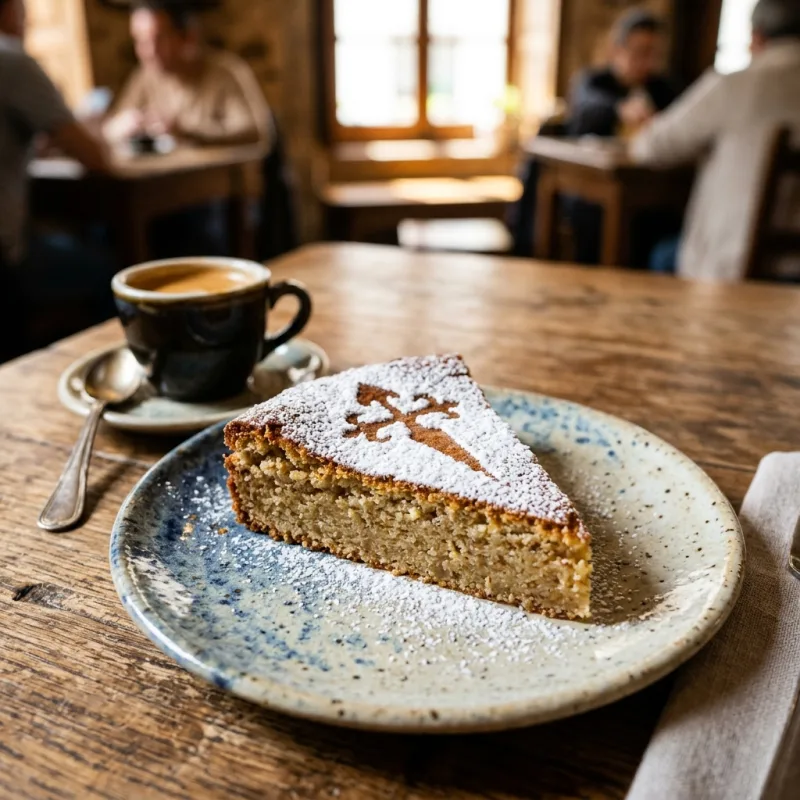
Traditional Tarta de Santiago almond cake showing the powdered sugar cross design

Must Try Dish

Tarta de Santiago - A moist, golden almond cake scented with citrus zest and almond liqueur, finished with powdered sugar displaying the iconic Cross of Saint James. This centuries-old dessert delivers a balanced nutty texture and remains protected under European Union PGI quality certification.
Food Experiences Title Icon

Food
Experiences

Discover cooking classes, tastings and local food tours

No food experience found

Related Tour Guides

Mateo Ferri -tour guide
Mateo Ferri
Spain Expert
Ana Maria Galera Lopez - tour guide
Ana Maria Galera López
Spain Expert
Anabel Arco Sola - tour guide
Anabel Arco Sola
Spain Expert
Ana Maria Soler Machirant - tour guide
Ana Maria Soler Machirant
Spain Expert
Maya, the human travel expert at TravelingWiz, offering curated, non-AI expertise

Maya’s Final Checklist for Santiago de Compostela

Logistics shouldn’t be the focus of your trip—the experience should. I’ve hand-vetted these essential partners to ensure your arrival, stay, and exploration are as smooth as an Athenian breeze.

Where to Stay

From boutique hotels to local apartments—compare thousands of options and find the perfect stay in the best neighborhood.

Air Travel

Getting there should be seamless. Compare the best routes and prices across top airlines to start your journey on the right note.

Local Guides

Connect with experts who know the destination best. Get personalized advice and insider tips to help you plan your perfect trip.

Travel Protection

The “Engineer’s” rule: always have a backup. Secure your trip with a plan that covers every “what if” and unexpected change.

Car Rentals

Explore at your own pace with total freedom. Compare reliable rental options and find the right vehicle for your adventure.

Visa Services

Don’t let paperwork slow you down. Get expert assistance with your application to ensure all your entry documents are in order.

FAQs

The giant censer (Botafumeiro) swings during major liturgical solemnities such as the Epiphany, Easter Sunday, the Ascension, the Feast of Saint James (July 25), All Saints’ Day, and Christmas, or when privately funded by pilgrim groups.
No. The official Compostela certificate is issued only by the Pilgrim’s Reception Office to individuals who have completed at least the last 100 km on foot/horseback or 200 km by bicycle, verified by passport stamps (credencial).
Yes. Due to the high influx of international pilgrims and the presence of the University of Santiago de Compostela, staff in hotels, museums, and historic quarter eateries comfortably converse in English.
The local Monbus airport line connects Santiago-Rosalía de Castro Airport (SCQ) directly to the central Intermodal Train and Bus Station and Praza de Galicia in approximately 25 minutes for under €4.

Your Insights Matter

TravelingWiz grows through the stories of our community. If you’ve recently explored ,Santiago de Compostela share your tips and stories to help us perfect our guides for the next traveler.

Related Articles

Check out our related articles and blog posts to learn even more about the destination.

No related articles found

Don’t Travel Alone

Share with your friends and family

Where should we send your offline card?

We hate spam just as much as you do

newsletter_consent *