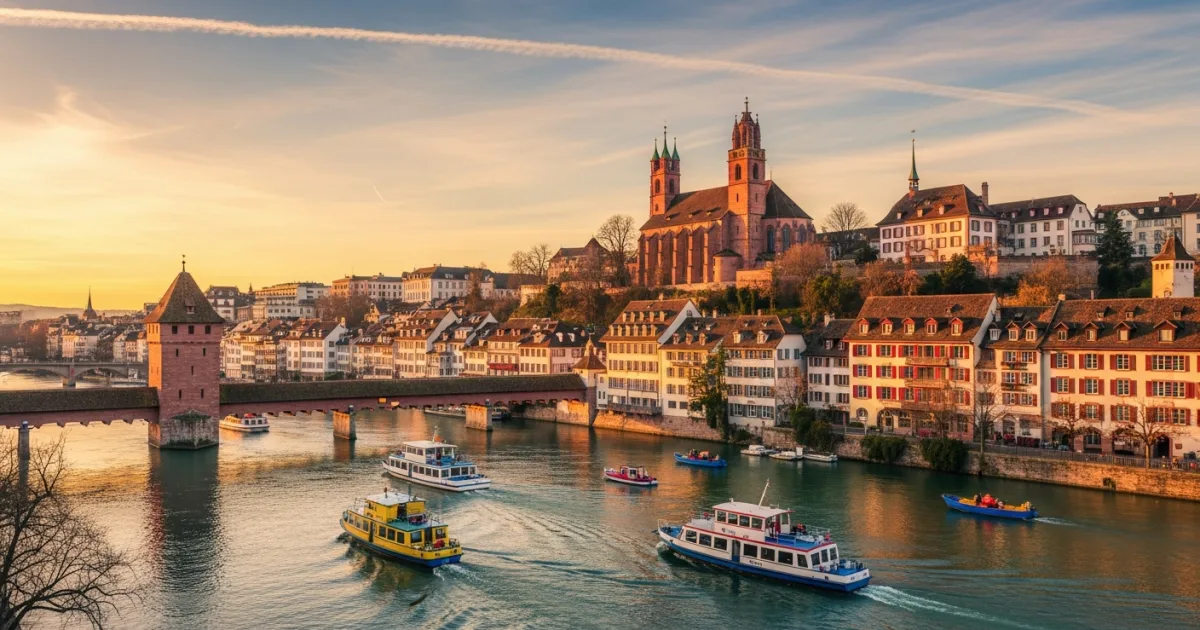
Basel-Stadt is a fascinating anomaly in Switzerland. As a city-state canton, it is highly urbanized yet incredibly green, boasting numerous parks and a deep connection to the natural flow of the Rhine. Its location at the 'Dreiländereck' (three-countries corner) means you can easily have breakfast in Switzerland, lunch in Germany, and dinner in France. This unique geographic positioning has historically made Basel a hub of trade and humanism, famously hosting the oldest university in Switzerland where Erasmus of Rotterdam once taught.
Today, Basel is globally recognized as a powerhouse in the pharmaceutical industry, home to giants like Novartis and Roche. This corporate wealth has heavily patronized the arts and architecture, resulting in a cityscape dotted with buildings designed by Pritzker Prize-winning architects such as Herzog & de Meuron, Mario Botta, and Renzo Piano. Whether you are wandering through the medieval alleys of the Grossbasel (Greater Basel) or exploring the trendy, industrial-chic neighborhoods of Kleinbasel (Lesser Basel) across the river, the canton offers a dynamic contrast between the meticulously preserved past and a bold, innovative future.
Reasons to Visit
- Unrivaled Art Scene: Home to Art Basel, the world's premier contemporary art fair, and over 40 world-class museums including the Kunstmuseum and Fondation Beyeler.
- The Rhine River Lifestyle: Experience the unique joy of floating down the fast-flowing Rhine in summer, a quintessential Basel activity.
- Architectural Marvels: A living museum of modern architecture, featuring more buildings by Pritzker Prize winners than almost any other city of its size.
- Tri-Border Experience: The novelty of standing at the Dreiländereck, where the borders of Switzerland, France, and Germany intersect.
- Basler Fasnacht: Witness Switzerland's largest and most unique carnival, a UNESCO Intangible Cultural Heritage event that begins at 4:00 AM with the 'Morgestraich'.
Things to Avoid
- Buying Bottled Water: Basel has hundreds of public fountains dispensing fresh, clean drinking water. Bring a reusable bottle.
- Driving in the City Center: The Old Town is largely car-free, and parking is expensive. Rely on the excellent tram network instead.
- Underestimating the Rhine: Never swim in the river if you are not a strong swimmer, and always observe local safety guidelines regarding entry and exit points.
- Assuming Euros are the Standard: While close to the border, the currency is the Swiss Franc (CHF). Paying in Euros often results in poor exchange rates.
Local Transportation Tips
Basel-Stadt boasts one of the most efficient and comprehensive public transportation systems in Europe, operated primarily by the BVB (Basler Verkehrs-Betriebe). The iconic green trams and buses run frequently and punctually, connecting every corner of the canton and even crossing borders into Germany and France. For visitors staying in local accommodations, the BaselCard provides free unlimited use of this network. Additionally, four traditional, motorless ferries cross the Rhine, powered solely by the river's current—a charming and historic way to get from one bank to the other.
Travel Etiquette
- Greetings: It is customary to greet shopkeepers with a polite 'Grüezi' (Hello) when entering a store and 'Uf Wiederluege' (Goodbye) when leaving.
- Punctuality: Swiss timekeeping is famously precise. Arrive exactly on time for tours, reservations, and meetings.
- Tipping: Service is included in all restaurant and café bills by law. However, rounding up to the nearest Franc or leaving a 5-10% tip for exceptional service is appreciated.
- Quiet Hours: Sundays are traditionally days of rest. Avoid loud activities, and note that most shops (except those at the main train station) will be closed.
Recommended Age Group
Basel-Stadt offers a diverse range of attractions that cater to visitors of all ages, from interactive family exhibits to sophisticated cultural experiences.
- Babies (0-2 years): Neutral. While the city is highly stroller-friendly and safe, the primary attractions (museums and river swimming) are not geared toward infants.
- Kids (3-12 years): Recommended. Children will love the Basel Zoo (affectionately known as 'Zolli'), the interactive exhibits at the Natural History Museum, and the Paper Mill Museum.
- Teens (13-19 years): Recommended. Teens will appreciate the vibrant street art, the thrill of floating down the Rhine, and the easy-to-navigate public transport system that offers independence.
- Adults (20-64 years): Recommended. The perfect demographic for Basel's world-class contemporary art scene, high-end gastronomy, and architectural tours.
- Seniors (65+ years): Recommended. The city is highly accessible, safe, and offers a relaxed pace of life with numerous benches, cafes, and easily navigable cultural institutions.
Accessibility Level: Medium
- Basel is highly committed to accessibility. The majority of the BVB trams and buses are low-floor, making them easily accessible for wheelchair users and strollers.
- Most major museums, including the Kunstmuseum and Fondation Beyeler, are fully wheelchair accessible with ramps, elevators, and accessible restrooms.
- The city provides a specialized 'Hürdenlos' (barrier-free) map online, detailing the accessibility of public buildings, restaurants, and tourist attractions.
- While the Old Town features some cobblestone streets and slight inclines, the main pathways are generally well-maintained and manageable for those with mobility aids.
Did You Know?
Did you know that Basel is home to the oldest public art collection in the world? In 1661, the city of Basel purchased the Amerbach Cabinet, a collection of artworks and objects, to prevent it from being sold abroad. This historic acquisition laid the foundation for the modern-day Kunstmuseum Basel, making it the first municipally owned museum in existence.
Cool Statistics
- 40+: The number of museums in Basel-Stadt, giving it the highest museum density in Switzerland.
- 1460: The year the University of Basel was founded, making it the oldest university in the country.
- 3: The number of countries that meet at the Dreiländereck monument (Switzerland, Germany, France).
- 178: The height in meters of the Roche Tower 1, which was Switzerland's tallest building until it was surpassed by its sister building, Roche Tower 2 (205 meters), also in Basel.






Buy a compatible power adapter for your trip