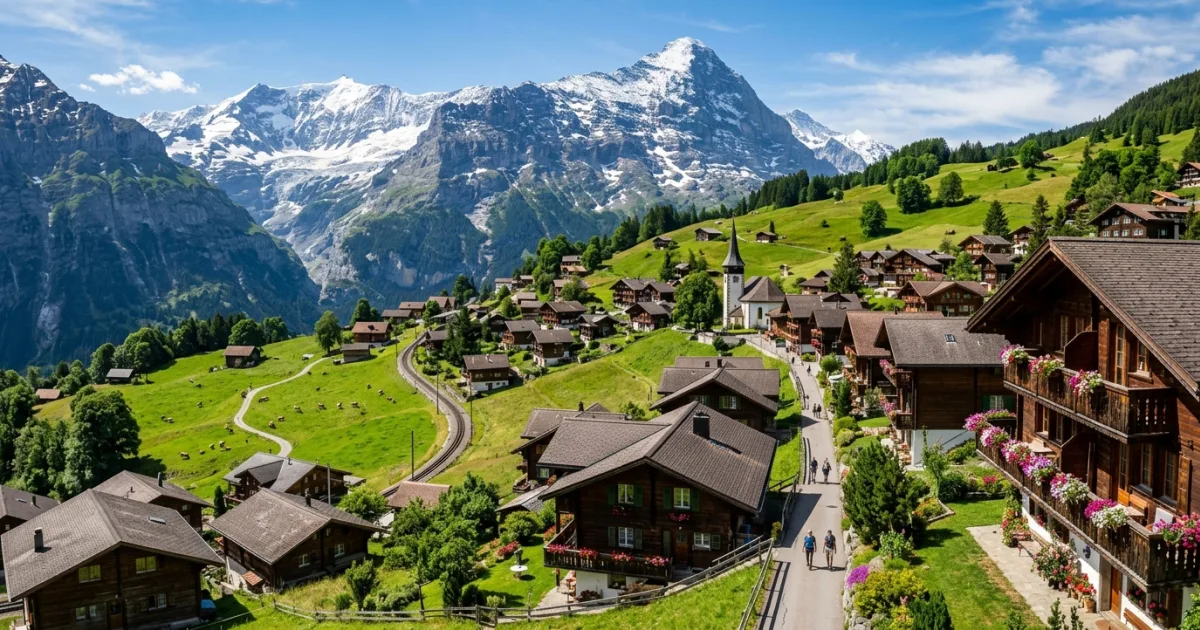
Wengen sits on a sun-drenched terrace 400 meters above the Lauterbrunnen Valley, offering a tranquil escape from modern urban life. Since 1893, it has been accessible via the Wengernalpbahn, the longest continuous rack railway in the world. The village retains its historic charm with timber chalets, Belle Époque hotels, and a distinct lack of combustion-engine vehicles.
It serves as a premier gateway to the UNESCO World Heritage site of the Swiss Alps Jungfrau-Aletsch. Whether you are seeking the adrenaline rush of winter sports or the peaceful serenity of summer alpine hiking, Wengen provides an idyllic, postcard-perfect Swiss experience.
Reasons to Visit
- Unparalleled, unobstructed views of the majestic Jungfrau, Mönch, and Eiger mountains.
- A completely car-free, pristine alpine environment perfect for relaxation and clean air.
- Direct access to world-class skiing networks and the famous Lauberhorn downhill course.
- Extensive summer hiking trails ranging from leisurely walks to challenging alpine treks.
- Convenient proximity and easy train access to the Jungfraujoch (Top of Europe).
Things to Avoid
- Avoid traveling without checking the train schedules, as the village is inaccessible by car and late-night arrivals require planning.
- Do not underestimate the alpine sun; always wear sunscreen and sunglasses, even in winter.
- Avoid hiking on closed trails during winter or shoulder seasons due to severe avalanche risks.
- Don't forget to pack layers, as temperatures can drop significantly when the sun goes behind the mountains.
Local Transportation Tips
Wengen is entirely car-free. The primary mode of transport to and from the village is the Wengernalp Railway (WAB) from Lauterbrunnen. Within the village, walking is the standard, though small electric taxis are available for transporting luggage from the train station to your hotel. Cable cars, such as the Wengen-Männlichen aerial cableway, efficiently connect visitors to higher elevations for skiing and hiking.
Travel Etiquette
- Greet locals with a friendly 'Grüezi' when passing on hiking trails or entering small shops.
- Respect the pristine environment by packing out all trash and staying on marked trails.
- When dining, it is customary to wait for everyone to be served before eating and to toast with 'Prost' while making direct eye contact.
- Keep noise levels down in the evenings, as alpine villages tend to embrace a quiet, early-to-bed culture.
Recommended Age Group
Wengen offers a safe, engaging, and accessible alpine experience for a wide variety of travelers.
- Babies (0-2 years): Neutral. While the village is safe and car-free, stroller access is limited on mountain trails, and the high altitude may require acclimatization.
- Kids (3-12 years): Recommended. The car-free environment is incredibly safe, and there are numerous family-friendly trails like the Lieselotte Trail and excellent ski schools.
- Teens (13-19 years): Recommended. Adventure activities such as skiing, zip-lining in nearby Grindelwald, and extensive hiking keep older children highly engaged.
- Adults (20-64 years): Recommended. World-class skiing, challenging alpine treks, and cozy après-ski bars provide a perfect mix of action and relaxation.
- Seniors (65+ years): Recommended. The village is highly walkable, and the extensive network of cable cars and cogwheel trains makes high-altitude viewpoints easily accessible without strenuous effort.
Accessibility Level: Medium
- The Wengen train station and the main village street are relatively flat and paved, making them accessible for wheelchair users.
- Many modern cable cars, including the Männlichen aerial cableway, and the Wengernalp Railway offer wheelchair-accessible boarding options.
- Due to Wengen's hillside location, some hotels and chalets require navigating steep inclines; it is highly recommended to confirm accessibility directly with accommodations.
- Accessible restrooms are available at the main train stations and major mountain cable car terminals.
Did You Know?
Wengen hosts the internationally renowned Lauberhorn ski races every January, featuring the longest downhill course in the FIS Alpine Ski World Cup, challenging skiers with speeds up to 160 km/h.
Cool Statistics
- Elevation: 1,274 meters (4,180 feet) above sea level.
- Permanent population: Approximately 1,300 residents.
- Peak season capacity: Over 10,000 tourist beds.
- Lauberhorn downhill course length: 4.48 kilometers, the longest on the World Cup circuit.






Buy a compatible power adapter for your trip