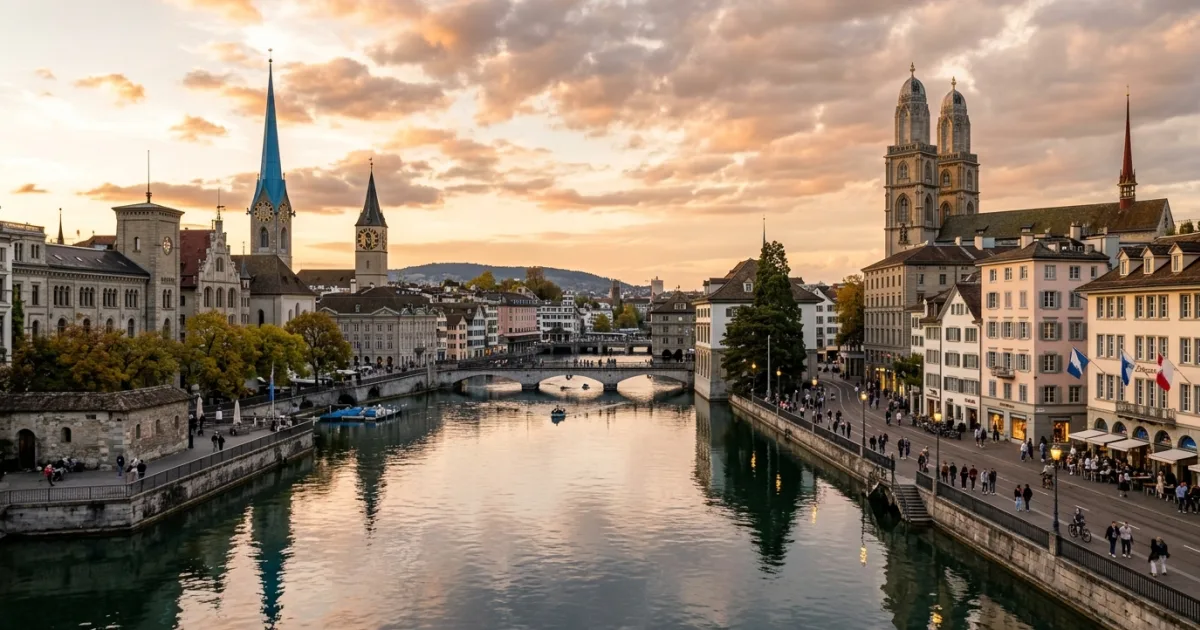
Altstadt Zurich constitutes District 1 of Zurich, encompassing four historic sub-quarters: Rathaus, Hochschulen, Lindenhof, and City. Built upon the site of the ancient Roman customs station known as Turicum, the area evolved over centuries into a prosperous medieval trading hub governed by influential merchant and artisan guilds. Today, the district retains its intact medieval footprint, where architectural styles ranging from 12th-century Romanesque to 18th-century Baroque sit shoulder-to-shoulder along narrow cobblestone passages.
The Limmat River cuts through the center of the district, bordered by the Limmatquai promenade. Key landmarks define the skyline, notably the twin neo-Gothic topped towers of the Grossmünster cathedral, the iconic blue spire of the Fraumünster church with its stained glass windows designed by Marc Chagall and Augusto Giacometti, and St. Peter Church, which boasts the largest church clock face in Europe. Altstadt functions not merely as an open-air historical museum, but as a thriving urban district filled with artisan boutiques, centuries-old taverns, independent art galleries, and residential enclaves.
Reasons to Visit
- Iconic religious landmarks featuring architectural and artistic masterpieces, including Chagall's stained-glass windows in Fraumünster.
- Scenic river and lake vistas from the historical Lindenhof terrace and the Limmat bridges.
- Immaculately preserved medieval and renaissance guild houses along the Limmatquai.
- A pedestrian-friendly atmosphere with an extensive network of car-free streets, cafes, and boutiques.
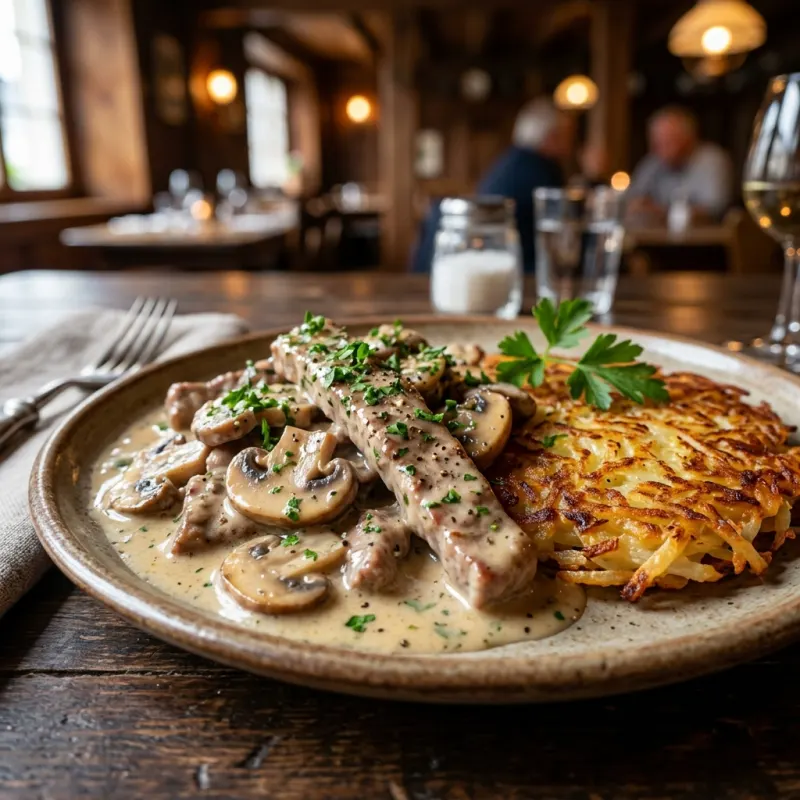
- Vibrant gastronomic heritage combining traditional Swiss taverns with cutting-edge international fine dining.
Things to Avoid
- Avoid wearing thin high heels or smooth-soled dress shoes; the historic cobblestone streets can cause trips and slips.
- Avoid eating solely on the primary thoroughfare of Niederdorfstrasse, where tourist-focused menus are common; venture one or two side alleys deeper for higher culinary quality.
- Do not purchase single-ride tram tickets if you plan multiple journeys; a 24-hour city card or Zürich Card offers vastly better value.
- Avoid driving or bringing a rental car into the district, as vehicle access is heavily restricted, permits are strictly enforced, and parking garages are exceptionally expensive.
Local Transportation Tips
Altstadt is best traversed entirely on foot. For connections to surrounding districts, the area is surrounded by Zurich's flawless public transit network operated by VBZ. Tram lines 4, 15, and 17 run along Limmatquai, while major tram hubs at Central, Paradeplatz, and Zurich Hauptbahnhof (HB) sit directly at its perimeter. River boats (Limmat River Cruises) operate seasonally from the National Museum to Lake Zurich, offering scenic water transit through the heart of the district.
Travel Etiquette
- Keep your voice to moderate levels in residential side alleys and courtyard spaces, especially after 22:00 (Swiss quiet hours).
- Always greet shopkeepers and service staff with 'Grüezi' (formal hello) upon entering small shops or establishments.
- Adhere strictly to pedestrian crossing signals; crossing against a red signal is culturally frowned upon in Switzerland.
- Remove hats and observe reverent silence when stepping inside active churches like Fraumünster and Grossmünster.
Recommended Age Group
Altstadt Zurich offers exceptional appeal across generations, though its cobblestone topography and cultural focus define its suitability.
- Babies (0-2 years): Neutral. Cobblestone lanes can make pushing traditional strollers bumpy, though pedestrian areas are quiet and car-free. Baby carriers are highly recommended over strollers.
- Kids (3-12 years): Neutral. While children enjoy boat cruises and running around the car-free Lindenhof park, the district's primary offerings are architecture, shopping, and art museums.
- Teens (13-19 years): Recommended. Vibrant boutique shopping, lakeside activities, photogenic alleys, and accessible cafe culture provide strong engagement for older youth.
- Adults (20-64 years): Recommended. Ideal for cultural exploration, world-class dining, historical architecture, art appreciation, and leisurely city walks.
- Seniors (65+ years): Recommended. Outstanding safety, abundant resting benches, flat riverfront walks, and efficient public transport, though comfortable walking shoes are required for cobblestones and gentle slopes.
Accessibility Level: Medium
- Many primary pathways along the Limmatquai and Münsterhof square are paved with flat, smooth flagstones suitable for wheelchairs.
- Interior alleys in the upper Niederdorf and Lindenhof feature steep inclines and uneven historic cobblestones that may challenge manual wheelchair users.
- Major historic churches have installed step-free ramp access, though climbing cathedral towers requires narrow spiral staircases.
- Public trams serving the perimeter of Altstadt are predominantly modern low-floor vehicles with accessible boarding ramps.
Did You Know?
The clock face on the tower of St. Peter Church in Altstadt Zurich measures an astonishing 8.7 meters (28.5 feet) in diameter, making it the largest church clock face in all of Europe—surpassing even London's Big Ben.
Cool Statistics
- Founded around 15 BC as the Roman customs post 'Turicum' on the Lindenhof hill.
- Features over 1,200 public fountains across the municipality, with dozens of historic stone fountains in the Old Town alone.
- St. Peter's clock face spans 8.7 meters with an hour hand measuring over 3 meters long.
- Grossmünster's twin towers were completed in their distinctive neo-Gothic style between 1781 and 1787.






Buy a compatible power adapter for your trip