Schaffhausen's history is deeply intertwined with the Rhine River. The city originally grew as a settlement where goods had to be unloaded and transported by land to bypass the impassable Rhine Falls. This trade brought immense wealth to the city, which is still visible today in the lavishly decorated guild houses and the 171 historic oriel windows that adorn the buildings in the car-free Old Town.
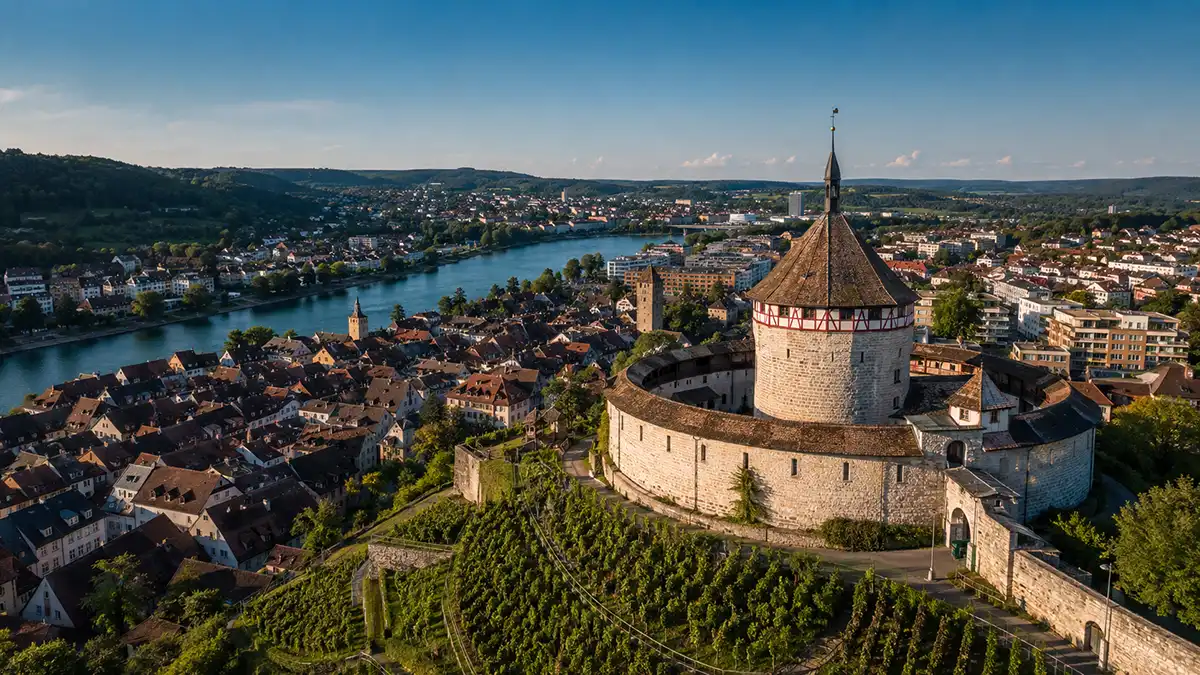
The Fronwagplatz serves as the bustling heart of the city, flanked by historic fountains and inviting cafes. Above the city sits the Munot, a circular fortress built in the 16th century by the citizens of Schaffhausen. Beyond its historical core, the city is a gateway to the Klettgau wine region, known for producing some of Switzerland's finest Pinot Noir, making it a well-rounded destination for history buffs, nature lovers, and gastronomes alike.
Reasons to Visit
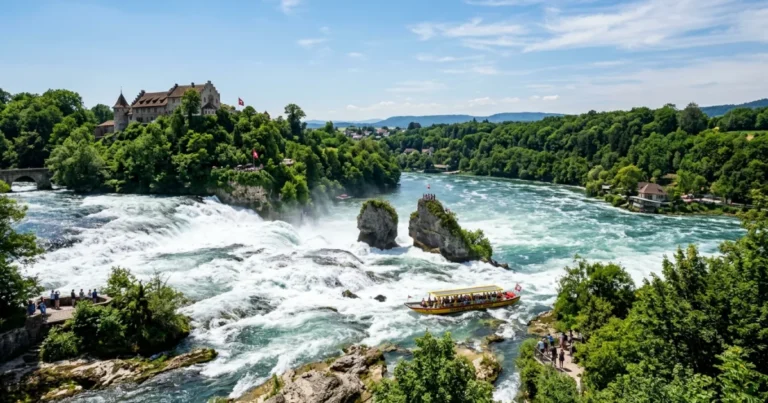
- The Rhine Falls: Experience the raw power of Europe's largest waterfall just a stone's throw from the city center.
- Medieval Architecture: Wander through one of the best-preserved Old Towns in Switzerland, famous for its Renaissance frescoes and oriel windows.
- The Munot Fortress: Climb this iconic 16th-century circular keep for sweeping views of the city, the Rhine, and the surrounding vineyards.
- Wine Culture: Explore the nearby Klettgau region, often referred to as the 'Pinot Noir region', for excellent wine tasting and vineyard walks.
Things to Avoid
- Driving in the Center: The Old Town is strictly pedestrian-only; park your car in one of the designated garages outside the historic core.
- Forgetting a Rain Jacket: If you plan to take the boat ride to the rock in the middle of the Rhine Falls, you will get wet.
- Ignoring Opening Hours: Many shops and smaller museums close on Sundays and have limited hours on Mondays, so plan your itinerary accordingly.
Local Transportation Tips
Schaffhausen boasts a highly efficient and punctual public transportation system. The local bus network (VBSH) connects all neighborhoods and neighboring towns, including direct routes to the Rhine Falls. The main train station (Schaffhausen Bahnhof) is a major hub with frequent SBB connections to Zurich, Winterthur, and cross-border trains to Germany. For exploring the Old Town, walking is the best and only option due to the pedestrianized streets.
Travel Etiquette
- Greetings: It is customary to greet shopkeepers and strangers on hiking trails with a friendly 'Grüezi'.
- Punctuality: Swiss transport runs exactly on time, and being late for tours or reservations is considered impolite.
- Tipping: Service is included in all restaurant and cafe bills by law, but rounding up to the nearest franc or leaving a 5-10% tip for exceptional service is appreciated.
Recommended Age Group
Schaffhausen offers a versatile experience that caters to various age groups, blending accessible nature with rich history.
- Babies (0-2 years): Neutral. While the city is safe and clean, the cobblestone streets in the Old Town and the steep paths up to the Munot can be challenging for strollers.
- Kids (3-12 years): Recommended. Children will be thrilled by the boat rides at the Rhine Falls and exploring the dark, castle-like corridors of the Munot fortress.
- Teens (13-19 years): Recommended. The area offers engaging outdoor activities like cycling along the Rhine, adventure parks near the falls, and highly photogenic historic sites.
- Adults (20-64 years): Recommended. Adults can fully appreciate the rich history, architectural beauty, and the excellent local wine tasting opportunities in the surrounding Klettgau region.
- Seniors (65+ years): Recommended. The city has excellent, reliable public transport and plenty of flat, pedestrianized areas in the Old Town, though the climb to the Munot requires navigating stairs.
Accessibility Level: Medium
- Public Transport: Most local buses and SBB trains are fully wheelchair accessible with low-floor entry and designated spaces.
- The Old Town: While pedestrianized, the historic center features cobblestone streets which may cause slight vibrations for wheelchair users, though they are generally well-maintained.
- Rhine Falls: The northern bank (Neuhausen side) offers paved, accessible paths and an elevator to view the falls, whereas the southern bank (Schloss Laufen) has more stairs, though a panoramic glass elevator has improved access.
- The Munot: Access to the top of the fortress involves a steep, spiraling ramp and stairs, making it difficult for those with severe mobility impairments.
Did You Know?
During World War II, on April 1, 1944, Schaffhausen was accidentally bombed by the United States Army Air Forces. Because the city is located on a piece of Swiss territory that juts into Germany, the pilots mistook it for a German town, resulting in a tragic event that is still commemorated in the city today.
Cool Statistics
- The Munot fortress was built over a period of 25 years, from 1564 to 1589, largely by the citizens themselves under compulsory labor.
- Schaffhausen's Old Town features exactly 171 historic oriel windows (Erker), a symbol of status for wealthy merchants in the past.
- The Rhine Falls drop 23 meters (75 feet) and span 150 meters (490 feet) across, with a summer water flow of around 600,000 liters per second.







Buy a compatible power adapter for your trip