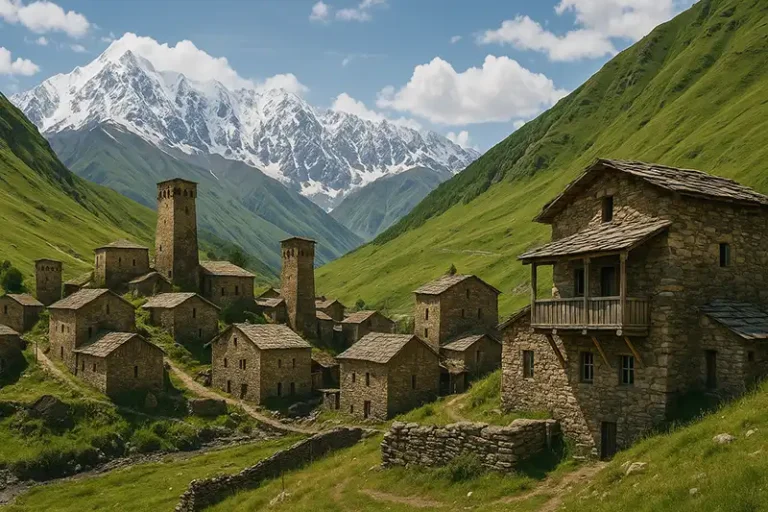
The Caucasus region is defined by the mighty Caucasus Mountains, which include some of the highest peaks in Europe. This dramatic landscape has given rise to a fascinating diversity of cultures that have been shaped by Persian, Ottoman, Russian, and Silk Road influences, yet have retained their own fierce independence and unique traditions. The region is a treasure trove for history lovers, as the birthplace of wine (Georgia) and the world's first Christian nation (Armenia).
Traveling through the Caucasus offers incredible variety, from the lush, green valleys and ancient monasteries of Georgia and Armenia to the fire temples and futuristic architecture of Azerbaijan. With its stunning scenery, delicious food, and relatively low travel costs, the Caucasus is one of the world's most rewarding and up-and-coming travel destinations.
Reasons to Visit
- Epic Mountain Scenery: Hike, drive, and marvel at the breathtaking beauty of the Greater and Lesser Caucasus mountain ranges.
- Ancient History and Culture: Explore a region that is a cradle of civilization, with ancient monasteries, Silk Road cities, and unique traditions.
- Incredible Hospitality: Experience the famously warm and generous hospitality of the peoples of the Caucasus.
- Diverse Experiences: Travel through three distinct countries in one compact region, each offering a completely different atmosphere, from Georgia's wineries to Azerbaijan's futuristic capital.
Things to Avoid
- Assuming the Countries are Alike: Georgia, Armenia, and Azerbaijan have very distinct languages, cultures, religions, and histories. Do not lump them together.
- Broaching Sensitive Topics: The region has complex and ongoing political conflicts (e.g., Armenia-Azerbaijan, Georgia-Russia). It is best to avoid discussing these topics.
- Underestimating Travel Times: The mountainous terrain means that distances that look short on a map can take a long time to travel by road.
- Ignoring Border Situations: Land borders between Armenia and Azerbaijan are closed. Travel between the two countries requires transiting through a third country like Georgia.
Local Transportation Tips
Travel between the capitals of the Caucasus countries is typically done by overnight train (e.g., Tbilisi-Baku, Tbilisi-Yerevan) or by marshrutka (shared minivan). Renting a car can be challenging due to differing road conditions and regulations. Within each country, a combination of marshrutkas, shared taxis, and private drivers is the most common way to get around.
Travel Etiquette
- Be a Gracious Guest: Hospitality is the cornerstone of Caucasus culture. If invited for a meal, accept graciously and be prepared for a feast.
- Toasting is Important: In Georgia and Armenia especially, toasting is a serious and respected ritual during meals.
- Respect Religious Differences: The region is a mix of Orthodox Christianity (Georgia, Armenia) and Shia Islam (Azerbaijan). Be respectful of the different customs and dress codes.
- Patience is a Virtue: The pace of life can be slower, and things may not always run on a strict schedule. A flexible and patient attitude is key.
Did You Know?
The Caucasus region is one of the most linguistically and culturally diverse areas in the world for its size. The mountains have historically served as a barrier and a refuge, allowing dozens of distinct ethnic groups and languages to survive.
Cool Caucasus Stats
- Highest Peak: Mount Elbrus, located in the Russian part of the Greater Caucasus, is the highest peak in Europe at 5,642 meters (18,510 ft).
- Three Countries: The South Caucasus is comprised of three independent nations: Georgia, Armenia, and Azerbaijan.
- Linguistic Diversity: Besides the main languages, there are dozens of smaller indigenous languages spoken in the Caucasus, such as Svan, Chechen, and Avar.
Recommended Age Group
The Caucasus is most suitable for adventurous Adults and Teens who are interested in history, culture, and spectacular mountain scenery.
- Babies (0-2 years): Not recommended. The long and often rough travel conditions and developing infrastructure are not suitable for infants.
- Kids (3-12 years): Not generally recommended. The focus on history, culture, and long journeys may not be engaging for young children.
- Teens (13-19 years): Highly Recommended. The combination of epic mountain landscapes, unique cultures, and a sense of adventure makes it a fantastic destination for teenagers.
- Adults (20-64 years): Highly Recommended. The Caucasus offers an incredible and affordable adventure for adults who love history, food, and world-class hiking.
- Seniors (65+ years): Recommended with considerations. Active seniors will enjoy the culture, but must be prepared for challenging terrain, a lot of walking, and basic infrastructure in rural areas.
Accessibility Level: Low
- This is a mountainous region with developing infrastructure that presents major accessibility barriers.
- Travel between countries and in rural areas is not accessible.
- Historic sites, monasteries, and hiking trails are not equipped for wheelchairs.
- While the modern parts of the capital cities (Tbilisi, Yerevan, Baku) are better, accessibility is not a widespread standard.






Buy a compatible power adapter for your trip