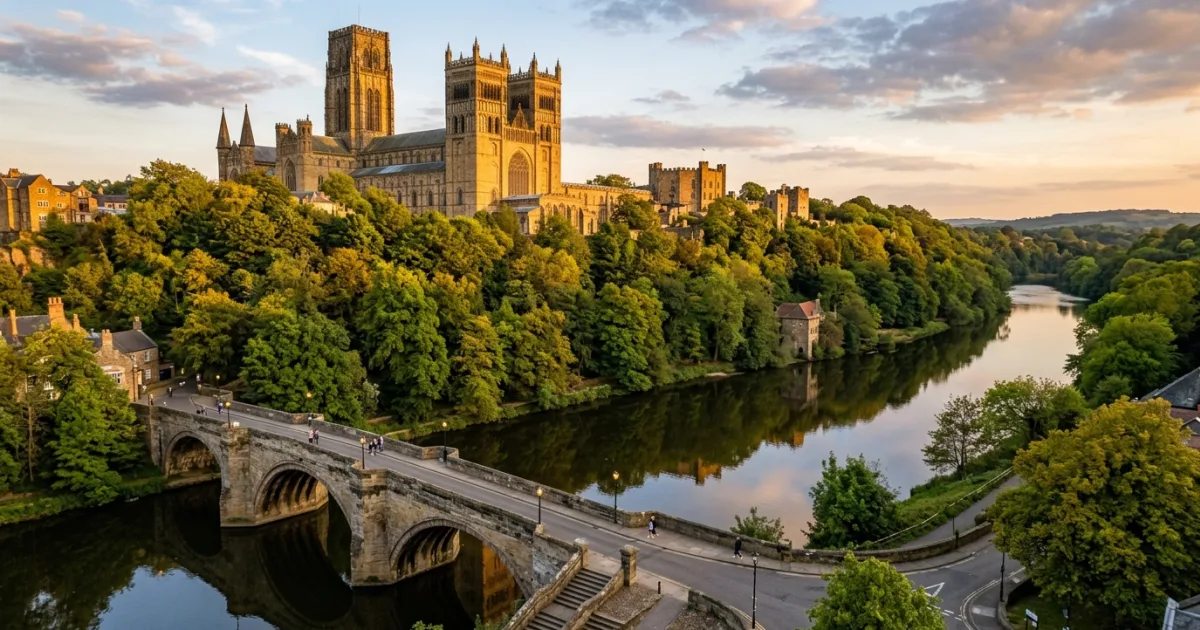
County Durham represents one of the most culturally layered regions in the United Kingdom. Dominated historically by the Prince Bishops—autonomous ecclesiastical rulers granted royal privileges to protect England's northern frontier against Scottish incursions—the county retains an atmosphere of sovereignty and historic weight. Its urban capital, Durham, balances collegiate energy from the prestigious Durham University with ancient stone monuments, tranquil wooded riverbanks, and winding medieval passages known locally as vennels.
Beyond the architectural splendor of the cathedral city, County Durham tells the story of Britain's Industrial Revolution. It was the cradle of the modern railway, where George Stephenson's Locomotion No. 1 ran on the Stockton and Darlington Railway in 1825. Today, restored industrial sites, extensive heritage railways, and the internationally celebrated Beamish Museum celebrate this engineering ingenuity. Simultaneously, the wild expanses of Teesdale and Weardale offer sweeping views, dark sky observation sites, and dramatic river gorges, making the county a rewarding retreat for both historians and outdoor travelers.
Reasons to Visit
- UNESCO World Heritage Grandeur: Durham Cathedral and Castle form one of Europe's finest surviving ensembles of Norman Romanesque architecture.
- World-Class Living History: Beamish Museum immerses visitors in life during the 1820s, 1900s, 1940s, and 1950s with authentic trams, shops, farms, and working colliery towns.
- Dramatic Waterfalls & Moorlands: High Force drops 21 meters over Whin Sill dolerite rock within the North Pennines National Landscape.
- Artistic Treasures: The Bowes Museum in Barnard Castle features European fine art in an authentic 19th-century French chateau, while Bishop Auckland houses the Spanish Gallery.
- The Durham Heritage Coast: A reclaimed coastline of Magnesian limestone cliffs, wild beaches, and peaceful walking trails.
Things to Avoid
- Avoid driving into central Durham without checking parking regulations, as the historic peninsula features narrow pedestrian zones and steep congestion charges.
- Avoid wearing flat shoes with no traction on rainy days; Durham's medieval cobbled lanes become extremely slick when wet.
- Do not plan trips to remote Dales attractions purely relying on evening public transport, as rural bus routes conclude early in the afternoon.
- Do not swim in the River Tees around Low Force and High Force, where strong undercurrents and submerged rocks present severe hazards.
Local Transportation Tips
Travel across County Durham is most convenient via a hybrid of public rail and private car. The East Coast Main Line stops at Durham and Darlington stations, providing swift high-speed rail connections to Newcastle, York, Edinburgh, and London Kings Cross. Northern Rail also operates the scenic Bishop Line connecting Darlington to Bishop Auckland. To venture into the North Pennines, Teesdale, or Beamish Museum efficiently, hiring a vehicle at Newcastle Airport, Darlington, or Durham is recommended. Within Durham city, the compact center is completely walkable, supported by an affordable Cathedral Bus linking the railway station to Palace Green.
Travel Etiquette
- Queue patiently when boarding regional buses and entering historic attractions; queue jumping is considered exceptionally poor form.
- Acknowledge drivers who yield on narrow single-track country lanes in the Dales with a brief wave of thanks.
- Maintain quiet voices inside Durham Cathedral and refrain from photography during active church services and choral evensong.
- Observe the Countryside Code when walking through farmland: close all gates behind you, keep dogs on leads near sheep, and take litter home.
Recommended Age Group
County Durham offers engaging attractions across diverse demographics, though logistical considerations vary between historic streets and wild moorlands.
- Babies (0-2 years): Neutral. Durham's steep, cobblestone hills make stroller navigation difficult, though Beamish Museum and lakeside country parks offer manageable wide pathways.
- Kids (3-12 years): Recommended. Interactive historical experiences at Beamish, open green spaces, castle ruins, and steam train rides provide outstanding engagement for growing minds.
- Teens (13-19 years): Recommended. Harry Potter filming locations at Durham Cathedral, high-wire adventure parks, and hiking along river waterfalls appeal to older youths.
- Adults (20-64 years): Recommended. Excellent opportunities for heritage touring, fine art galleries, hiking, and exploring traditional country pubs.
- Seniors (65+ years): Recommended. Rich cultural heritage, flat riverside strolls, accessible museums, and tranquil gardens make it an exceptional destination for mature travelers comfortable with moderate walking.
Accessibility Level: Medium
- Durham Cathedral features level access via the North Door, with accessible ramps leading into the nave and cloisters; loan wheelchairs are available on site.
- Beamish Museum provides wheelchair-accessible vintage tramcars, adapted buses, and complimentary motorized scooter hire (advance booking required).
- Durham city's historic peninsula has steep gradients and uneven cobblestones, making independent manual wheelchair travel strenuous without motorized assistance.
- High Force waterfall offers an accessible gravel track leading to the viewing platform from the hotel car park, suitable for all-terrain pushchairs and rugged wheelchairs.
- Station platforms at Durham and Darlington are equipped with lifts and pre-bookable passenger assistance services.
Did You Know?
Durham Cathedral houses the relics of Saint Cuthbert and the Venerable Bede, and its innovative 11th-century ribbed stone vaulting marked a revolutionary structural breakthrough in European architecture that directly paved the way for the Gothic style.
Cool Statistics
- 21 meters: The sheer drop of High Force, one of England's most powerful waterfalls.
- 1093 AD: The year construction commenced on Durham Cathedral under the first Norman bishop, William of St. Calais.
- 350 acres: The massive footprint of Beamish Museum, preserving regional history across multiple functioning historic settlements.
- 1825: The year the Stockton and Darlington Railway opened, heralding the age of passenger rail transit.







Buy a compatible power adapter for your trip