Disclosure: This site contains affiliate links. We may earn a commission if you make a purchase, at no extra cost to you.

Panoramic view of the Bow River flowing through the Bow Valley with towering Rocky Mountain peaks

Bow Valley Overview & Key Highlights

The Bow Valley serves as the rugged geographic spine and primary corridor through the heart of the Canadian Rockies in Alberta. Carved by glacial retreat and the meandering Bow River, this dramatic sub-alpine basin spans from Kananaskis Country through Canmore, Banff National Park, and up toward Lake Louise. Towering limestone peaks including the Three Sisters, Mount Rundle, and Castle Mountain enclose dense montane forests, turquoise alpine lakes, and fertile wildlife migration corridors. Travelers visit the Bow Valley to experience iconic mountain scenery paired with exceptional outdoor recreation and alpine hospitality. The valley features a dual nature, encompassing both vibrant mountain towns like Canmore and Banff alongside pristine wilderness reserves crossed by the scenic Bow Valley Parkway. Whether hiking ridgelines in summer, paddling glacial waters, or accessing world-class ski resorts in winter, the corridor provides an accessible yet intensely wild immersion in North American mountain ecology.

Bow Valley Travel Guide: Logistics & In-Depth Tips

The Bow Valley forms the premier ecological and transportation artery through the Rocky Mountains of Southwestern Alberta. Spanning roughly 100 kilometers along the glacier-fed Bow River, the valley is framed by iconic peaks like Mount Rundle, Cascade Mountain, and Ha Ling Peak. It bridges the transition from the rolling foothill prairies into high alpine terrain, containing ecosystems that support grizzly bears, wolves, elk, bighorn sheep, and mountain goats.

Historically a vital travel corridor for the Stoney Nakoda, Blackfoot, and Tsuut'ina First Nations, the valley developed modern prominence with the expansion of the Canadian Pacific Railway in the late 19th century. Today, it balances strict conservation zoning within Banff National Park and Alberta Provincial Parks with thriving mountain community infrastructure. The valley is renowned for world-class trekking, road cycling, limestone sport climbing, and Nordic skiing.

Reasons to Visit

  • Witness monumental limestone summits rising straight out of the glacial river valley floor.
  • Encounter healthy populations of native megafauna including elk, moose, and bighorn sheep in roadside meadows.
  • Pedal the vehicle-free Bow Valley Parkway during seasonal cycling windows.
  • Explore dramatic geological canyons such as Johnston Canyon with suspended catwalks and roaring waterfalls.
  • Access world-class Nordic and downhill ski terrain within a 30-minute radius of valley towns.

Things to Avoid

  • Avoid approaching wildlife within minimum safe distances (100m for bears, 30m for elk and sheep); park wardens issue heavy fines for crowding animals.
  • Do not hike alone without bear spray or keep bear spray locked away inside your backpack where it cannot be accessed quickly.
  • Avoid driving the Trans-Canada Highway without checking winter road condition advisories between November and April.
  • Do not leave food or scented items unattended in day-use picnic areas or unsealed campsites.

Local Transportation Tips

The Bow Valley is traversed by the four-lane Trans-Canada Highway (Highway 1) and the parallel scenic two-lane Bow Valley Parkway (Highway 1A). Roam Transit provides regional bus transport connecting Canmore and Banff (Route 3), as well as shuttles to Johnston Canyon, Lake Minnewanka, and Lake Louise. Regional shuttle coaches like the Banff Airporter link Calgary International Airport (YYC) to the valley, allowing travelers to visit without renting a private vehicle.

Travel Etiquette

  • Yield the trail to uphill hikers and alert mountain bikers when walking multi-use paths.
  • Follow strict Leave No Trace principles; pack out all food scraps, including biodegradable fruit peels.
  • Respect seasonal trail closures and wildlife corridor restrictions without exception.
  • Keep dogs leashed at all times to prevent fatal wildlife conflicts and preserve habitat integrity.

Recommended Age Group

The Bow Valley offers outdoor recreation suited for many travel stages, though high mountain terrain demands physical readiness.

  • Babies (0-2 years): Neutral. Valley paths like the Bow River Loop in Canmore are stroller-friendly, but rough backcountry terrain and high altitudes require durable carriers and warm layers.
  • Kids (3-12 years): Recommended. Easy nature trails, canyon boardwalks, wildlife viewing, and interactive interpretive centers make the valley an educational playground.
  • Teens (13-19 years): Recommended. Excellent opportunities for mountain biking, climbing, paddleboarding, and alpine skiing provide adventurous physical challenges.
  • Adults (20-64 years): Recommended. Perfect balance of challenging backcountry ridgelines, trail running, craft breweries, and luxury alpine lodges.
  • Seniors (65+ years): Recommended. Accessible viewpoints, gentle riverside walks, scenic drives along the parkway, and accessible Roam Transit options cater comfortably to mature travelers.

Accessibility Level: Medium

  • The Roam Transit fleet is low-floor and fully wheelchair accessible across all regional routes.
  • Paved pathways like the Bow River Trail in Banff and the Canmore Engine Bridge trail offer level, barrier-free scenic access.
  • Johnston Canyon features paved lower canyon walkways, though the upper canyon path transitions to steep dirt and steps.
  • Parks Canada visitor centers in Banff provide loaner all-terrain wheelchairs (Trail Riders) for backcountry access with prior reservation.

Did You Know?

The wildlife crossing structures across the Trans-Canada Highway in the Bow Valley, consisting of six overpasses and thirty-eight underpasses, represent one of the world's most successful wildlife highway mitigation projects, reducing animal-vehicle collisions by more than 80 percent.

Cool Statistics

  • Over 40 designated wildlife overpasses and underpasses safeguard animals traversing the Bow Valley.
  • The Bow River flows approximately 587 kilometers from its source at Bow Glacier to the South Saskatchewan River.
  • Elevation along the valley floor ranges from 1,309 meters in Canmore to 1,600 meters near Lake Louise.


Address:

Bow Valley, Alberta, Canada

Find Nearby Accommodations

Basic Info

address icon

COUNTRY & Region

Canada,
North America

ACCESSIBILITY LEVEL​

Medium
Currency icon

LOCAL CURRENCY​

Canadian Dollar (CAD)
Price level icon
High
Safety Level icon

SAFETY LEVEL

Duration icon

Recommended Duration

• 1-7 days
• More than a week

Electricity

electricity icon

Electricity

110-120V, 
60Hz
Plug Socket icon

Plug Type

• Type A (Flat blade)
• Type B (Flat blade with grounding pin)
Plug types
Click To View Plug Types
Bow Valley is part of our
Coolcation collection

Activities To Do In Bow Valley

Best Time To Visit Bow Valley

Bow Valley operates on two peak tourism rhythms driven by alpine seasons.

  • June to September: Prime summer hiking, road cycling on the Bow Valley Parkway, turquoise lake paddling, and accessible high-elevation passes. July and August experience peak crowds and warm days averaging 22°C (72°F).
  • December to March: Reliable sub-zero conditions transform the valley into a winter sports haven with deep powder skiing across nearby resorts, ice walking in Johnston Canyon, and cross-country ski trails at the Canmore Nordic Centre.
  • October to November & April to May: Shoulder seasons bring variable snowpack, trail mud, and wildlife closures, but fewer tourists and lower accommodation rates.

Average Temperatures Per Month

Remember to check the weather forecast a few days before the trip and before heading to the airport.

Safety Level icon

Safety Level

Wildlife encounters constitute the primary hazard in the Bow Valley, which is active grizzly, black bear, elk, and cougar territory. Always carry certified bear spray, keep it easily accessible, and maintain a minimum distance of 100 meters from bears and 30 meters from elk. High-altitude mountain weather changes swiftly; carry spare thermals and check Parks Canada trail avalanche bulletins before ascending high mountain routes.

The rating is based on multi-year peace, crime, and security indices. Before you go, always verify current conditions through official government travel advisories.

Emergency Numbers

Police: 911
Ambulance: 911

No internet needed • Includes local translations • Free for TravelingWiz readers

Spoken Languages

English is the primary spoken language throughout the Bow Valley. French has official federal status in national park administration, with signage and visitor center services available in both languages.

Learn The Language

  • Toque: Pronounced ‘took’, a warm knit winter beanie hat.
  • K-Country: Local shorthand for Kananaskis Country provincial park network.
  • The Parkway: Refers specifically to the Bow Valley Parkway (Highway 1A).
  • Scramble: Non-technical mountain ascent requiring handholds over loose scree.
  • Parks Pass: The mandatory admission permit for vehicles stopping within Banff National Park.
  • Roam: The regional public transit bus system connecting valley towns.
  • Bears in area: Official trail warning indicating recent carnivore activity nearby.
  • Scree: Loose rock and gravel slopes common on Rocky Mountain hiking routes.
Travel Booking Partner - TravelingWiz

Trip Cost & Budgeting for Bow Valley, 2026

Everything you need to know about money while traveling

Exploring the Bow Valley leans toward an expensive travel experience due to national park fees, premium resort pricing, and high demand across its mountain corridor. Daily expenditure varies depending on whether you camp under the peaks or stay in heritage alpine lodges. With TravelingWiz's Human Verified data, a typical traveler should expect to spend around $215 USD per day for a mid-range trip. A sit-down dinner with a local craft beer typically runs around $35 USD, while a specialty flat white in Canmore costs about $4.50 USD. Click the Trip Cost Calculator button below the table to work out your personal budget for this trip.

Currency icon

LOCAL CURRENCY​:

Canadian Dollar (CAD)
Price level icon
High
Credit and debit cards via chip or tap (Visa, Mastercard, and American Express) are universally accepted across the Bow Valley, including at public transit readers, trail pass stations, and backcountry lodges. Carry around 40 to 60 CAD in physical bills solely for small honesty-box firewood purchases or backcountry hut tips.

Per person, per day – pocket cash for small purchases.

Local: 65
Canadian Dollar (CAD)
≈ 48 USD

Full daily spend estimation (accommodation, food, transportation, attractions).

Travel Style
Canadian Dollar (CAD)
≈ USD ($)
Budget
140
105
Mid-range
290
215
Comfort
580
430

The Prices, Daily costs, and calculator results are estimates for planning purposes only. Actual costs may vary based on season, booking timing, personal spending habits, and currency fluctuations. TravelingWiz cannot be held responsible for discrepancies between these estimates and your final trip expenses.

  • Purchase a Parks Canada Discovery Pass if staying longer than seven days across Canadian national parks to reduce entry fees.
  • Base yourself in Canmore or Harvie Heights instead of downtown Banff to access lower lodging rates and avoid municipal resort surcharges.
  • Take the Roam Transit bus network rather than renting private cars or paying high parking fees at Lake Louise and Johnston Canyon.
  • Stock up on trail snacks and groceries at major supermarkets in Canmore before entering deeper national park limits.

Pre-Order Tickets

Avoid disappointment when tickets sell out — and skip the long lines by booking online in advance. You’ll often save up to 20% too.
Save up to 20%

Travel Discounts & Coupons

Save on hotels, attractions, transport, and gear — find verified discounts for smarter travel spending.
Verified Coupons

What To Pack

  • Bear spray in an accessible holster (mandatory for trail safety).
  • Moisture-wicking base layers and insulating fleece for rapid alpine weather shifts.
  • Gore-Tex waterproof jacket and rain pants.
  • Sturdy hiking boots with deep tread and ankle support.
  • UV-rated polarized sunglasses and broad-spectrum sunscreen for high-altitude glare.
  • Microspikes or crampons for shoulder-season trails with packed ice.
  • Refillable insulated water bottle or hydration reservoir.
We couldn't find tips for Bow Valley.
If you got any, please share

Recommended Itineraries for Traveling to Bow Valley

We couldn't find itineraries for Bow Valley.
you can contact us for custom trip plan

Food & Drink Highlights

Local Food Overview

Dining throughout the Bow Valley highlights Canadian Rockies regional cuisine, defined by lean game meats, sustainable freshwater fish, and hearty alpine comfort fare. Menus frequently highlight Alberta bison, elk medallions, red deer sausage, and rainbow trout. In towns like Canmore and Banff, a sophisticated culinary scene pairs microbreweries and craft distilleries with farm-to-table menus emphasizing root vegetables, Saskatoon berries, and artisanal cheeses.
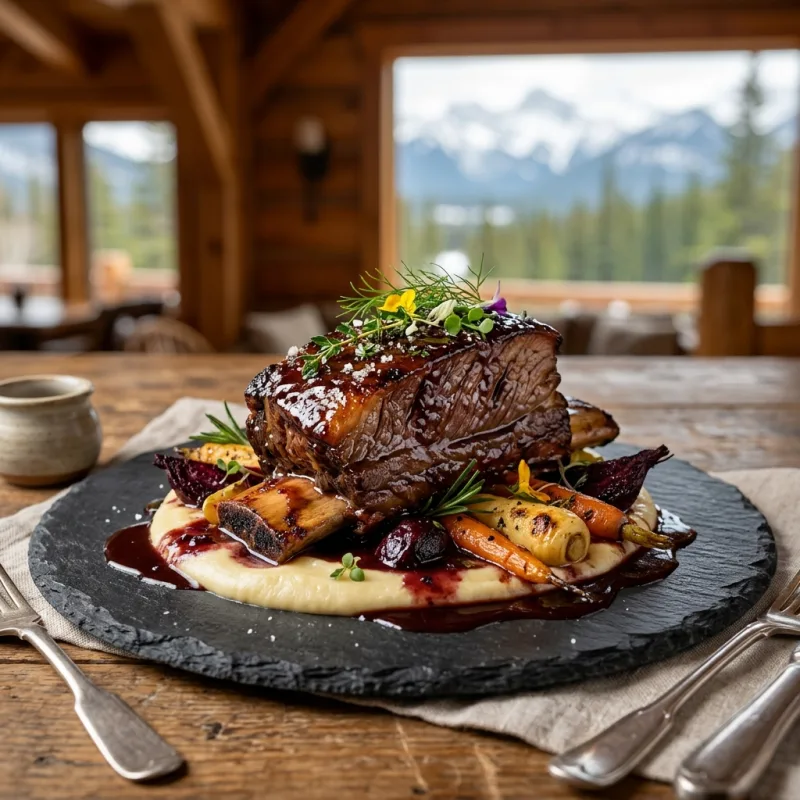
Braised Alberta bison short ribs with Saskatoon berry glaze and root vegetables

Must Try Dish

Braised Alberta Bison Short Ribs - Slow-cooked for hours in local mountain stout until fork-tender and unctuous. The dish is classically served over creamy celery root puree with a tart Saskatoon berry glaze that balances the rich, earthy depth of native game meat.
Food Experiences Title Icon

Food
Experiences

Discover cooking classes, tastings and local food tours

No food experience found
Maya, the human travel expert at TravelingWiz, offering curated, non-AI expertise

Maya’s Final Checklist for Bow Valley

Logistics shouldn’t be the focus of your trip—the experience should. I’ve hand-vetted these essential partners to ensure your arrival, stay, and exploration are as smooth as an Athenian breeze.

Where to Stay

From boutique hotels to local apartments—compare thousands of options and find the perfect stay in the best neighborhood.

Air Travel

Getting there should be seamless. Compare the best routes and prices across top airlines to start your journey on the right note.

Local Guides

Connect with experts who know the destination best. Get personalized advice and insider tips to help you plan your perfect trip.

Travel Protection

The “Engineer’s” rule: always have a backup. Secure your trip with a plan that covers every “what if” and unexpected change.

Car Rentals

Explore at your own pace with total freedom. Compare reliable rental options and find the right vehicle for your adventure.

Visa Services

Don’t let paperwork slow you down. Get expert assistance with your application to ensure all your entry documents are in order.

FAQs

A Parks Canada pass is required if you are stopping, hiking, or lodging anywhere within Banff National Park boundaries. The eastern section of the Bow Valley around Canmore is outside the national park, but vehicles parking in provincial parks in Kananaskis Country require a Kananaskis Conservation Pass.
The eastern section of the Bow Valley Parkway (Highway 1A) undergoes seasonal vehicle closures in spring and fall to encourage active human-powered transit like cycling and reduce disturbance to wildlife during critical feeding periods.
The Roam Transit bus network provides affordable, frequent year-round bus service connecting Canmore, Banff, Johnston Canyon, and Lake Louise, making car-free travel through the valley feasible.

Your Insights Matter

TravelingWiz grows through the stories of our community. If you’ve recently explored ,Bow Valley share your tips and stories to help us perfect our guides for the next traveler.

Related Articles

Check out our related articles and blog posts to learn even more about the destination.

No related articles found

Don’t Travel Alone

Share with your friends and family

Where should we send your offline card?

We hate spam just as much as you do

newsletter_consent *